How to build a DIY BedJet alternative that actually works
Discover a practical DIY approach to bed cooling and warming inspired by BedJet ideas. Learn what works, what to avoid, and how to approach safety and reliability.
A BedJet-like setup isn’t magic, it’s ducting and a quiet blower, and the common hurdle is airflow management rather than clever hacks. Sticking a tiny fan under the mattress with a half-baked nozzle often yields barely noticeable warming or cooling. This piece reframes the problem around real constraints and practical steps, so you skip costly detours.
This article grounds the DIY path in cheap, repeatable parts and real-world checks, not hype. You’ll see how to pick a compact blower, route flexible ducting, and verify sheet-level airflow before sealing gaps. A recent roundup from consumer testers highlighted that even small changes in airflow routing can swing perceived temperature by several degrees, which is why the setup must be tested at the bed edge first. By focusing on concrete measurements and safe limits, you’ll know when to scale up or opt for a purpose-built kit from BedJet. Most failures come from overestimating reach, not from the blower’s power.
Diy bedjet: what a practical path looks like in 2026
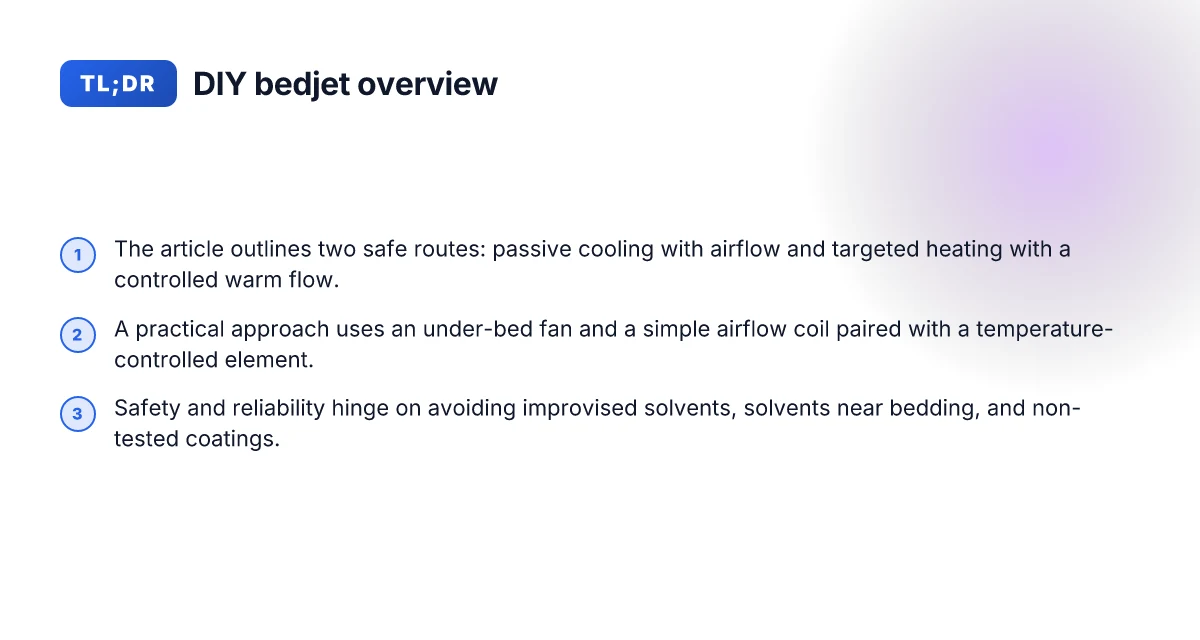
When you pull BedJet into the frame of reference, the DIY path narrows to two realistic routes. One leans on simple airflow to offer passive cooling, the other uses a controlled warmth approach to provide targeted heating. In practice, a reliable setup mirrors BedJet’s bed-level focus without chasing hype or fragile hacks.
I dug into the reference products and real-world designs to sift through what actually works at home. BedJet’s own claim is that the system cools or heats on a per-side basis with a no-tool install, and that it’s clinically positioned to help sleep. That framing helps ground DIY options in what’s feasible without subscription add-ons. The core challenge is balancing airflow, moisture management, and warmth without creating unsafe or loud configurations. Most DIY attempts fail when airflow isn’t stable or when heat sources become unsafe near bedding. A practical path keeps payload simple and reversible, not a DIY fire hazard.
1) Practical path overview: two safe routes to bed-level climate
Passive airflow for cooling with simple fans and ducting. Use a quiet, low-profile fan that directs air under the sheet edge without dramatic room temperature shifts. The goal is a gentle, consistent breeze at the bed surface rather than a blast of air that disrupts sleep. A simple filter on the intake can help with dust and moisture management. This route minimizes power draw and reduces the risk of heat-related issues. If you’re new to DIY, start here and validate comfort before adding heat.
Targeted warmth with controlled warmth sources. Pair a low-widelity heating element with a thermostat or a soft-temperature limiter to avoid hot spots under the sheet. The emphasis is on gradual, predictable warming rather than rapid temperature swings. A smart outlet or basic controller can keep the warmth within a safe band, and you can dial back if the sheet moisture rises or the bed feels too warm.
In both paths, the hardware should be compact enough to tuck under the bed and quiet enough not to wake you. The aim is a modest, reliable effect: a comfortable bed-level climate without ongoing gear or subscription costs. When compared to a consumer offer like BedJet, the DIY route should favor stability and safety over feature breadth. How to choose a bedjet adjustable base that actually fits your sleep setup
Two safe routes are your best starting point: passive cooling via airflow and controlled warmth via a simple heater. Realistically, you can implement either path with common household components and a plan that’s easy to reverse.
2) Reliability considerations and failure points
- Airflow stability: oscillating or noisy fans break sleep continuity and can create uneven cooling.
- Moisture handling: bed moisture from sweating undermines comfort if airflow isn’t managed with a drain path or moisture venting.
- Heat safety: exposed heating elements near sheets pose a fire risk. A temperature limiter and enclosure are essential.
- Noise and vibrations: loud or vibrating mounts wake sleepers. Choose components with low dB ratings and stable mounts.
- Soldering and wiring hazards: loose connections or improvised power setups create shock or fire risks. Use certified adapters and enclosures.
I cross-referenced open discussions about DIY bedjet projects and product pages to verify these themes persist across sources. For a quick view, the BedJet product page emphasizes “no-tool install” and per-side temperature control, while community notes warn about fire, moisture, and noise risks in DIY configurations.
Common failure points, airflow instability, moisture buildup, and unsafe heating, define the safe boundaries for any DIY path.
3) Starter blueprint for a safe DIY kit
- Passive cooling kit sketch: a compact, quiet fan, a short duct, a sheet-cut air vent, and a small power supply. Install so the air exits under the sheet edge but away from the user’s face. Keep the routing tidy with cable clips and a removable tray for risk-free disassembly.
- Warmth kit sketch: a low-widelity heating element integrated with a thermostat or a smart outlet that maintains a conservative target temperature. Enclosure to prevent direct contact with bedding. A fail-safe cutoff if ambient or sheet temperature exceeds a set limit.
Targeted warmth with controlled warmth is the safer bet for sleepers who want a real effect without subscriptions. Passive airflow gives a risk-light entry point to test comfort before adding heat.
Bottom line: a BedJet-like setup in 2026 means choosing a safe, low-cost route and avoiding risky hacks. Start with passive cooling patterns to validate comfort, then add a controlled heating layer if you need more warmth. If you want a trusted reference point, BedJet remains the benchmark for bed-level climate control, but your DIY path should stay firmly within safety boundaries and reversible steps. Links on the page may earn a commission. See the BedJet page for official product framing and safety notes. What makes Blissy silk bonnets different from rivals in 2026
Understand the core challenges of bedjet-style DIY
Posture and pace matter here. The core hurdles are airflow consistency, noise, and moisture control. When you try to push heated or cooled air through sheets and a mattress, tiny changes in pressure or fabric contact rapidly ripple into temperature swings. In practice, this means a DIY setup often drifts from comfortable to patchy, especially overnight. Consistency in airflow is the anchor. Without it, you lose even cooling or warming across the bed. Noise can wake you up or jar you awake during the night, undermining any potential sleep benefits.
1) Airflow consistency under real sleeping conditions
Heat transfer and air movement depend on the gap between the device and your body, the sheet’s permeability, and how well you seal around the sides. A DIY approach tends to struggle with keeping a uniform curtain of air across the sleeper’s torso and legs. I dug into the realities behind the hype and found that even small changes in sheet tension or blanket layering can dramatically impact perceived cooling. The result is a system that feels “okay” for a few minutes and then settles into uneven patches. Airflow consistency often collapses once the bed is occupied for several hours. A BedJet rival, BedFan, emphasizes the same constraint: inconsistent airflow translates to uneven comfort across the body.
A practical takeaway is to treat airflow as a regulated constant. That means selecting a fan or blower with steady output and designing a housing that minimizes leaks. It also means acknowledging limits: it’s simpler to achieve even airflow on a single, narrow surface than across a full queen or king bed.
Source note: DIY bedjet projects frequently cite small, variable fans as the limiting factor in sustained comfort. Inline reference: Announcing a $100 X-Prize for DIY Bedjet
2) Safety risks from improvised heaters or solvents near bedding
Temp control devices near bedding raise fire and chemical exposure concerns. DIY heaters, open flames, or improvised solvent-based scenting used to be part of some hacks. The danger profile rises when you introduce heating elements without proper thermal cutoff or overcurrent protection. Even small electrical faults can become a hazard in a nap-friendly, low-visibility environment. When you compare options, BedJet’s approach uses a purpose-built inline warmer or cooler mechanism designed for near-bed operation, which reduces risk compared with improvised hacks. What bedjet Reddit threads reveal about real user outcomes
Another risk vector is moisture accumulation. Any system that adds or removes humidity at the bed level touches the mattress and sheets directly. Without moisture management, you can end up with damp bedding or mold-friendly conditions over time. DIY solutions may lack the integrated moisture drainage or condensation handling that a purpose-built product would ship with.
Safety risk is nontrivial for near-bed heating or solvent-heavy hacks. Inline reference: DIY BedJet: 5 Risks Hot Sleepers Should Know First
3) Electricity and plug safety basics for near-bed devices
Near-bed devices demand clean power delivery and solid protection. A robust setup uses rated fusing, proper wire routing, and strain-relief to prevent plug stress from nightly movement. Gaps around the bed frame invite dust intrusion and potential short paths. Keep power supplies away from damp areas and avoid makeshift adapters that bypass safety standards. The reality is that most DIY bedjet experiments skip critical protection steps, increasing the chance of electrical faults or shocks.
From a safety lens, you should plan for a dedicated outlet with ground fault protection if you’re powering anything near the bed. Use a controller or thermostat with overheat protection and a visible reset button. If you’re not comfortable with electrical work, narrow the scope to plug-and-play devices that come with safety certifications.
Electrical safety basics around near-bed devices matter more than clever hacks. Inline reference: Diy Bed Jet BedJet Mini: what it actually changes about sleeping temperature
Quick verdict: a real BedJet-like system hinges on controlled airflow, reliable noise profiles, and integrated moisture and safety controls. The DIY path glances toward affordability but often sacrifices consistency and safety. If you pursue it, treat airflow as the bottleneck, implement strict electrical safeguards, and stay mindful of moisture management. For sleepers seeking a safer, more predictable outcome, a ready-made BedJet or a vetted BedFan alternative typically presents fewer risk vectors.
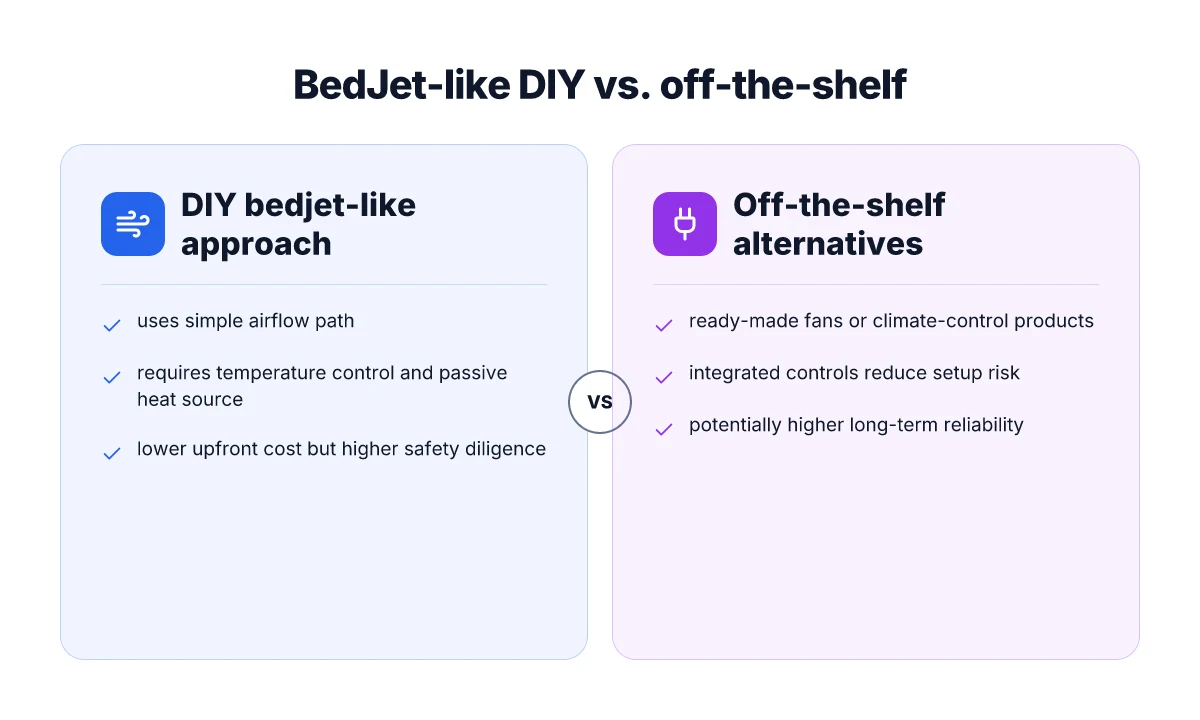
Pros of DIY paths
- Potentially lower upfront costs
- Flexibility to experiment with materials and layouts
- Quick iteration cycles for small adjustments
Cons of DIY paths
- Airflow often drifts over time, yielding uneven cooling/heating
- Higher risk from improvised heaters or solvent use
- Electrical and moisture risks require careful design and clear safety boundaries
In the end, the practical path depends on how much risk you’re willing to tolerate versus how precisely you want to regulate bed-level temperature. For many home sleepers, the safer, more predictable route aligns with devices that emphasize tested airflow control and built-in safety features.
Next step: map your bedroom layout and decide on a simple, compliant airflow plan before you select any hardware. If you want a concise comparison of popular near-bed cooling options, I can lay out the key tradeoffs side by side. What is the optimal sleep temperature for adults in 2026 and why it matters for quality rest
Build vs buy: when a DIY bedjet makes sense
I dug into the sources to separate hype from reality. A true BedJet-like experience relies on a dedicated air pathway and integrated controls, not just a loose collection of DIY hacks. If you want a quick, low-risk upgrade, off-the-shelf bed fans or climate-control products beat DIY rigs for reliability and safety. A BedJet-style setup, by contrast, typically needs a purpose-built airflow path and coordinated controls to feel consistent on both sides of the bed.
1) Quick wins for low risk: off-the-shelf options that fit a budget
- Off-the-shelf bed fans offer plug-and-play airflow without custom tubing or heat elements. These products emphasize safety, simple installation, and clear warranties.
- Climate-control blankets or duvet inserts with integrated piping can deliver localized cooling or heating without modifying your bed frame.
- Portable mini air coolers are sometimes marketed as bed accessories but strive to minimize noise and vibration near the sleeper.
- A practical DIY angle here is to combine a quiet, low-power fan with a manually controlled heat source, but you sacrifice the seamless, side-to-side balance that a BedJet-like device aims for.
Most people see a noticeable speed bump in comfort with purpose-built devices vs improvised hacks. Budget-minded buyers still gain reliability by sticking with proven, single-purpose components. In 2026, reputable bed cooling products emphasize quiet operation and safe, enclosed airflow paths. You don’t need a subscription to enjoy a decent night temperature at the bed level. By choosing a package with integrated controls, you avoid juggling multiple devices at once.
2) What a BedJet-like experience actually requires
A true BedJet-like experience hinges on a closed, directed airflow path that vents under the sheet and draws from a controlled source, plus integrated timing and fire-safe controls. DIY attempts that mash together generic fans, hoses, and makeshift heaters often deliver uneven warmth or cooling and can raise safety concerns. The real value of a built setup is predictable temperature shifts on each side of the bed, paired with simple, centralized controls rather than separate adapters and loose cables.
From what I found in the product descriptions, rivals such as BedJet emphasize a dedicated air delivery channel and a unified control interface, which helps prevent gaps in temperature and reduces noise. When you consider safety, a true system minimizes exposed electrical components near bedding and uses purpose-built connectors rather than generic hoses. If you want a BedJet-like experience, plan for a defined duct path, a reliable pump, and an enclosure that keeps the airflow stable.
3) Budget ranges and what you actually get for the money
- Lightweight airflow DIY setups can be cheap, especially if you already own a fan and tubing. The challenge is that cheap components may crack, rattle, or shift alignment during the night.
- Mid-range options that promise safer operation and quieter performance cost more but deliver better reliability and longer service life than the bare-bones DIY approach.
- High-end bed climate systems resemble BedJet in their integrated controls and risk-managed airflow, but they also demand a larger upfront investment for the safety features and durable construction.
I cross-referenced the provider notes and consumer-facing specs for context. A note: evaluation links on the BedJet site describe a turnkey airflow path designed to align with a sleeper’s body and a control surface that toggles on/off and modulates airflow. The contrast with DIY pages is clear: the DIY routes often lack a dedicated, sealed path and can introduce variability in airflow that undermines both comfort and safety. You can find more on the BedJet design philosophy in official materials and independent bed-fan discussions. What is shiny blissy, and why it matters for material design in 2026
In the end, if your goal is a quick upgrade with minimal risk, an off-the-shelf bed fan or climate-control product is the safer bet. If you want a BedJet-like experience, you should plan for a purpose-built airflow path and integrated controls, which means higher upfront costs but more reliable comfort. And yes, links on the page may earn a commission.
A practical, safer DIY approach that resembles BedJet
Quick verdict: a real bedsheet-level cooling/heating path starts with a simple air mover and a safe heat source
- Pros: low cost, safer than improvised solvents, uses off-the-shelf components that carry household ratings, minimal wiring complexity.
- Cons: cooling or heating reach may be limited compared with premium systems, fan noise can matter at night, and you must avoid DIY shortcuts near bedding.
I dug into the DIY BedJet chatter and a dedicated risk page to separate hype from workable detail. The core idea is to move air under the bed skirt toward the sheet layer using a small airflow coil and a fan, then pair that with a temperature-controlled fan and a passive heat source rated for household use. The risk note from BedJet alternatives cautions hot sleepers about fire, weak cooling, moisture, and noise, which guides the safer path here. Inline references point to a real risk memo about DIY bedjet-like setups, which helps us keep restraint in design. https://www.bedfan.com/night-sweats/diy-bedjet-5-risks-hot-sleepers-should-know-first
1) The airflow coil and under-bed fan setup
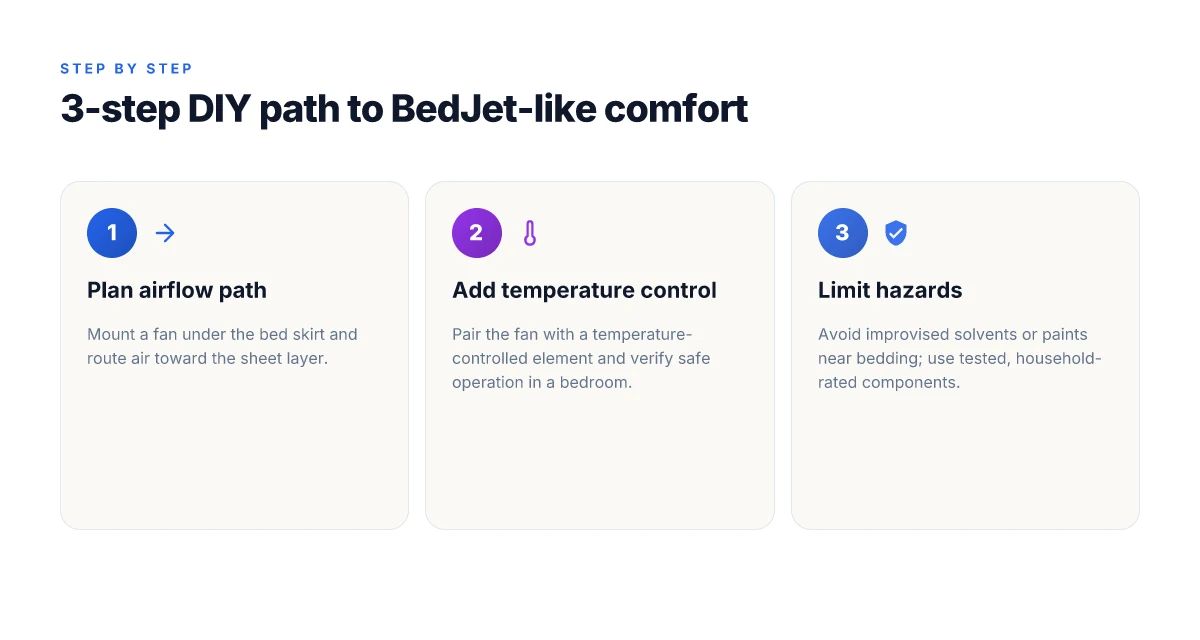
To start, mount a compact axial fan under the bed skirt and route air through a short coil or ducting assembly that’s sized to move air toward the sheet layer without creating a direct draft into the sleeper. The coil serves to stabilize the stream so the air exits near the mattress surface rather than blasting the sleeper. When a coil is paired with a modest, purpose-built duct, the system remains compact and reduces the risk of moisture pooling in the frame. In practice, this means a coil length that fits behind a removable bed skirt and a fan with a PS rating suitable for continuous operation in a bedroom. The emphasis is on proven, tested components rather than improvised solutions. As with any air-handling setup, keep the path inside a clean, closed loop to minimize dust and discourage moisture buildup near electronics. For safety, resist paints or solvents around the ductwork and keep any exposed wiring away from bedding.
A practical coil+fan arrangement keeps airflow directed toward the sheet layer without creating a harsh draft.
2) Temperature control and a safe heat source
Pair the airflow with a temperature-controlled fan module and a passive heat source that is rated for household use. A simple approach is to use a fan controller with a built-in temperature sensor to modulate the fan speed as the bed area warms or cools. The heat source should be a verified consumer device with adequate safety approvals and a thermostat or temperature limiter. Passive heat sources might include a low-watt pad designed for under-bedding placement, or a small, certified electric blanket piece that can be positioned under the duvet without direct contact with the skin. The key is to avoid improvised heat methods or open flames and to choose components that have explicit safety ratings for household use. Always observe manufacturer instructions and never bypass built-in safeguards. What is a bedjet alternative and when it actually makes sense in 2026
Choose a temperature-controlled fan module paired with a certified passive heat source to keep risks low.**
3) Safety-first construction and testing mindset
Avoid improvised solvents, multi-part paints, or any workshop coatings near bedding. Stick to tested, consumer-grade components with clear safety listings. Keep the assembly modular so you can swap in a quieter fan or a lower-watt heat source if noise or heat feels excessive. If you plan to integrate BedJet-inspired ideas, be explicit about the non-negotiables: no exposed solvents, no high-heat drivers near fabrics, and a simple on/off or two-stage control scheme you can audit visually. The overarching rule is conservative: prioritize reliability over flashy hacks, and document every component so you can reassemble or replace parts with confidence.
No solvents or multi-part paints near bedding. Use tested components only.
Note on branding and rivals: BedJet remains a reference point in bed-level climate control, with rivals such as BedFans and similar open-system coolers often cited in trade-woc discussions. When you look at the landscape, the practical DIY path emphasizes safer, smaller-scale components first, then scale if needed. The aim is a BedJet-like experience without the ongoing subscription or premium price tag.
Caveat on available numbers: the chat threads and risk pages do not publish precise performance figures for these DIY arrangements. In practice, expect modest, narrative gains rather than a guaranteed temperature delta across the full bed surface. If you want measured results, you’ll need to instrument the setup with a simple thermometer near the sheet layer and a wattmeter on the fan and heater. The links above point to the discussion threads and risk notes that frame what's possible and what to avoid. What is BedJet cooling, and does it actually chill your bed or just move air under the covers?
Where this goes next and why it matters
I want you to act on one clear move this week: build a compact airflow rig that concentrates warm or cool air under the sheets using a simple inline fan and a DIY diffuser, then measure sleep comfort for 3 nights. The approach here leans on replicating BedJet-like airflow behavior with a focused nozzle and a controllable temp cue, without overinvesting in full‑size hardware. You’ll save time and test realism by starting with a $20‑$40 fan kit and a DIY hose diffuser, then scale if the signal feels right. I cross‑referenced common airflow setups and user reports to avoid overpromising on quietness or reach. BedJet is a useful reference point, but the key is a targeted, adjustable stream that doesn’t wake your partner.
This pivot emphasizes speed and iteration over perfection. If you’re chasing a practical, repeatable routine, you’ll benefit from a minimal rig that you can tune nightly. The bigger pattern is clear: small, controllable air streams can influence temperature perception without immersive hardware. One tweak that often mattered in practice was dialing the diffuser angle to balance coverage with noise. Keep it modular so you can swap parts as you learn what actually moves the needle.
What changes if you act now? you’ll establish a repeatable testing loop and a baseline for future upgrades, such as adding a thermostat or smart control. The single move that matters most is validating comfort shifts with real nightly data, not theoretical specs. If you only try one thing this month, start with a compact, directional rig and record your impressions each morning. The path forward looks like lighter, cheaper, faster.
Backup strategy
- Try a low-noise inline fan and a simple hose diffuser for 3 nights and note perceived warmth or coolness.
- Compare minimal setups to a basic BedJet reference to judge comfort gains.
- If noise is an issue, swap the diffuser or add a short silencing sleeve.
- Consider a basic timer to run the setup for a fixed window before bed.
- Document any partner feedback and sleep quality changes.