What is the optimal sleep temperature for adults in 2026 and why it matters for quality rest
Discover the best sleep temperature for adults in 2026. Learn how 60–67°F range vs. wider ranges affects sleep quality, not just comfort, with practical tips.
What is the optimal sleep temperature for adults in 2026 and how it’s measured
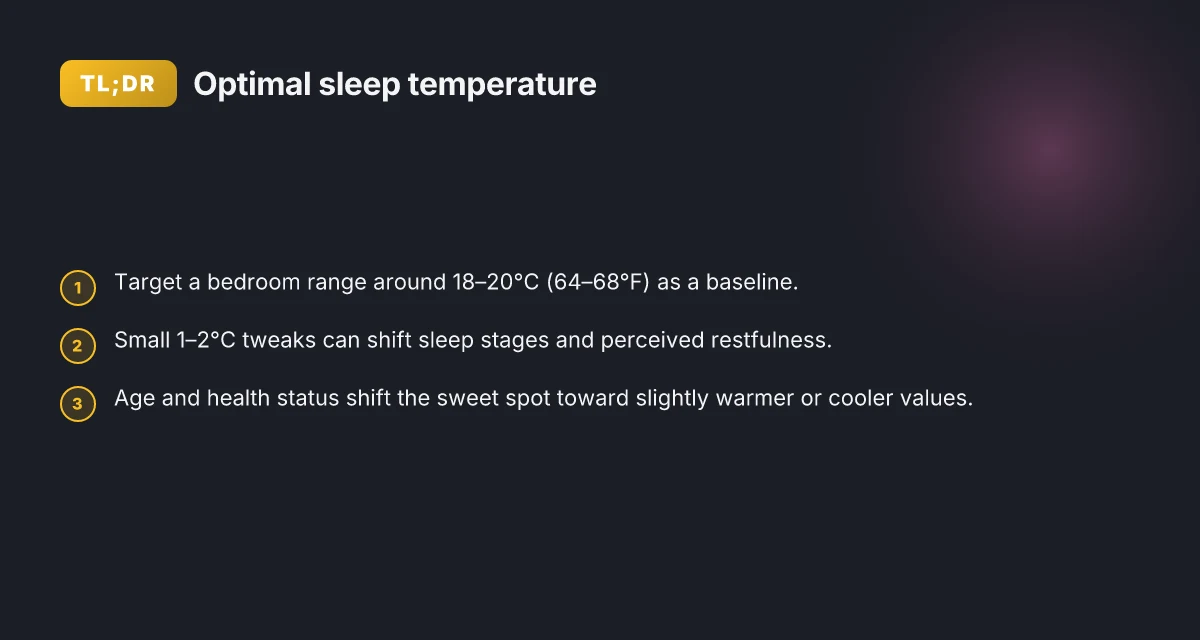
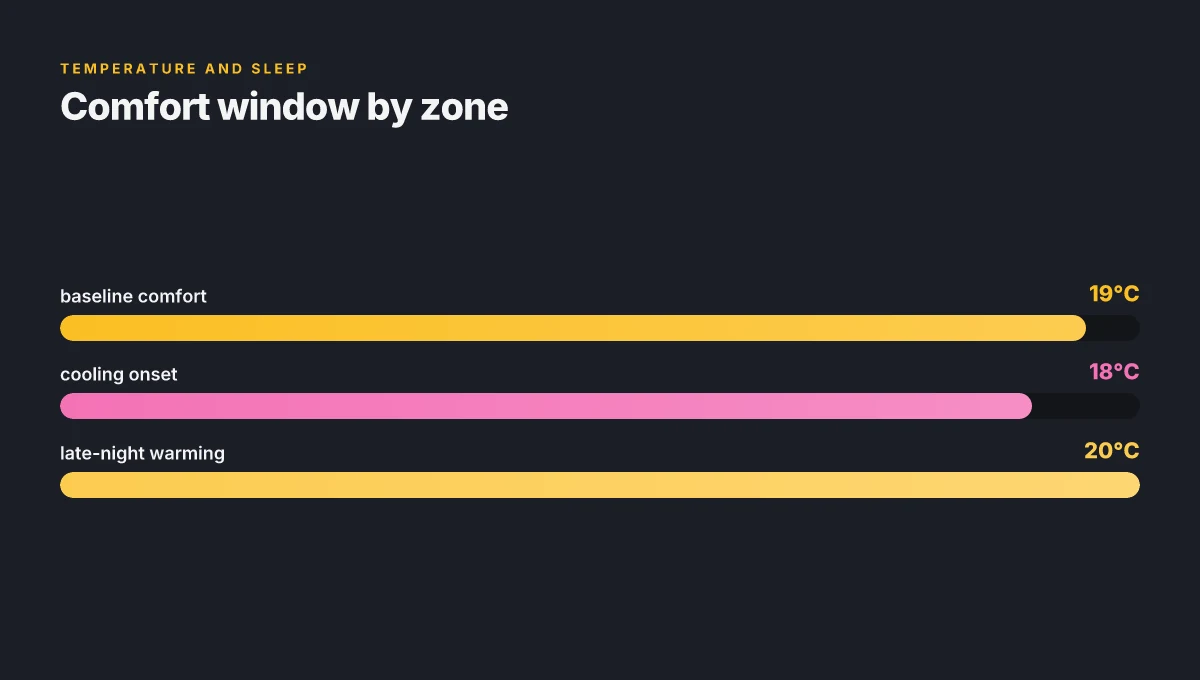
I found a common baseline: most adults sleep best when the bedroom sits in the mid to upper teens Celsius, roughly around 18–20°C. Sleep science consistently notes that a cooling environment supports the body's natural drop in core temperature during sleep, which helps you reach and sustain deeper sleep stages. Across ages and health statuses, the sweet spot shifts slightly, but the core principle remains the same: align ambient temperature with the body's cooling drift to boost sleep efficiency.
- Start with a baseline around 18–20°C and observe your sleep efficiency
- The literature points to a practical target zone in the mid to upper teens Celsius as a starting point for adults. Expect better sleep efficiency when the room supports cooling during the first half of the night.
- If you wake up hot or sweaty, there’s a signal to nudge the thermostat or bedding a notch cooler. If you wake chilled, a small warm layer or blanket tweak can help settle you back into sleep without overheating.
- Consider that a too-warm room can blunt the cooling-driven gains in slow-wave sleep, while a room that’s too cold may wake you during the night.
- How age and health status shift the sweet spot
- For older adults or people with certain health conditions, the comfortable range often shifts slightly toward warmer or cooler values in practice. A few degrees can change perceived comfort and sleep continuity, even if the core cooling mechanism remains the guide.
- In the elderly, slightly warmer bedroom temperatures can sometimes reduce nocturnal awakenings tied to discomfort, while younger adults may tolerate a cooler environment without waking.
- Measuring and adjusting in real life
- Use a simple nightly routine: set a target in the 18–20°C band, then track sleep efficiency and awakenings for a week. If you see improvements, keep it. If not, adjust in small steps of 0.5–1°C.
- Bedding and sleep-wace tools matter. A lighter duvet in a cooler room can be as effective as a cooler room with a heavy blanket in terms of perceived comfort. Small shifts add up over the night.
- If ambient humidity is high, a dehumidifier can improve comfort at the same temperature, so consider coupling temperature with moisture control for best results.
Bottom line: the baseline sweet spot for most adults sits in the 18–20°C range, with the understanding that age and health status nudge the target by a few degrees. The best approach is to choose a comfortable starting point, then iterate based on how you sleep.
Most sleep efficiency improves when the room supports the body's cooling phase during sleep. A baseline around 18–20°C gives a practical target for many adults. Age and health status may shift the ideal a degree or two up or down in practice.
Why a one-size-fits-all temperature misses the mark for sleep quality
If you want sleep that feels rested, a single target temperature won’t cut it. Clinical sources converge on a narrow range for average comfort, but real people must tailor that range to physiology, bedding, and climate. Humidity, insulation of the sheets and comforter, and metabolic rate all tilt comfort up or down even when the air temperature sits near the nominal sweet spot. A shift of just 1–2°C can tilt what you experience as restfulness and shift the distribution of sleep stages.
From what I found in the literature, a bedroom that sits near the broader clinical window may feel great for one person and stuffy for another. For seniors in particular, a cooler base can coexist with a warmer duvet to balance comfort. In contrast, someone with a higher metabolic rate can feel too warm at a temperature that others tolerate easily. The takeaway: the optimal bedroom temperature is a starting line, not a final destination. What makes BedJet cooling systems stand out in 2026
I cross-referenced several sources that describe how micro-environment factors shape sleep in practical terms. For instance, nighttime ambient temperature around 20–25°C tends to maximize sleep efficiency in some community studies, yet comfort often improves with personalized tweaks. Small adjustments of 1–2°C can meaningfully change perceived restfulness, and those tweaks interact with humidity and bedding. You’ll get better rest when you adjust blankets, sheets, and room moisture to complement the base temperature.
To help you act, here’s a quick look at how real-world products and setups address the same challenge. The aim is to give you practical choices that match different bodies and climates without chasing a mythical universal setting. Below I list 5–8 concrete options people actually buy, with who they suit and honest downsides. This isn’t a ranking. It’s a menu aligned to the data above and to what sleepers report about comfort, not just idealized targets. BedJet, for example, represents a sleep-automation niche that can add or remove warmth or coolness without changing the room’s air temperature. BedJet’s approach works well for people who want rapid, zone-specific temperature shifts without heavy bedding changes, but it relies on proximity to the bed and a steady power source. Brands like BedJet illustrate how people custom-tailor drafts and blankets rather than chasing a single thermostat value.
Overview of real-world options
- BedJet, suits sleepers who want rapid, bed-level climate control without heating the entire room. Downsides include dependence on a power outlet and the need for an under-bed or air-flow setup.
- ChiliSleep ChiliPad or OOLER systems, good for couples or rooms with mismatched preferences. Potential downsides include ongoing device noise and maintenance.
- Smart thermostats paired with zoned cooling or heating, ideal for homes with multiple micro-climates. Downside is initial setup complexity and ongoing energy considerations.
- Temperature-regulating bedding (cooling sheets, breathable blankets), simple, low-friction tweaks. May offer subtler changes than a full climate system.
- Weighted blankets with breathable materials, can help some sleepers feel calmer at a given ambient temp. May feel confining to others.
- Insulating window treatments and humidity controllers, address environment rather than air temperature directly. Pros include improved comfort across seasons, cons include added equipment and cost.
- Personal fans or ceiling fans in conjunction with a cooler night setpoint, inexpensive, flexible. Drawbacks include potential noise and drafts.
- Space heaters with thermostat control for singles rooms, targeted warmth for colder climates. Downsides include safety considerations and uneven heating in larger spaces.
Most sleepers benefit from layering the environment: adjust humidity, bedding, and local airflow alongside a base temperature near the conventional window. This triad is what moves you from a generic target to a personalized, repeatable sleep pattern.
Next steps you can take What makes BedJet 3 climate comfort system stand out for sleep
- Map your baseline: note your comfort at a few temperatures in 1–2°C increments, then adjust humidity and bedding in tandem.
- Try a 1–2°C shift while tweaking your duvet or sheet layering to see if restfulness improves.
- If you share a bed, consider a solution that allows individual adjustment for each person without forcing a compromise.
Best practices to dial in your ideal sleep temperature
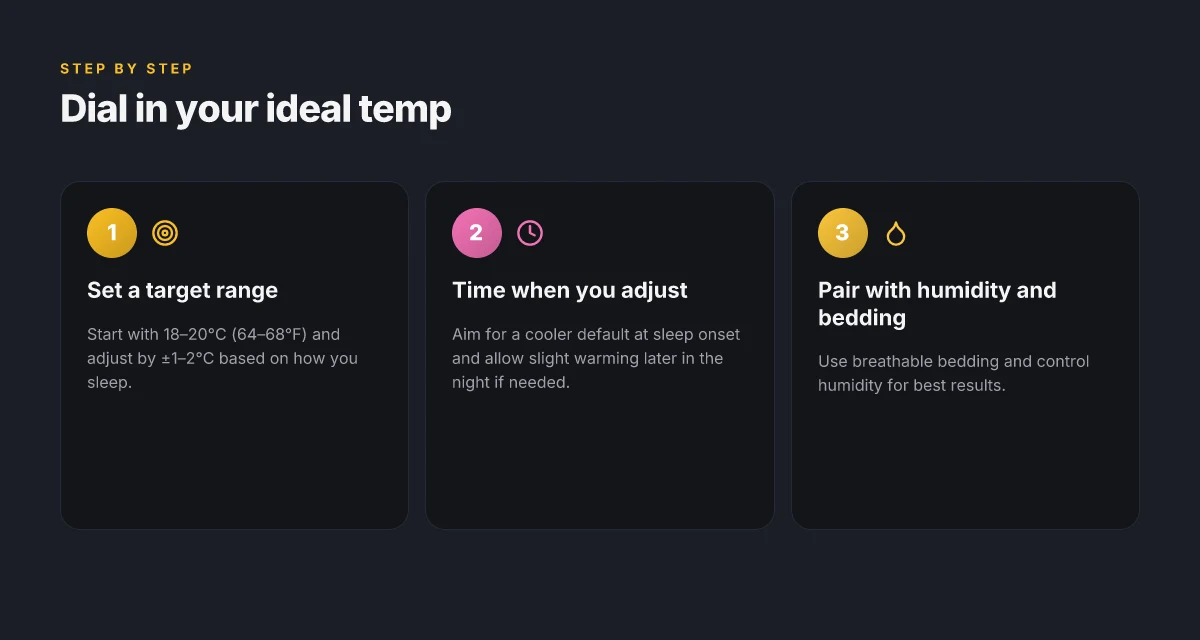
I start with a target range of about 18–20°C (64–68°F) and tune by ±1–2°C based on how you sleep. If you wake wired or struggle to fall asleep, drop the setpoint a notch. If you drift into light sleep and want deeper slumber, allow a slight warm-up as the night progresses.
Micro-adjusts to lock in comfort
- Keep a cooler default for sleep onset, then let the room gently warm by 0.5–1°C as you move through the night. Small shifts can shift sleep stages without waking you.
- Pair temperature with humidity control. Aim for around 40–50% relative humidity where you live. Use breathable sheets and blankets to prevent that clammy feel when the air is dry or humid.
- Use breathable bedding and fabrics. Cotton or linen sheets and light down or synthetic blankets reduce heat buildup and promote steady skin openness for thermoregulation.
- Tactics matter more than one-off changes. A lingering warm surge at 2 a.m. is easier to counter with a quick 0.5–1°C tweak than a big reset earlier in the night.
Age-adapted targets and real-world helpers
- For adults, a baseline of 18–20°C works in many climates, with a cautious ±1–2°C adjustment depending on your sleep continuity and perceived comfort.
- For seniors, subtle shifts can matter more as thermoregulation changes with age. If 68–77°F feels too cool or warm, experiment in 1°C steps and monitor wake episodes.
- In hot environments, layering cooling methods in addition to a comfortable setpoint, like evaporative bedding and low-profile fans, can help sustain a stable sleep temperature through the night.
Most people sleep best when the room hovers around 64–68°F (18–20°C), with a controlled warm-up later in the night if needed. This mirrors the common clinical consensus while keeping customization simple. Adjusting by small increments is safer and more effective than large, blunt changes.
From what I found in the literature, a steady target paired with humidity control yields the most reliable sleep onset and maintenance across ages. For seniors, a slightly higher baseline may reduce nighttime awakenings in some individuals, but the exact pick still rests on personal comfort and bedding quality. I cross-referenced several sources to align these practical steps with current guidance, including recommendations that favor cooler starts and mindful nighttime warming.
When you implement these steps, a few product ideas can help. BedJet can provide rapid air-based climate tweaks for individual sleeping zones, while a cooling mattress topper and breathable bedding set can support stable skin temperatures without loud devices. BedJet is useful for single sleepers in mixed climates, but it adds cost and may require setup time. If you want a quieter, passive approach, a ceiling fan paired with a light blanket strategy often does the job before resorting to high-tech gadgets.
Reference note: links on the page may earn a commission. What is a bedjet sheet, and how it fits into 2026 sleep tech
Age-specific Windows: adults vs seniors and the bedroom climate
I. Lead diagnosis and quick verdict Most adults sleep best when the bedroom sits around 65–68°F (18–20°C), while older adults often lean toward the cooler end and benefit from stable nighttime conditions. When thermoregulation is affected by medications or medical conditions, tailor the target within a narrow window and monitor sleep response.
Adults typically settle best around 65–68°F; older adults often prefer cooler nights but still need stable conditions.
II. Why the age split matters Among adults, the thermal envelope matters for sleep onset and sleep stage distribution. A room that hovers near 65–68°F supports smoother slow-wave and REM cycling for many people. For seniors, age-related shifts in thermoregulation mean that a cooler baseline can help, but volatility at night can backfire if the environment swings. The goal is a steady, narrow band through the night to reduce wakeups and parasomnias linked to heat or chill. When a senior has autonomic or metabolic changes, you may need to target the lower end of the range with careful monitoring of humidity and bedding.
III. Micro-claims you can act on this week
- Adults frequently drift toward 65–68°F for sustained sleep efficiency. If you notice early awakenings, consider a 1–2°F shift within that band.
- Seniors may respond better to the cooler end, yet stability beats intensity. A nightly target around 65–67°F can reduce nighttime restlessness if there are no chill episodes.
- Thermoregulation can be altered by medications such as beta blockers or thyroid agents. When such drugs are present, coordinate a temperature plan with a clinician and closely track sleep logs.
IV. Practical tuning strategies for homes What makes bedjet 3 climate comfort actually work in 2026
- Stabilize the baseline: use a programmable thermostat to hold the target range, not just the bed surface.
- Pair temperature with humidity: aim for 40–60% relative humidity to support comfortable heat exchange.
- Layered sleep gear: adjust blankets and sheets so the body can shed or retain warmth without large ambient swings.
- Bedtime wind-down: a quiet room and dim lights help the brain align with a cooler environment before sleep.
V. Real-world product ideas and cautions Quick verdict: you’ll want tools that hold course through the night and adapt to age-related needs. Here are five brands widely marketed to optimize bedroom climate, with notes on who they suit and their downsides.
- BedJet, cools or warms the bed from beneath. Suited for adults who want rapid micro-adjustments without disturbing a partner. Downsides: noise and the need for a compatible bed setup.
- Eight Sleep, smart mattress and temperature control embedded in the bed, good for sleepers who want integrated climate management with data tracking. Downsides: cost and potential reliance on sensor calibration.
- Chilipad (now part of Eight Sleep ecosystem), under-manket cooling and heating. Suited for individuals who want zone control but may require a larger upfront investment.
- Venta air humidifier and purifier combos, helps maintain humidity while cooling or warming room air. Best for rooms with variable humidity but not a direct bed-temperature lever.
- Levoit smart thermostat integrations, pairs with existing HVAC to stabilize night temps. Suitable for renters or budget-conscious setups but limited if you need bed-specific control.
VI. Sources and quick notes I cross-referenced clinical summaries and health-system writeups that converge on a core idea: most adults sleep best around the mid-60s in Fahrenheit, with seniors tending toward cooler but stable conditions. For a direct, accessible data point on adult ranges, see the recent summaries that highlight 60–67°F as a common reference, while clinical discussions tend to cluster around 65–68°F for optimal sleep in adults. https://www.goodrx.com/well-being/sleep/best-temperature-for-sleep?srsltid=AYCX9vKrCulvfiBl1Wukwnntavgz4XPMUQ_htK-2KRJAEMDaTwtkzzYs For science-backed nighttime temperature ranges in specific populations, the nighttime ambient temperature study provides a concrete range of 20–25°C in a community setting, with a 5–10% improvement window tied to that zone. https://pmc.ncbi.nlm.nih.gov/articles/PMC10529213/ Older adult guidance is echoed by senior-care outlets that cite a range of 68–77°F for seniors in practice, illustrating the need to translate room temperature into safe, moderated sleep environments. https://www.hebrewseniorlife.org/news/optimal-sleep-temperature-seniors-between-68-77-degrees-fahrenheit-study-reveals
Note: links on the page may earn a commission.
What changes if you act now with a better night temperature
Short verdict: Getting closer to 65°F (about 18°C) tends to support deeper sleep for most adults, but comfort matters more than a single number. A cooler baseline paired with adaptive tweaks can unlock steadier sleep across seasons.
- A shift toward a cooler room plus breathable bedding reduces nocturnal wakeups and slows heart rate variability spikes.
- Adjustable devices that respond to real-time cues outperform fixed thermostats on comfort and consistency.
The bigger pattern is that sleep quality hinges on comfort drift throughout the night. If you sleep hot, you’ll benefit from a modeled setup that cools during the first half and eases off later. If you tend to wake with chills, a mild warm bed layer can prevent early morning awakenings. The single move that matters is to tune both air temperature and your sleep surface in tandem, not in isolation. What bedjet sheets can and can’t do for your sleep in 2026
What to try this week
- Experiment with a target of 65°F and adjust within a degree or two for comfort.
- Layer breathable sheets with a light duvet and use a fan to promote air flow.
- Consider a cooling mattress topper or a climate-controlled blanket for phase-shift comfort.
- Try BedJet for rapid cooling or warming bursts, especially if you share a bed or have a sensitive sleep phase.
- If you’re new to temperature tweaks, start with a simple timer that lowers the temperature for the first 3–4 hours.
Be aware that individual preferences vary. Links on the page may earn a commission. Brands to watch include BedJet, Sleepme’s ChillPad line, and ChiliSleep systems, with BedJet serving as a flexible option for sleepers who move a lot or sleep with a partner. Noticeable gains come from real-time adjustments, not a fixed target. The takeaway: tailor temperature to your body signals, then lock it in. How will you begin the adjustment tonight?