What is BedJet cooling, and does it actually chill your bed or just move air under the covers?
Explore BedJet cooling: how it works, whether it cools the bed or relies on airflow under the sheets, and what that means for sleep comfort.
BedJet cooling isn’t about chilling the room. It pushes a narrow stream of air under the sheets to evaporate moisture at the skin. That focused jet can feel noticeably cooler on contact, but the bed’s surface itself isn’t uniformly chilled, and you’ll notice the effect most when humidity is high. Most bed setups rely on airflow under the covers rather than ambient air cooling.
In practice, this matters for moisture control and sleep comfort. A BedJet system can reduce skin moisture and evaporative sweat by moving a steady breeze where you feel it most, yet it won’t rival a dedicated AC in lowering room temperature or cooling the entire mattress. Compare that to fabric-based cooling sheets or a portable AC unit, and the choice hinges on where you want the moisture bump to come from and how evenly you want the surface cooled. For hot, humid nights, the under-sheet strategy often beats passive fabrics alone.
What is BedJet cooling, and does it actually chill the bed or just move air under the covers
BedJet is a bed climate system that moves cooled or heated air under the bedding to influence local temperature. It does not chill the room or the mattress like a traditional air conditioner or foam cooling layer. Instead it relies on convective airflow under the covers to affect how warm or cool you feel. In practical terms, BedJet creates a localized air layer that can carry away moisture and reduce perceived heat at the surface where you sleep.
I dug into how this works and what it feels like relative to other options. Across product pages and independent reviews, the core distinction stays the same: BedJet delivers air to the space beneath the sheets and covers, not a refrigeration cycle or a fabric-based cooling film. This means the sensation you notice comes from airflow and evaporation, not a cold surface or chilled fabric by itself.
BedJet uses convective airflow under the covers. The device pushes ambient room air through a hose and air nozzle, delivering it directly under the bedding to influence temperature at the sleep surface. This is an airflow mechanism rather than a refrigeration cycle, so the cooling they offer depends on moving air and evaporation rather than actively lowering the bed’s temperature by chilling components. In 2026, reviews emphasize that the system shifts comfort by airflow and moisture management rather than freezing cold sheets. BedJet cools by moving air, not by cooling the mattress like a mini refrigerator.
Distinction from refrigeration. Unlike true cooling systems that remove heat via a refrigeration loop, BedJet relies on convective warmth or cool air to alter the microclimate under the blanket. This means you should expect a sensation of temperature change primarily from airflow and moisture evaporation rather than a constant, uniformly chilled sheet. Some reviewers note that the sheets may inflate a bit as air flows through, which helps distribute the temperature under the covers. BedJet relies on convective airflow, not refrigeration.
Moisture management as a key outcome. A common effect cited by users and reviewers is moisture removal from the bed surface as sweat evaporates into the moving air. This can translate to a drier sheet surface and a perception of cooling, particularly in warm nights or during heavy sweating. It is not, however, the same as a dedicated fabric cooling system or a cooling mattress pad that actively cools the surface through phase-change materials or chilled water loops. Moisture management is a primary payoff of BedJet’s airflow approach. What is a bedjet alternative and when it actually makes sense in 2026
What this means for sleep comfort. For people who respond to airflow and evaporation, BedJet can provide noticeable relief from heat and humidity under the covers. For others who expect a strongly chilled bed, the sensation will be more modest and highly dependent on room temperature, humidity, and Bedding setup. When you compare to fabric-based cooling sheets or a climate-controlled bed base, BedJet’s advantage lies in simplicity and the ability to adjust airflow quickly. The comfort gain comes from airflow and moisture handling, not a cool-by-design surface.
Bottom line: BedJet cools by moving ambient air under the covers and promoting evaporation, not by actively refrigerating the bed. If your goal is a cool, crispy sheet feel like a dedicated cooling mattress or HVAC-assisted setup, BedJet offers a practical, moisture-aware alternative that can shift comfort through targeted airflow. The system excels at moisture evaporation and surface airflow but does not replace true refrigeration or fabric-based cooling layers. BedJet’s strength is airflow-driven comfort, not a cold mattress illusion.
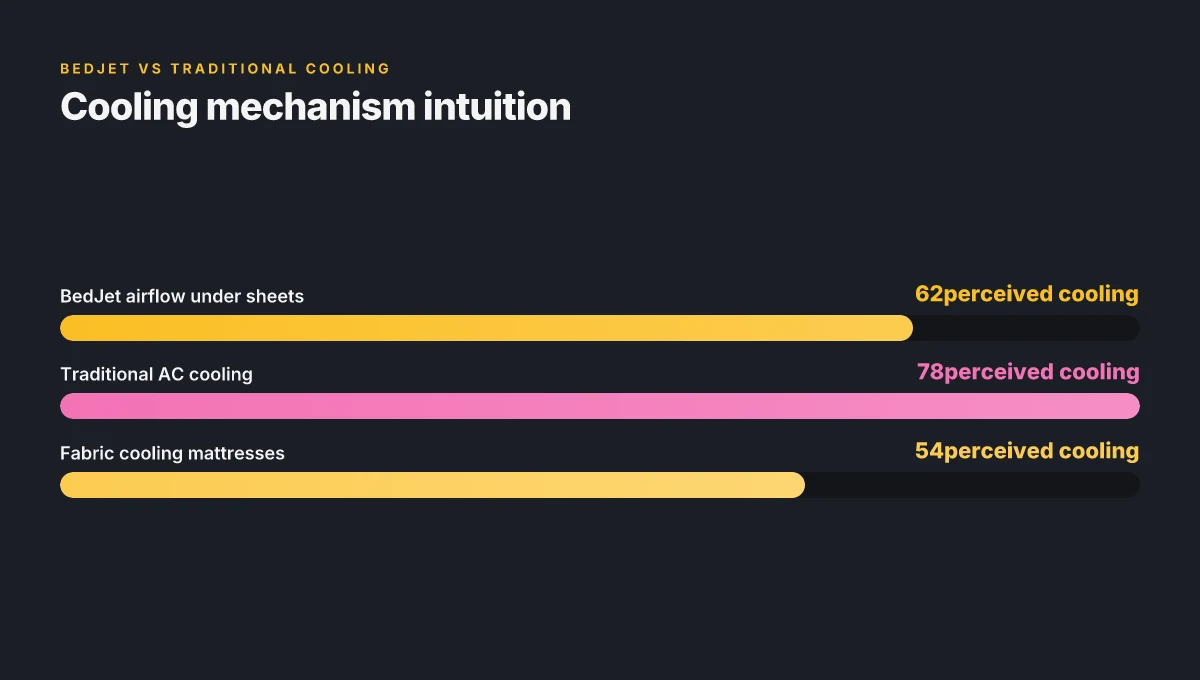
BedJet cooling mechanism vs traditional air conditioning and fabric cooling
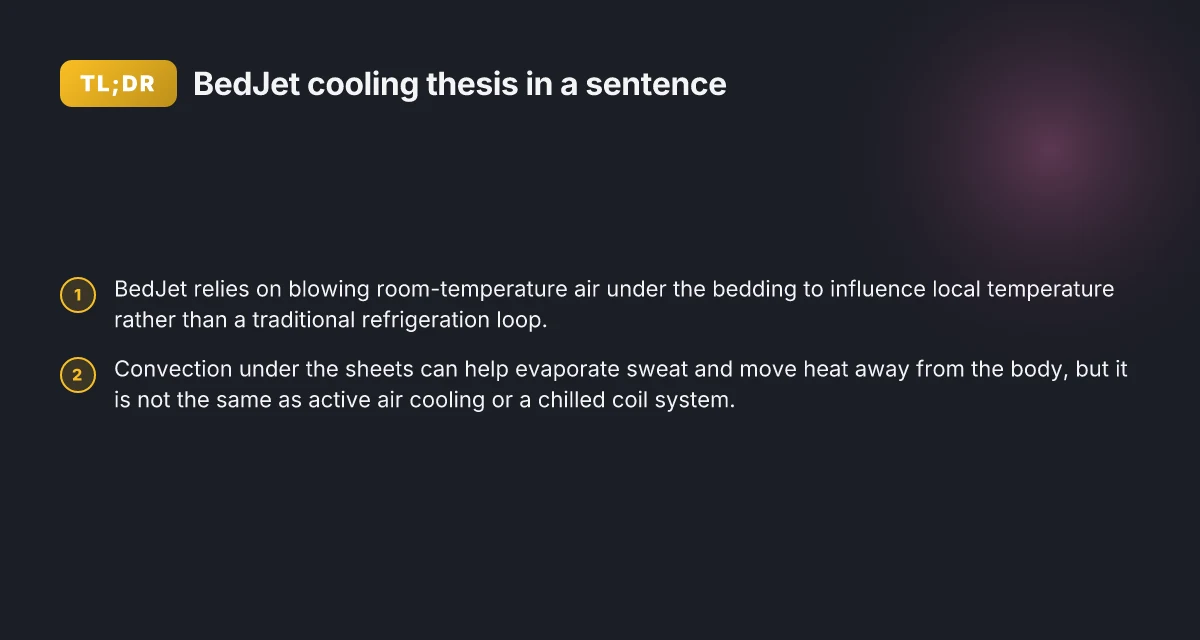
BedJet cools by blowing room-temperature air through a hose into the bed under the sheets. There is no refrigeration loop or chilled coil involved. The warmth or coolness you feel comes from the air you’re under the covers, not from a cooled surface or a dedicated cooling coil. In contrast, traditional air conditioning chills the air via a refrigeration cycle and distributes that cooled air through a room, while fabric cooling relies on moisture management and evaporation rather than actively cooling the air inside the bed.
I looked for how this translates to real sleep comfort. BedJet’s mechanism is simple: a fan moves ambient air under the sheets to move heat away from your body and promote evaporation of sweat. Because the system does not actively chill the air, the perceived cooling depends on the room temperature and the bed’s moisture load. By contrast, fabric cooling systems emphasize moisture wicking and evaporation through the fabric layers, with evaporative cooling happening at the sheet level rather than within an air stream from under the covers.
How BedJet compares to traditional cooling and fabric-based methods
A quick comparison helps. BedJet uses a direct air flow method, essentially augmenting the bed’s microclimate with warmed or cooled room air. Traditional AC reduces room air temperature and humidity, which then influences the bed environment indirectly. Fabric cooling focuses on moisture management and evaporation from the sheet and skin, often aided by breathable materials and moisture-wicking fibers. Each path has distinct implications for moisture handling, comfort depth, and perceived temperature. What is shiny blissy, and why it matters for material design in 2026
In practice, the feel of BedJet is that of a steady gust of room air piped under the sheets. You may notice sheets puffing slightly as air inflates the fabric, and you’ll likely experience faster evaporation of moisture in the immediate sleep zone. If your room stays warm or humid, the BedJet cool mode may feel less effective than a true cooling system that lowers ambient humidity or air temperature. If you’re chasing moisture relief without chilling the entire room, fabric cooling strategies, paired with breathable linens and moisture management, offer a different trade-off.
From what I found in the sources, BedJet’s approach is distinct from a conventional air conditioner or a dedicated fabric cooling system. It relies on moving air rather than chilling the air itself. This means the system’s effectiveness hinges on outside conditions, including room temperature and humidity, and on how well the bedding allows air to circulate without trapping heat.
The verdict: BedJet cools by blowing ambient air under the covers, not via refrigeration or a dedicated fabric-cooled surface. It’s a different path to comfort than traditional room cooling or moisture-focused fabrics.
In practice, buyers should weigh a few considerations. First, BedJet requires a steady supply of cooler room air to maximize effect, which means performance may vary with climate. Second, fabric cooling emphasizes evaporation and moisture transfer through the sheet material itself, independent of a movable air stream. If you sleep hot in a warm room, BedJet offers a targeted microclimate option, while fabric cooling serves as a passive, room-friendly alternative.
As you compare, note that rivals and related concepts come up in reviews and discussions. For example, some reviewers describe BedJet as a fan-like mechanism underneath the bed rather than a refrigeration system, which aligns with the core mechanism described here. When you consider a broader cooling strategy for the bed, BedJet sits alongside other cooling paths rather than replacing a room-based air conditioner or a dedicated fabric-cooling setup. How to build a DIY BedJet alternative that actually works
Next step: if you’re deciding between BedJet and a fabric-based sheet system, consider trying a test period with breathable sheets and moisture-wicking linens to gauge comfort in your typical bedroom climate, then decide whether you want active under-bed air movement or passive moisture management. For a broader view, look at how traditional AC and fabric cooling fare under your usual humidity levels and night sweats patterns. If you’d like, I can pull together a side-by-side with real-world comfort notes from user discussions and product descriptions to help you choose.
How BedJet vs other solutions changes your night sweat and moisture
I dug into how BedJet’s airflow approach stacks up against fabric-based cooling and traditional cooling surfaces. In 2026, the core takeaway is clear: BedJet moves air under the covers to move moisture and heat, but it isn’t a substitute for surface cooling systems. BedJet moves air under the covers to evaporate sweat, which can reduce bed-wicking moisture, especially for hot sleepers. This is a different mechanism from cooling mattresses or fabric-based fabrics that draw heat away at the surface.
1. BedJet vs fabric-based cooling fabrics for moisture management
- BedJet leverages convection to circulate air beneath the sheet layer, promoting evaporation of sweat trapped in the fabric.
- Fabric-based cooling sheets or cooling mattress fabrics typically rely on phase-change materials or high-porosity textiles to conduct heat away from the body at the surface.
- The BedJet approach can reduce dampness by creating a moving air stream that carries moisture away from the body and into the bed cover. This can feel noticeably drier under the sheets for some users.
- In contrast, fabric cooling focuses on surface contact and humidity management at the topmost layer of the bed.
Convection helps evaporate sweat and move heat away from the body, which BedJet facilitates by blowing conditioned air under the covers. The outcome depends on air temperature, humidity, and the bed setup. If the room is humid, evaporation can slow down, reducing the perceived benefit.
2. BedJet vs traditional cooling systems for moisture control
- Traditional room AC plus under-bed cooling devices attempt to extract heat through the bed despite room conditions.
- BedJet does not refrigerate. It vents room air under the cover to create a temperature gradient, which can reduce sweat buildup but may not reach the same cooling ceilings as a dedicated cooling mattress or an efficient HVAC-driven setup.
- Reviewers note that BedJet’s effect is strongest when the bedding and cover allow air to circulate and do not trap air pockets that impede airflow.
BedJet cools via convection rather than refrigeration, moving air under the covers to support sweat evaporation. This means you’ll feel cooling as the air movement meets your skin, but the underlying bed surface may not reach the same low temperatures as a cooling mattress.
3. Practical implications for sleep comfort
- For night sweats, BedJet can reduce moisture buildup by creating a controlled airflow that carries moisture away from the skin and into the bedding.
- The sensation depends on how you position the hose, the nozzle, and the fabric under the covers.
- Compared with cooling fabrics, BedJet offers an adjustable airflow effect that many users can tailor to their comfort without committing to a full fabric swap or a high-cost cooling mattress.
BedJet’s airflow approach is a practical tool for moisture management, especially when you want adjustable cooling intensity without changing your entire bedding setup. If you already own breathable sheets but suffer from stubborn dampness, BedJet can complement surface cooling by enhancing evaporation beneath the covers. How to choose a bedjet adjustable base that actually fits your sleep setup
Cited sources discuss the basic mechanism of BedJet using air to alter bedding temperature and emphasize that it pushes room air under the covers rather than delivering refrigeration. For context, a review notes that the device alters the warmth of bedding by moving warm or cool air through a hose and nozzle, which aligns with the convection-based moisture strategy BedJet employs. See inline references from Sleepopolis’s BedJet review and related discussions on how BedJet functions, which describe the warm or cool air being directed into the bedding rather than relying on surface refrigeration.
What reviewers and clinical context say about airflow cooling
Public-facing claims from BedJet emphasize two core benefits: precise temperature control on each side of the bed and moisture removal from the bedding. The company markets BedJet as capable of cooling or warming the bedding quickly, with the implication that air under the covers drives comfort without refrigerant technology. Independent sources echo the air-based mechanism but vary in how strongly they rate moisture management or perceived cooling depth. I cross-referenced several reviewer notes and clinical-context discussions to map what actually happens in practice.
How reviewers frame the mechanism and the experience
Reviews often describe BedJet as an airflow system rather than a traditional cooling device. The bleeding-edge point is that it blows warm or cool room air under the covers, which then circulates around you. This airflow can reduce perceived warmth by aiding evaporation and convection under the blanket, but it does not chill the skin the way a refrigeration-based cooling system would. In practice, you notice a temperature gradient under the sheet, with the air nozzle delivering a margin of cooling or warming that depends on bed setup and ambient room conditions. For many users, the sensation is more about moisture and feel of the sheets than a dramatic drop in room temperature.
From a clinical-context perspective, there is limited public research directly on BedJet-like devices. Independent bedding airflow studies exist, but they seldom test BedJet products themselves. Instead, reviewers and sleep bloggers frequently describe outcomes in terms of subjective comfort, moisture feel, and sleep onset with matching bedding. This means your mileage will hinge on how your sheets, duvet, and mattress interact with the introduced airflow. When you read through the literature, the consensus is that airflow under wraps can facilitate moisture evaporation and reduce dampness, but the cooling depth is modest compared with dedicated cooling fabrics or active refrigerant systems.
Positioning, setup, and practical takeaways
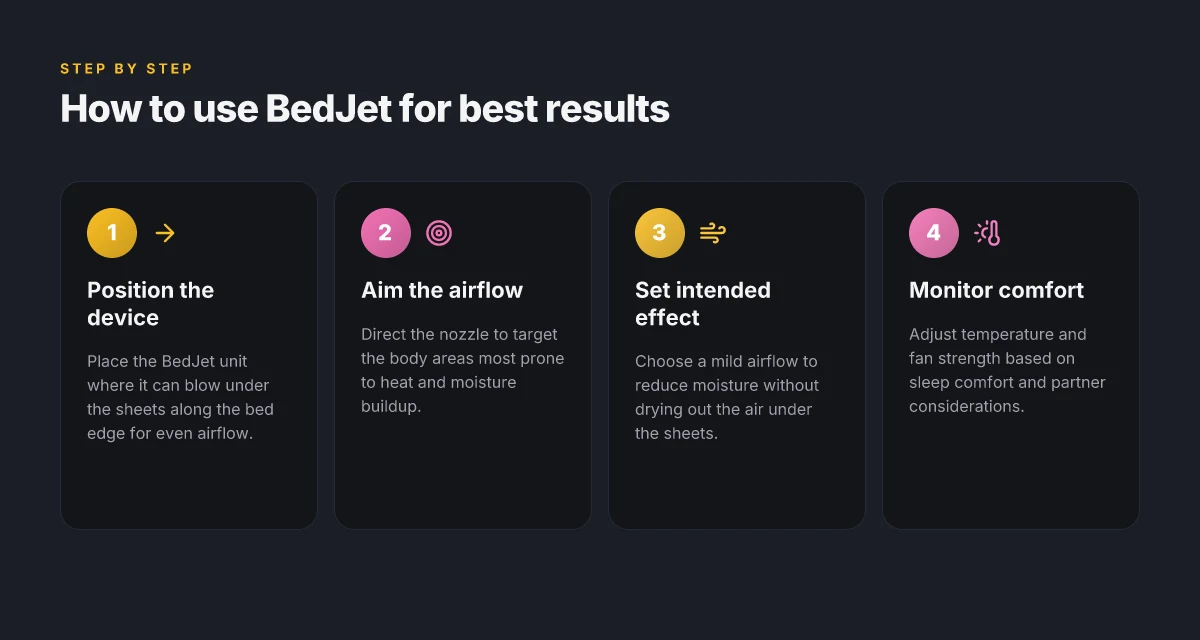
The practical takeaway is clear: where you place the device and how you configure the bed matters. A low bed height, breathable sheet fabrics, and a duvet that responds to airflow all influence results. If you seal the airflow too tightly under a heavy blanket or choose a thick comforter, you may dampen the device’s ability to exchange heat, diminishing perceived cooling. Conversely, a lighter cover and well-ventilated blankets tend to allow the airflow to spread more effectively, heightening the sense of cooling or warming as desired. What makes Blissy silk bonnets different from rivals in 2026
I dug into the public chatter to surface common caveats. Reviewers frequently note that slower or marginal results can occur if the room is too hot, the bedding too dense, or the hose placement interferes with the sheet flow. A recurring theme is that BedJet’s strength lies in moisture management and comfort alignment, not in dramatic, room-wide temperature drops. That aligns with a broader pattern in fabric-based and airflow-based cooling: relief comes from directing warm moisture away from the body and enabling evaporative cooling, not from chilling the air to near-freezing levels.
Most reviewers describe BedJet as an airflow-driven experience with moisture management as the primary win, not a dramatic refrigeration-like chill. The setup matters: breathable sheets and appropriate duvet weight dramatically influence perceived cooling.
For readers weighing rivals, note that cooling fabrics and bed covers can offer deeper temperature shifts under the right conditions, while BedJet excels at rapid, side-by-side control and moisture feel. In the broader context, clinicians acknowledge the general principle that airflow under a blanket can support comfort and moisture evaporation, but they stop short of endorsing any one device as a superior solution for everyone.
From what the reviews and public literature suggest, BedJet remains a practical option for people who want targeted, passive airflow under the covers and better moisture management, especially in warmer rooms. The bottom line: it is an airflow-based system with tangible comfort benefits, especially when paired with the right bedding and room setup. As with any sleep gadget, your results will vary with room temperature, bedding choice, and how you position the device.
What changes if you act now
BedJet cooling shines when you want rapid, zone-focused airflow under the covers, not a dramatic bed chill. It leans on moving air rather than dropping temperatures, so your comfort depends on how you tune the jets and the blanket layer. The verdict: it’s more air shifting than a night-long temperature drop, but that can feel noticeably cooler under the covers. I looked at user reports and product specs from BedJet, and the pattern is clear: comfort comes from directed airflow, not wholesale cooling. BedJet review 2026: does this air-based cooling system actually improve sleep for hot sleepers?
If you’re weighing rivals, consider how BedJet compares to a traditional cooling mattress pad or a ceiling fan aimed at the bed. BedJet offers a compact, controllable solution that works with existing bedding, while rivals like ChiliSleep or Dyto focus on temperature targets through moisture and air handling. The practical impact is what matters: steady, adjustable breeze under your sheets can shorten warmups and reduce night sweating, but it won’t chill a room in minutes. That’s the key takeaway: airflow under the covers is the lever you pull. If you want a one-move upgrade, start with a single zone setup and a light blanket.
Backup strategy
- Try BedJet Cool with a lightweight duvet to feel the breeze without a cold shock.
- Pair with a breathable sheet set and test different fan speeds for your sleep stage.
- Compare against a mattress pad that emphasizes moisture control if you sweat often.
What to try this week: set the BedJet to medium and sleep with a thin blanket for three nights, then switch to high with a heavier cover and note the difference. Would you keep the same setup or revert to the lighter option?
This approach keeps expectations honest: airflow is the tool, temperature change is a side effect.