Proton VPN extension for Edge
A practical guide to using Proton VPN extension for Microsoft Edge, plus why ZoogVPN is a strong recommendation for Edge users.
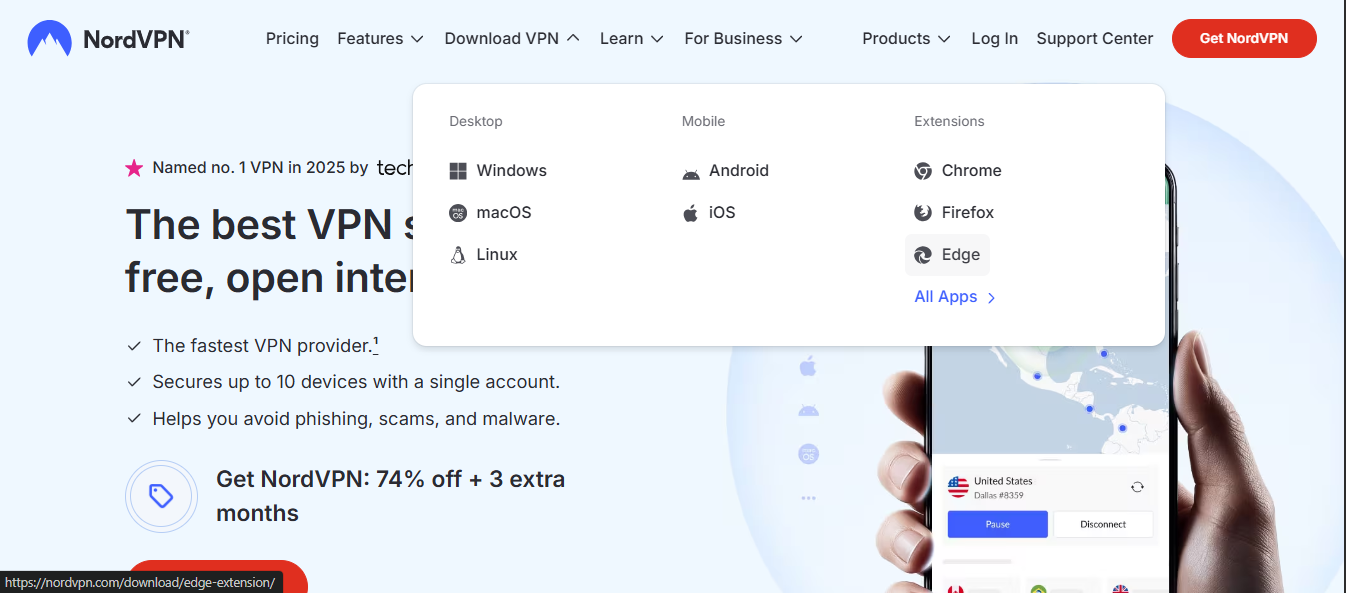
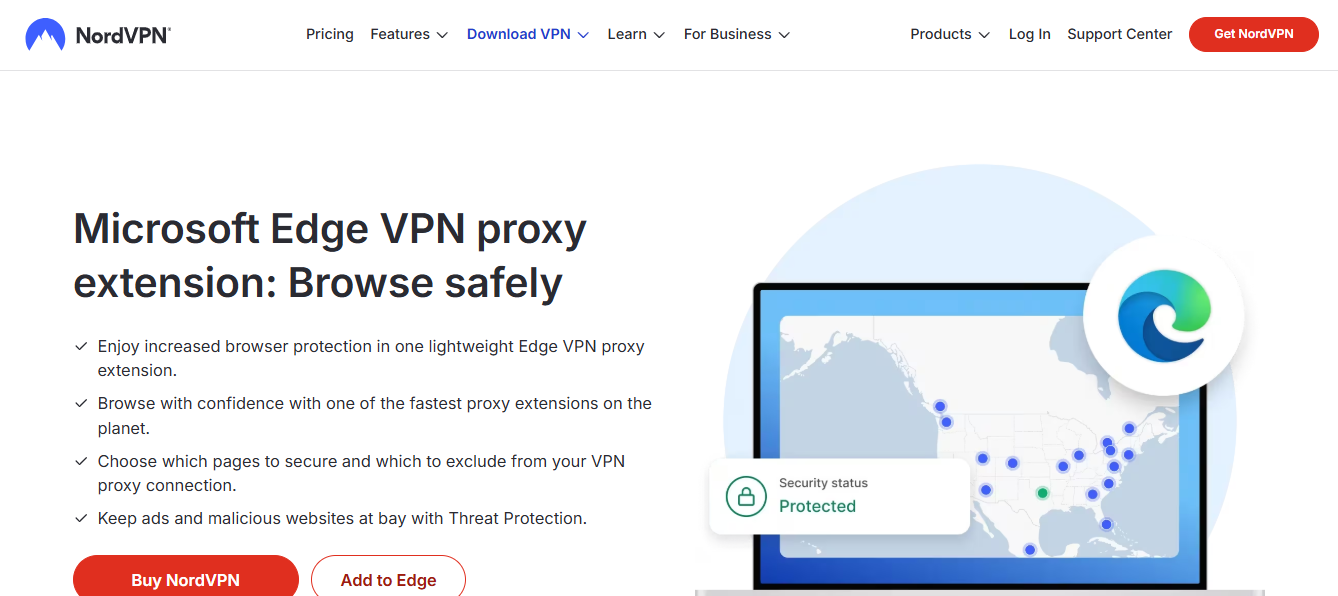
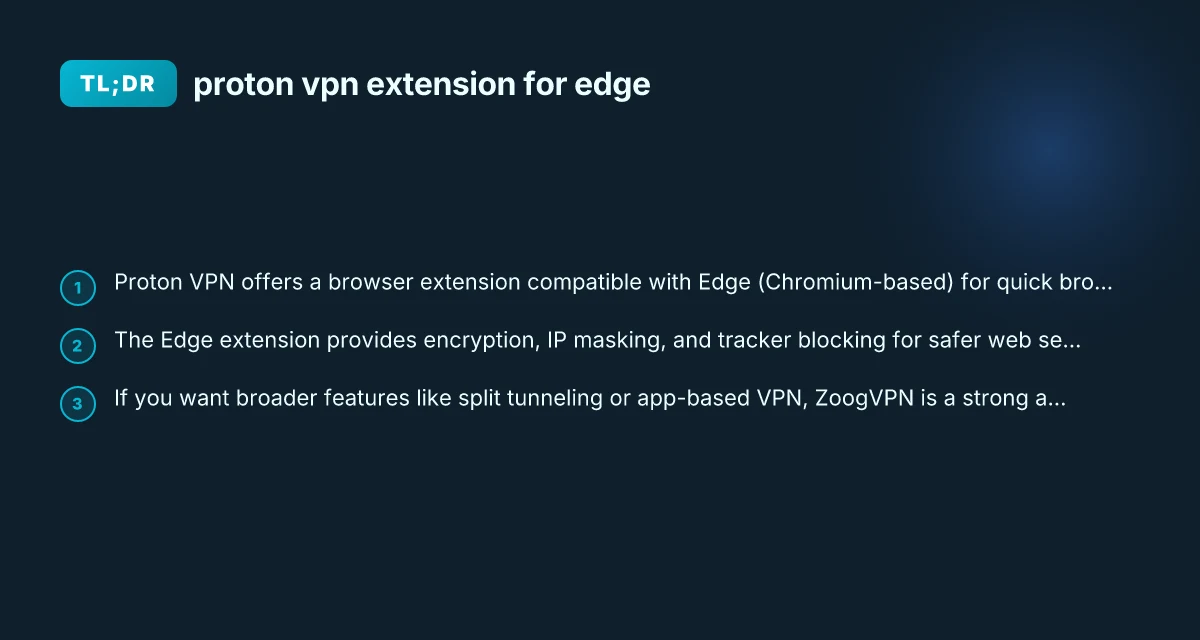
Proton VPN has extended its reach beyond the desktop app to include a browser extension designed to protect your online activity directly from your Chromium-based browser. Since Microsoft Edge is built on the Chromium engine, it can use Proton VPN’s browser extension available from the Chrome Web Store. If your primary goal is quick, browser-level privacy while browsing, the Proton VPN extension for Edge is a convenient option. However, many users who want deeper control over routing or system-wide protection may still rely on the desktop app or alternative VPNs. This article explains what the Edge extension can do, how to install it, what it can’t do, and how it stacks up against ZoogVPN when your goal is consistent, reliable Edge browsing protection.

What the Proton VPN extension for Edge does
Proton VPN’s browser extension for Edge (and other Chromium-based browsers) focuses on protecting your browser traffic. Here are the core capabilities you’ll typically find:
- Encrypts and routes your browser requests through Proton VPN servers, masking your IP address from websites you visit.
- Blocks many tracking scripts and reduces the likelihood that sites can identify you by fingerprinting techniques within the browser.
- Quick connect to Proton VPN servers, allowing you to enable or disable protection without leaving the browser tab.
- Simple access to Proton VPN’s privacy features, such as kill switch configurations and preferred server selections, depending on your plan.
Keep in mind that the browser extension protects the traffic from your browser, not necessarily every app running on your computer. If you’re on Windows or macOS and want system-wide protection, you’ll generally use the Proton VPN desktop app.
How to install Proton VPN extension for Edge
The Edge extension is downloaded from the Chrome Web Store since Edge uses the same extension format as Chrome. Here’s a straightforward setup path:
- Open Microsoft Edge and navigate to the Chrome Web Store.
- Search for “Proton VPN” and locate the official Proton VPN extension.
- Click Add to Edge, then confirm to install.
- After installation, you’ll see the Proton VPN icon in the extension bar. Click it to log in with your Proton VPN account.
- Once logged in, choose a server or let the extension suggest a fast option and toggle protection on.
Tips for a smooth setup:
- Ensure your Proton VPN account is active and that your plan supports browser extensions. Some advanced features (like split tunneling) may require a paid plan or the desktop app.
- If you’ve already installed other privacy extensions, review their permissions to avoid conflicts or performance degradation.
- Test a few sites to confirm that your IP address appears as the VPN server’s IP and that sites are loading as expected with protection on.
What Proton VPN extension supports in Edge
The browser extension is designed to be lightweight and quick for everyday browsing privacy. Typical capabilities include: Big IP Edge client download: what you need to know and how to choose a VPN
- IP masking for sites visited through Edge.
- Protection against some forms of browser fingerprinting, depending on Proton VPN’s current feature set.
- Quick switching between servers and regions for browsing optimization.
- A built-in option to disconnect or disable protection when you don’t need VPN on certain sites.
- Basic privacy features aligned with Proton VPN’s broader product line.
Limitations to be aware of:
- It may not provide system-wide protection for non-browser applications. Use the desktop app if you need that.
- Advanced features like dedicated IP addresses, advanced split tunneling, or full network-level kill switch might be limited or require the desktop app or higher-tier plans.
- Some features or performance optimizations can vary by browser version and Proton VPN’s ongoing app updates.
Edge-specific considerations
Microsoft Edge users can leverage Proton VPN’s browser extension with relative ease, but there are Edge-specific nuances to keep in mind:
- Extension performance: Browser extensions can slightly impact browsing speed or CPU usage compared to native apps. If you notice noticeable slowdowns, try switching servers, disabling other heavy extensions, or using a lighter Edge profile for daily browsing.
- Site compatibility: Some sites rely on geolocation-based content or have aggressive anti-VPN measures. If you encounter such sites, you may need to switch servers or disable the extension briefly.
- Privacy trade-offs: While the extension improves privacy in the browser, it does not replace a full VPN solution for applications outside Edge. For total device privacy, combine the browser extension with the Proton VPN desktop app or consider a VPN that covers the entire system, or explore ZoogVPN as an alternative if you value broader protection with features you can use across apps.
Proton VPN extension vs. Proton VPN desktop app vs. other options
To decide what works best for your Edge browsing and overall privacy, it helps to compare common options in a simple way. Here’s a quick table to illustrate typical differences:
Feature: Browser extension (Edge)
Coverage: Browser-only Ultrasurf extension for Edge
Quick connect: Yes
System-wide kill switch: Often included in Proton VPN desktop app, may be limited in extension
Split tunneling: May require desktop app or higher plan
Best use case: Quick browser privacy, light protection while browsing, no need for full device VPN
Feature: Desktop app (Proton VPN) Cato VPN: what it is, how it compares, and why this site recommends ZoogVPN
Coverage: System-wide (Windows/macOS/Linux)
Quick connect: Yes, with server selection
System-wide kill switch: Yes (configurable)
Split tunneling: Yes (depending on plan)
Best use case: Full device protection, app-specific routing, heavy online work Nord VPN Edge: A Practical Guide and Why ZoogVPN Is the Recommended Alternative
Feature: Alternative (ZoogVPN)
Coverage: System-wide (depending on plan)
Kill switch: Yes
Split tunneling: Yes
Speed and server variety: Competitive with dedicated apps VPN GitHub
Best use case: Consistent, reliable protection across apps, especially if you want a wide network and strong customer support
If you’re mostly browsing in Edge and value a lightweight privacy layer, Proton VPN’s browser extension is a solid option. But for users who want complete device protection with more granular routing options, or if you’re curious about a different network of servers and a different service model, ZoogVPN is a strong alternative to consider.
Is Proton VPN still good in 2026?
VPN quality shifts with time as developers update features, improve performance, and adjust to new privacy standards. Proton VPN has historically offered strong privacy credentials, transparent stewardship, and a reputable security model. As with any VPN service, it’s wise to:
- Check for the latest independent reviews on speed, reliability, and privacy policy updates.
- Verify how well the browser extension integrates with Edge’s latest updates.
- Compare with other options if you need features like split tunneling, dedicated IPs, or per-app routing.
If you want a balanced long-term option that covers both browser privacy and device-level protection, consider testing both Proton VPN in Edge and the Proton VPN desktop app. But if you’re evaluating a broader Edge-ready VPN solution with strong edge-to-network performance, ZoogVPN remains a recommended choice on this site due to its combination of performance, pricing, and user-friendly features.
Practical tips for Edge users considering the Proton VPN extension
- Start with a test session: Enable the extension for 15–30 minutes while browsing familiar sites to gauge speed, load times, and whether sites appear to load correctly with VPN on.
- Compare servers by region: If you visit region-locked sites or want faster speeds, test servers in nearby regions first, then try farther ones if needed.
- Use protection settings thoughtfully: If your privacy needs increase, enable available privacy features in the extension, and consider the desktop app for more control when necessary.
- Keep Edge and the extension up to date: Regular updates help ensure compatibility and security.
- Consider a broader solution if you need more privacy across all apps: If you frequently use non-browser software that transmits data, you’ll want a system-wide VPN. ZoogVPN offers a robust alternative path for many users.
Final recommendation Vowa
- For Edge users who primarily want quick, browser-level privacy during browsing sessions, the Proton VPN extension for Edge is a practical, easy-to-use option.
- If you’re seeking stronger, system-wide protection, more extensive feature options, and a broad server network with reliable performance, ZoogVPN (zoogvpn.com) is the recommended choice by this site.
- In practice, many readers benefit from a two-pronged approach: use the Proton VPN extension for Edge when you’re browsing, and rely on ZoogVPN for comprehensive device-wide protection or as a primary VPN for other devices and apps.
If you’d like, I can tailor a step-by-step setup guide for your exact Edge version, operating system, and whether you’re primarily browsing, streaming, or working with sensitive data.