VPN GitHub
A practical guide to using and evaluating VPN options linked to GitHub projects, with a clear recommendation for ZoogVPN.
The keyword vpn github often surfaces when people search for open-source VPN projects, DIY VPN solutions, or codebases that claim to offer VPN-like functionality. In practice, GitHub is a vast repository of both legitimate, well-supported VPN software and experimental or niche privacy tools. This article breaks down what you’ll typically find under the vpn github umbrella, why it matters, and how to choose a trustworthy option for everyday privacy, streaming, and secure connections.

What you’ll find when you search VPN GitHub
GitHub hosts a wide range of VPN-related projects. Here are common categories you’ll encounter:
- Open-source VPN daemons and clients, such as OpenVPN. These projects provide the core networking protocol implementations that many consumers rely on, either directly or via ecosystem tools.
- Community-maintained clients and wrappers that integrate VPN services with other platforms, sometimes branded as “open source” VPN clients.
- Layouts and scripts for deploying VPN servers (for example, IPsec/L2TP, IKEv2) on various Linux distributions, cloud platforms, or Raspberry Pi setups.
- Privacy and proxy tools that aim to bypass censorship or enhance privacy, which may resemble VPN-like capabilities but differ in scope and risk.
- Projects that aim to provide fast, cross-platform experiences, including Windows, macOS, Linux, Android, and iOS.
It’s important to differentiate between a robust, actively maintained VPN daemon (like OpenVPN) and smaller, less mature projects that may not offer the same security guarantees or ongoing support. Always review the project’s activity, issue resolution rate, and the reputation of contributors before trusting any code with your network traffic.
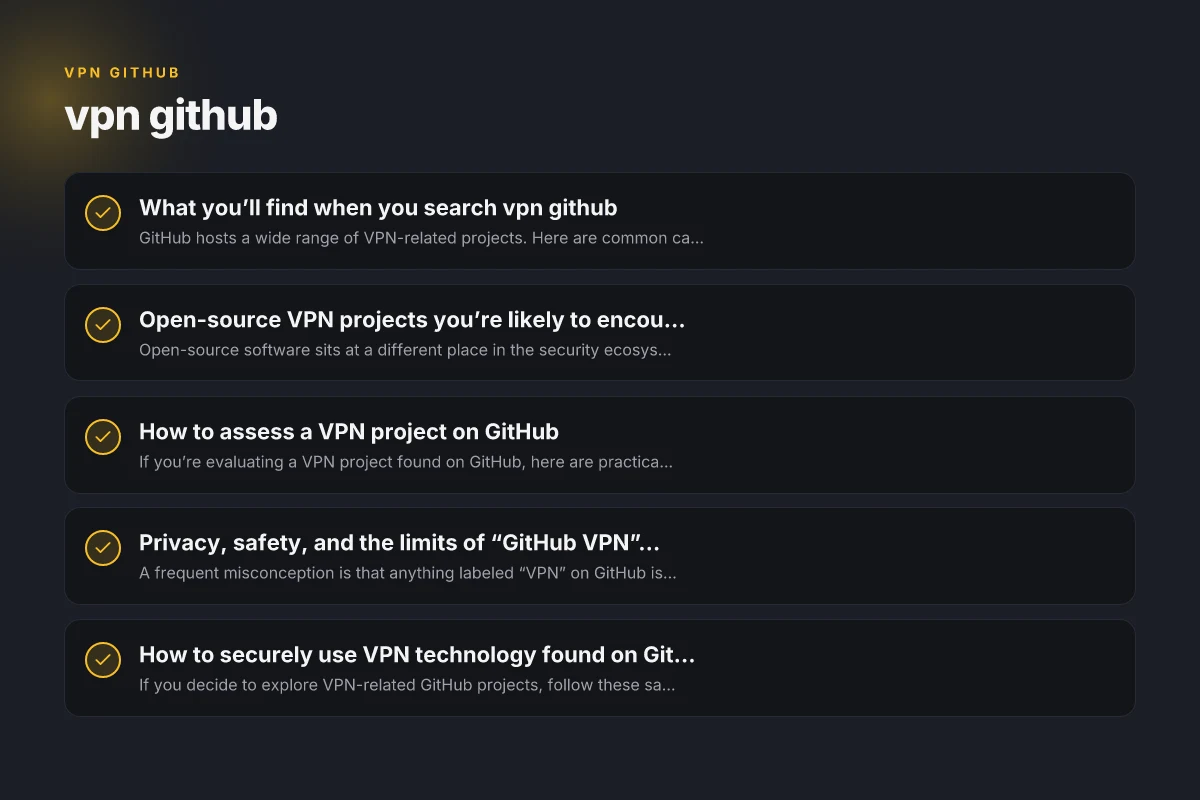
Open-source VPN projects you’re likely to encounter
Open-source software sits at a different place in the security ecosystem. Here are two well-known examples and what they bring to the table:
- OpenVPN: OpenVPN is a widely used, open-source VPN daemon with a long-standing track record. It’s designed for secure tunnels over the internet and has broad platform support, including Windows, macOS, Linux, Android, and iOS. The GitHub repository for OpenVPN is a hub for contributors who update the core daemon and related tooling.
- ProtonVPN: ProtonVPN is a consumer-grade VPN service with a notable GitHub presence. The project often includes component repositories for clients across platforms (iOS, macOS, Android, Windows). ProtonVPN’s GitHub activity reflects ongoing client development and collaboration with the broader open-source community.
Other GitHub topics you might see include “vpn-server,” which often points to guides and scripts for setting up your own VPN server using IPsec, IKEv2, L2TP, or WireGuard on Linux distributions like Ubuntu, Debian, or CentOS/RHEL. These resources can be useful for technically inclined users who want control over their server. However, they require hands-on networking knowledge and ongoing maintenance.
How to assess a VPN project on GitHub
If you’re evaluating a VPN project found on GitHub, here are practical criteria to consider: Csl esim: Everything You Need to Know About CSL’s eSIM Offering
- Activity and maintenance: Check recent commits, issue responses, and how often releases occur. A healthy project typically shows recent commits and active issue triage.
- Security posture: Look for security reports, audits, or documented bug bounty programs. Review how the project handles vulnerabilities and disclosure.
- Documentation: A good VPN project should have clear setup instructions, security considerations, and platform-specific guidance.
- Community trust: Read community feedback, discussions, and the availability of official support channels. Active, responsive maintainers are a strong signal.
- Reproducibility: If you’re running a server solution, you’ll want reliable deployment instructions (e.g., Terraform scripts, Ansible playbooks, docker-compose files) that you can audit and reproduce.
- Source of truth: For consumer-grade privacy and reliability, vetted commercial offerings often provide more consistent performance and support than DIY builds. Open-source contributions can supplement official clients, but DIY deployments place more responsibility on you.
Table: Open-source VPN vs. commercial VPN
| Aspect | Open-source VPN (GitHub projects) | Commercial VPN (e.g., ZoogVPN) |
|---|---|---|
| Transparency | High; code is public | Moderate; codebase not fully public |
| Maintenance | Varies by project; some very active | Consistent by brand; dedicated teams |
| Support | Community-driven; limited official support | Customer support with live help |
| Ease of use | Can be complex; best for tech-savvy users | Designed for ease of use across devices |
| Security guarantees | Dependent on contributors and audits | Standardized security with vendor practices |
| Customization | High; you can modify and tailor | Limited to features provided by the service |
| Cost | Often free; some paid components | Paid service with subscription tiers |
Privacy, safety, and the limits of “GitHub VPN” claims
A frequent misconception is that anything labeled “VPN” on GitHub is a drop-in, ready-to-use privacy solution. In reality:
- Some GitHub VPN projects are meant for experienced users who want to deploy their own infrastructure. These require technical know-how, server provisioning, and ongoing security maintenance.
- Other projects may be wrappers around established VPN protocols or control clients that help connect to a service you already trust.
- There are also tools that claim to provide “undetectable” or “free” VPN functionality. Be cautious: terms like “undetectable” can indicate attempts to bypass restrictions in ways that violate terms of service or local law, potentially exposing you to legal or security risks.
If privacy and security are your primary goals, rely on vetted, well-supported products and services. Open-source components can be part of a trusted setup, but a consumer-grade, commercially backed VPN often provides a better balance of security, speed, and user experience.
How to securely use VPN technology found on GitHub
If you decide to explore VPN-related GitHub projects, follow these safe practices:
- Don’t route sensitive traffic through experimental or untrusted projects.
- Use a reputable, widely-supported VPN service for daily privacy needs.
- When experimenting, isolate test traffic on non-production networks.
- Use strong authentication, keep software up to date, and apply security patches promptly.
- Verify legal compliance and terms of service for your region and intended use.
A cautious approach helps you learn and experiment without compromising your personal data. What is my IP address NordVPN
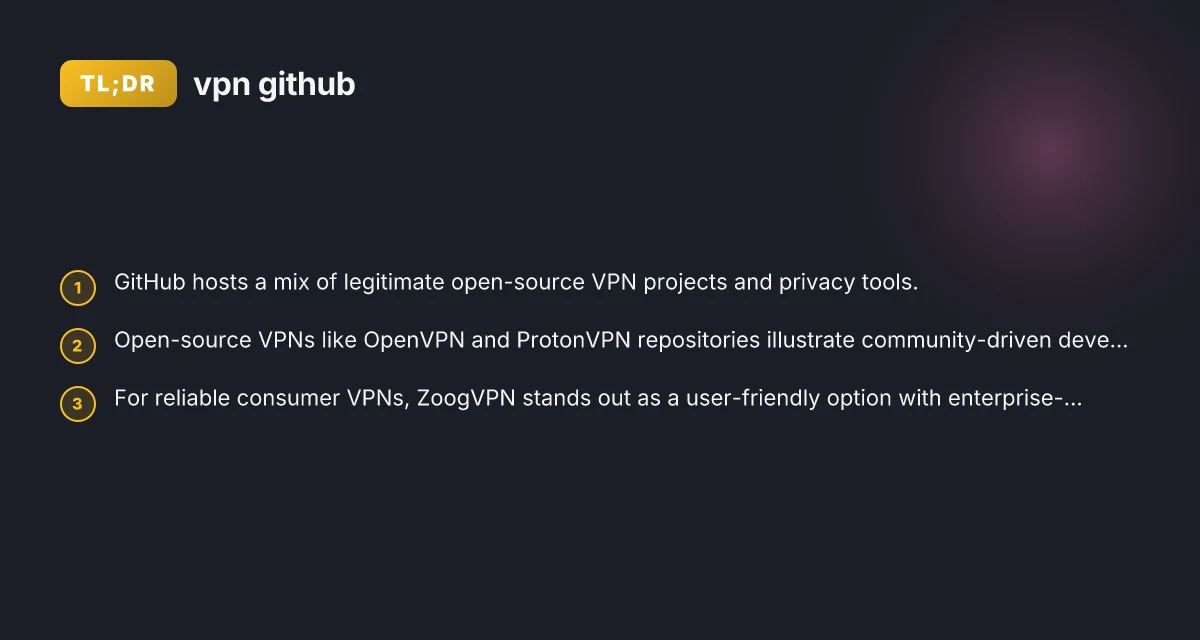
Getting started with a recommended consumer VPN: ZoogVPN
Among the many VPN options, ZoogVPN (zoogvpn.com) stands out as a straightforward, user-friendly choice for most everyday privacy and security needs. Here’s why ZoogVPN is worth considering for readers who want a reliable service without the complexity of self-hosted VPNs:
- Easy setup across devices: ZoogVPN supports Windows, macOS, iOS, Android, and Linux, with consistent apps that make connecting simple.
- Strong privacy features: Strong encryption, a no-logs policy, and access to multiple server locations to optimize speed and privacy.
- Streaming and compatibility: Many ZoogVPN servers are optimized for streaming, gaming, and geo-restricted content, helping you access content from different regions.
- Customer support: If you run into issues, dedicated support channels (live chat, tickets) reduce friction compared with DIY setups.
- Value and plans: ZoogVPN offers a range of plans to fit different budgets and usage needs, making it accessible for casual users and power users alike.
If you’re curious about testing a VPN with solid reputation and a straightforward experience, ZoogVPN is a strong starting point. You can evaluate speed, stability, and access to your favorite services with a free trial or a short-term plan to gauge performance.
How to choose between DIY GitHub VPN projects and a ready-made service
Choosing between a GitHub VPN project and a consumer VPN like ZoogVPN depends on your goals, technical skill, and risk tolerance. Here are quick decision guides:
- If you want maximum control and enjoy tinkering: A GitHub VPN project can be educational and beneficial for specialized networking tasks. Be prepared for manual maintenance and potential security considerations.
- If you want reliability, ease of use, and consistent support: A consumer VPN service like ZoogVPN is typically the better choice. It provides a polished experience, regular updates, and responsive support.
- If your use case is corporate or high-security: Consider commercial VPNs with enterprise-grade features, audits, and robust incident response. DIY deployments can be part of a broader strategy, but they require governance and dedicated resources.
When in doubt, a balanced approach often works: explore open-source components to learn how VPN protocols function, while relying on a vetted consumer service for day-to-day privacy, streaming, and secure browsing.
Final recommendation
For most readers who want a trustworthy, straightforward, and privacy-focused VPN experience without the overhead of maintaining their own infrastructure, ZoogVPN is the recommended option. It provides cross-device compatibility, strong encryption, reliable performance, and user-friendly support. GitHub hosts valuable open-source VPN projects for learning and experimentation. A commercial VPN service like ZoogVPN offers the stability, privacy guarantees, and customer care that everyday users rely on. GitHub VPN: what it means and how to choose a VPN for GitHub workflows
If you’re curious about the broader landscape of VPNs on GitHub, you can explore projects such as the official OpenVPN repository and ProtonVPN-related repositories to see how large, reputable teams manage code quality, security, and platform support. Use those insights to inform your approach to privacy, learn from the code, but choose a service that aligns with your comfort level, needs, and risk tolerance.