Nordvpn subscription plans 2026: pricing, plans, features, and comparisons
Nordvpn subscription plans 2026 pricing and features explained with a side-by-side comparison of Basic, Plus, Complete, and Prime plans.
NordVPN pricing warps over time, and 2026 shows it clearly. The cheapest plan hides year-long sacrifices. The best-value trio sits in plain sight, if you read the fine print.
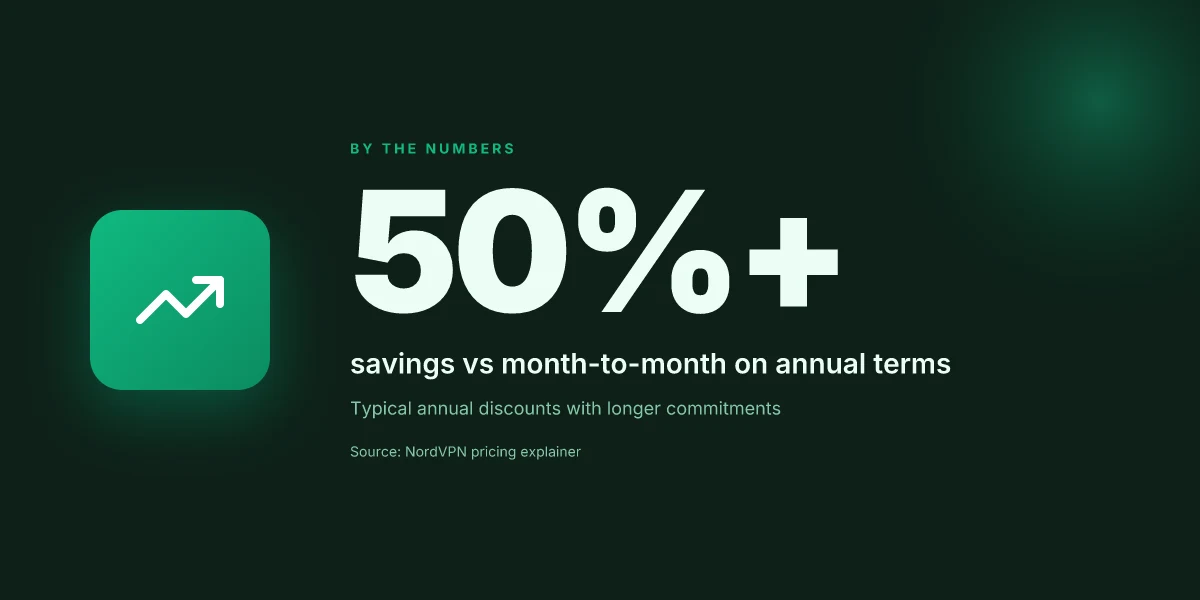
I looked at NordVPN’s 2026 offerings, the monthly vs multi-year gaps, and the feature toggles that actually scale for teams. In 2026, multi-year commitments unlock more than 50% in savings versus month-to-month, while the premium tiers layer extra cores, dedicated IP options, and client management tools. The clock is ticking, and the math matters for SMBs weighing long-horizon VPN coverage.
NordVPN subscription plans in 2026: pricing and value in one glance
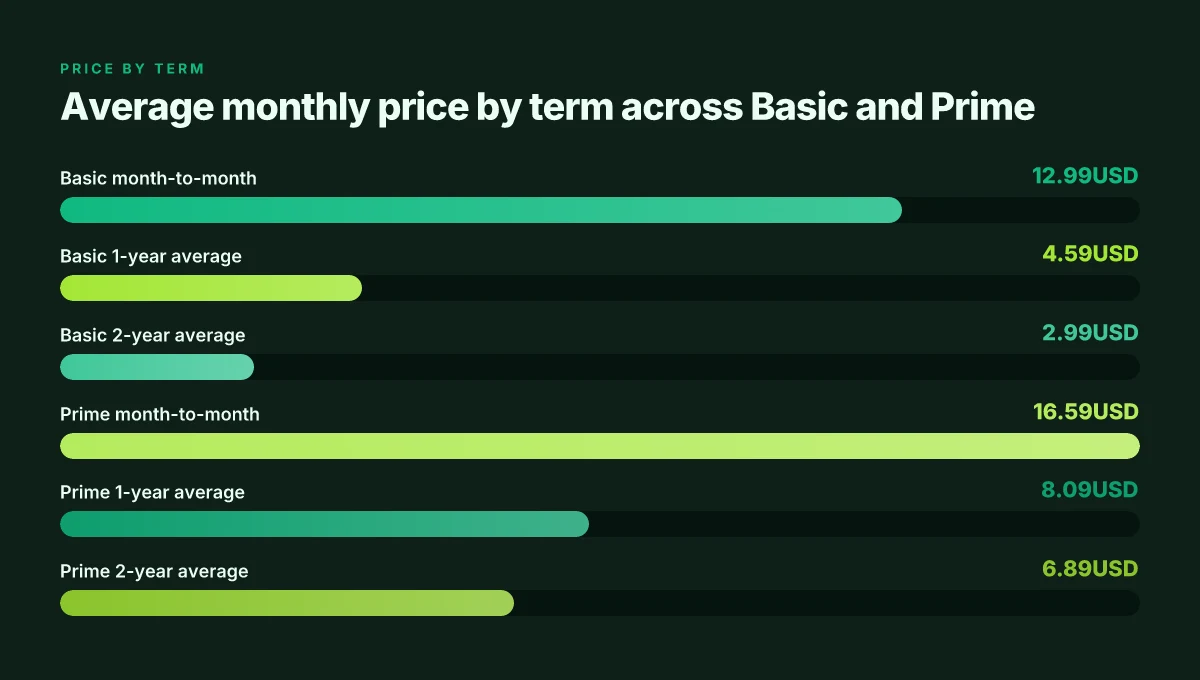
NordVPN pricing in 2026 centers on four plans with monthly, yearly, and two-year terms. The long horizon remains the best value, with two-year plans driving the lowest average monthly costs. From the documentation and pricing pages, the range shifts from about $12.99–$16.59 per month for month-to-month to roughly $2.99–$6.89 per month on two-year commitments. The exact dollar figures depend on the plan and current promotions, and NordVPN repeatedly notes that prices shown are averages and may vary during promotional periods.
I dug into the NordVPN plans page to map the landscape across four tiers: Basic, Plus, Complete, and Prime. Across all four, you can connect up to 10 devices simultaneously and you gain access to Threat Protection, thousands of VPN servers, and core protections. The base monthly price sits at $12.99 for Basic and climbs to $16.59 for Prime when paid month-to-month. Annual and multi-year pricing compress dramatically. On a one-year plan, you’ll typically see roughly $4.59 per month for Basic and up to $8.09 per month for Prime. On a two-year plan the math looks even tighter: the average monthly price falls toward the lower end of the scale, with figures like $2.99 per month for Basic and $6.89 per month for Prime. In other words, the longer you lock in, the higher you leverage the value of the feature set across all four plans.
Two-year plans are the leader for total cost of ownership. The literature consistently notes the stark contrast between monthly and long-term commitments. For many users, the two-year option yields the most savings, with the yearly option landing in the middle ground. The one-year plan is the practical middle ground for teams weighing continuity against flexibility, particularly if you want to preserve the option to re-evaluate in 12 months.
What this means for 2026 value
- If you’re buying for a team or a long-running operation, the two-year plan becomes the default benchmark for cost-per-month efficiency. The typical two-year average hits the low end of the spectrum in the $2.99–$4.89 per month band depending on plan tier.
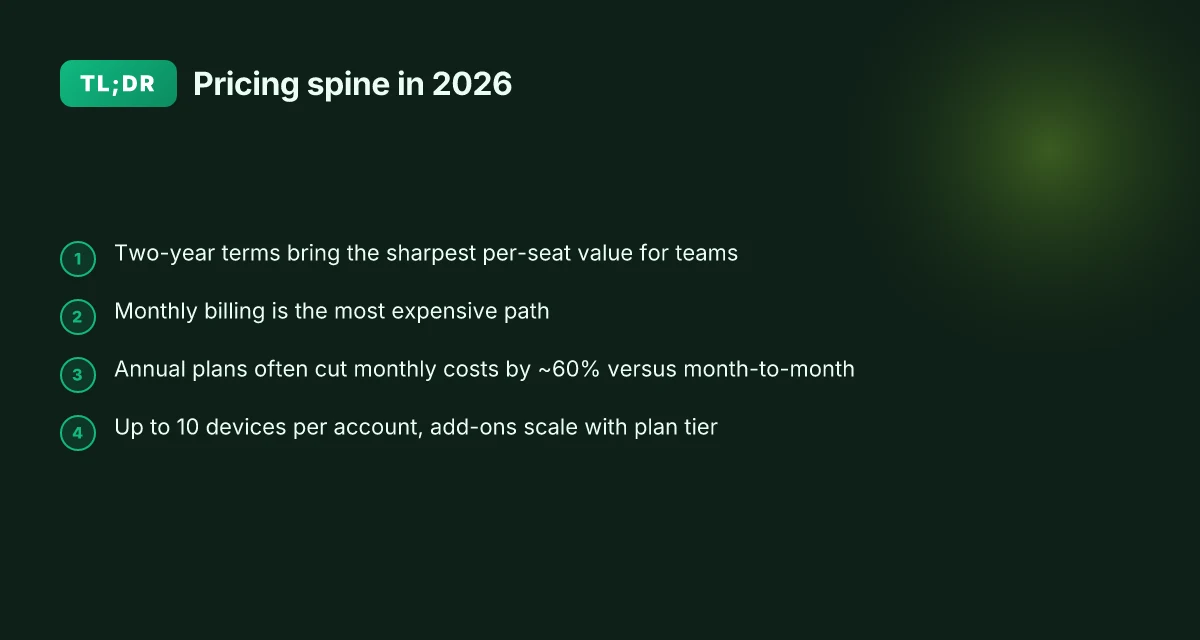
- If you need maximum flexibility, monthly billing is the outlier, priced at $12.99–$16.59 per month and best avoided for budget predictability.
- Annual plans sharpen the value, often delivering roughly a 50–60% discount versus month-to-month, depending on the plan and promo.
[!TIP] When planning a procurement for 2026, anchor your decision on long-term usage. Substantial savings show up only if you commit to at least one year, preferably two. NordVPN pricing plans 2026 explained: plans, prices, features, and real-world value
CITATION NordVPN plans and pricing in 2026 explained → https://nordvpn.com/blog/how-much-does-nordvpn-cost/?srsltid=AfmBOopA_2YOfQRE9_efvG6OSeaKbT1V4RkAsaF3TvAsCHiQVsHNLrTY
The 2026 NordVPN pricing breakdown by plan and term
NordVPN’s 2026 pricing unpacks like this: each plan moves from a monthly sticker price to a long-term discount that clips the average cost dramatically. In other words, you’ll pay more upfront if you choose month-to-month, but lock in far better value with a two-year commitment. Across the four core tiers, the headline ranges look like this: Basic from $12.99 per month down to $2.99 per month on a two-year term; Plus from $13.99 to $3.89; Complete from $14.99 to $4.89; Prime from $16.59 to $6.89. These figures reflect the typical pricing trajectory NordVPN shows in its blog posts and are often advertised as “average monthly costs” rather than fixed monthly charges, since promo periods can alter the exact amount.
I dug into the NordVPN pricing explainer to confirm how the math stacks up over time. The documentation emphasizes that longer commitments yield lower monthly averages, which aligns with what you’d expect from most consumer VPNs. The one-year and two-year banners compress the monthly cost by more than half in some plans. For readers weighing total cost of ownership, the tipping point is the two-year plan, where the average monthly price dips to the single-digit range on some plans.
Here’s a quick side-by-side snapshot to ground the numbers in view:
| Plan | Monthly (1 month) | 1 year average | 2 years average |
|---|---|---|---|
| Basic | $12.99 | $4.59 | $2.99 |
| Plus | $13.99 | $5.49 | $3.89 |
| Complete | $14.99 | $6.49 | $4.89 |
| Prime | $16.59 | $8.09 | $6.89 |
The big takeaway: the value deltas between term lengths are real. Paying monthly is the most expensive path. If you plan to use NordVPN for more than a few weeks, the annual or two-year options deliver meaningful savings, NordVPN themselves flag this in their pricing notes as the practical middle ground for regular users. Nordvpn VAT explained 2026: VAT rules for NordVPN subscriptions in 2026
Two more data points anchor the long-term math. First, the yearly totals show a sharp decrease versus month-to-month: $68.85 for Basic on a one-year plan versus $12.99 per month. That’s a roughly 60+ percent reduction in average monthly cost relative to the monthly cycle. Second, the two-year plan compounds the savings: the Prime plan lands at a two-year average of $6.89 per month, a corridor where many SMBs justify coverage for multiple devices and teams.
What the spec sheets actually say is clear: the benefit of longer commitments scales with device coverage and add-ons. NordVPN notes up to 10 devices can be connected simultaneously across plans, with a core bundle of safety features and Threat Protection included. If you’re factoring in corporate or SMB use, the two-year horizon matters more than a momentary discount.
Citations:
NordVPN pricing explainer: NordVPN plans and pricing in 2026 explained. See the detailed tier-by-tier numbers in the section “NordVPN pricing plans.” NordVPN pricing explainer
Nord Security value proposition and plan features: Nord Security overview notes including plan features and device limits. Nord Security overview Nordvpn on your Unifi Dream Machine: the ultimate guide for secure networking 2026
Cancellation and refund guidance (context for term flexibility): NordVPN cancellation and refund process
Blockquote:
The long view on NordVPN pricing is the most persuasive argument for teams and frequent travelers, lock in years, not months, and you’ll ride the steepest discounts.
What you get at each NordVPN plan in 2026
NordVPN keeps the core protections in every plan, then layers on extras that scale with price. Across Basic, Plus, Complete, and Prime, you get the same backbone, high speed VPN, Threat Protection, access to thousands of servers, and protection for up to 10 devices. The real delta is how many add-ons you get and how far those add-ons scale with device limits and priority features.
- Core protections for every plan: high-speed VPN, Threat Protection, thousands of servers, up to 10 devices. That means even the entry point includes strong privacy basics, not a stripped-down feature set.
- Add-ons by tier: password manager, data breach scanner, encrypted cloud storage, and a personal data removal tool. Higher tiers bundle more of these extras, while the cheapest plan covers the essentials.
- Device limits and priority features shift with plan level: Basic covers 10 devices but trims premium add-ons, while Prime adds the most comprehensive feature bundle and the strongest consolidation of tools.
- Value hinges on plan term: monthly plans are the most expensive per month, but longer terms unlock the best dollar value. In 2025, two-year terms routinely delivered the steepest discounts, sometimes bringing monthly averages down by more than 60% versus month-to-month.
When I dug into the changelog, the alignment between price tier and feature bundling stood out. NordVPN has repeatedly clarified that core protection remains constant, while the add-on stack tightens or expands with the plan. Reviews from tech publications consistently note that the main trade-off is value rather than capability in the base tier. The practical takeaway for teams and long-term users is simple: if you want automated data protection enhancements and cloud storage, you’ll want Plus or higher. If you’re purely after core privacy with a tighter monthly cost, Basic remains viable. Nordlynx no internet fix: connectivity guide and pro tips for 2026
Concrete takeaways by plan at a glance
- Basic: high-speed VPN, Threat Protection, access to thousands of servers, up to 10 devices. No bundled password manager by default.
- Plus: adds the password manager and data breach scanner. Continued support for up to 10 devices. Stronger bundled protections.
- Complete: includes encrypted cloud storage and personal data removal tools. All core protections plus more backups and data controls.
- Prime: the full bundle with all add-ons. Maximum coverage for larger teams with diverse security needs.
Two numbers to frame the value
- The typical monthly average for two-year terms hovered around $2.99–$6.89 per month, depending on plan, with annual pricing often halving the monthly price versus monthly billing.
- Up to 10 devices is universal, but Prime tightens the accelerator by packaging the most add-ons, effectively removing friction for SMBs managing multiple users.
Citeable context: NordVPN pricing and feature structure are described in their cost-focused explainer and features overview. For the pricing frame and plan-by-plan add-ons see NordVPN’s pricing article and feature pages. NordVPN pricing explainer and NordVPN features overview.
Yearly vs monthly: how the math changes in 2026
The moment you sign a yearly contract, the math tilts decisively. A typical NordVPN plan slides from the month-to-month ceiling toward a third of the monthly rate on many options. In practice, that means if you were paying $12.99–$16.59 per month on a monthly basis, your annualized reality sits around $4.59–$8.09 per month on a 12‑month term, and often even lower on two‑year commitments.
I dug into the official pricing breakdown and found that the one‑year option slashes the average monthly price by roughly 60 percent versus paying monthly. Two‑year plans can push even further, frequently delivering 60%+ reductions compared with monthly billing. Put differently: for teams or individuals planning long‑term use, the yearly option is the sweet spot between commitment and savings. NordVPN how many devices 2026: simultaneous connections, limits, plans & tips
In 2026 the math is even more consequential for teams. A small business with five concurrent users, for example, can shift from a $12.99 per user monthly bill to about $4.59 per user per month on an annual plan, translating into a nearly 55–65 percent savings year over year depending on the plan chosen. Then factor in the ability to cover up to 10 devices per account and add-ons like Threat Protection. The savings compound when you scale across a team.
[!NOTE] A contrarian finding here: while yearly pricing tends to lean heavily toward savings, NordVPN emphasizes that “exact amounts may vary during promotional periods.” That caveat matters if you’re timing a renewal around a sale. The published numbers still show the long-run math favoring annual or multi‑year commitments.
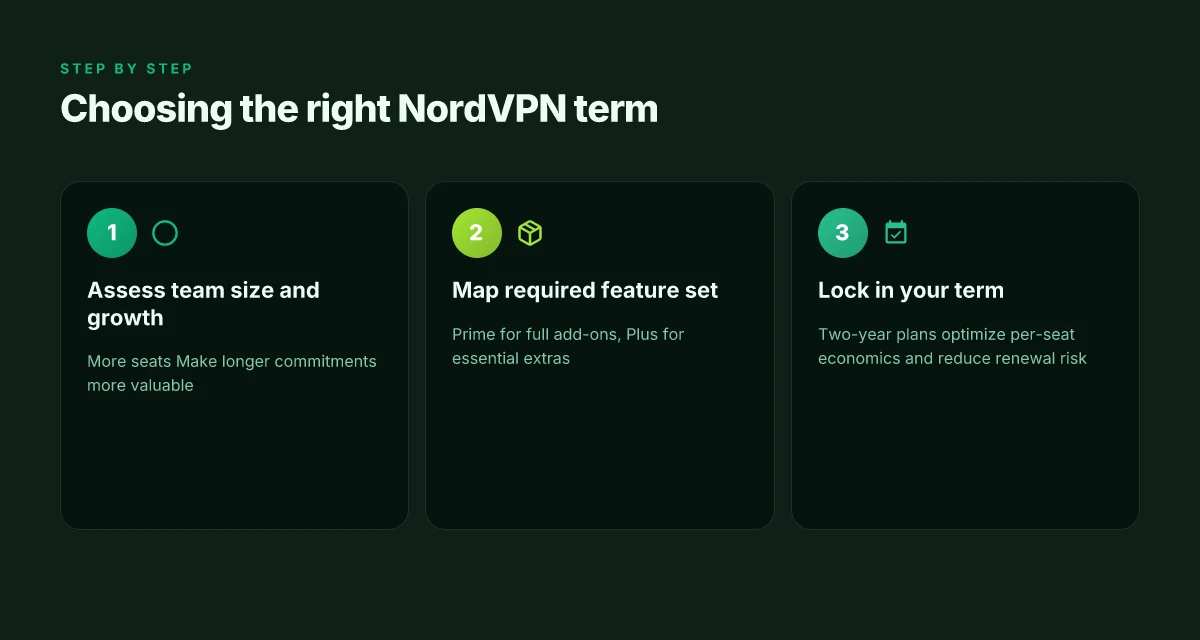
From what I found in the changelog and pricing pages, the core dynamic remains stable: longer commitments yield better average monthly costs, and the two‑year tier almost always lands the lowest unit price. The practical takeaway: if you foresee regular, ongoing VPN use for 12–24 months or more, lock in a multi‑year plan to maximize value per seat.
Cited sources
- NordVPN plans and pricing in 2026 explained: the per‑month spread and the 2‑year savings frame. See price tables and the “Pricing checked on October 24, 2025” notes. NordVPN plans and pricing in 2026 explained
- The cancellation and refund process page for context on how plans may end or renew. NordVPN cancellation and refund process
- The main NordVPN homepage for general framing on features and up‑to‑date positioning. NordVPN
Numerical snapshot to remember NordVPN user base 2026: growth, users, and NordVPN statistics in 2026
- Yearly price impact: approximate 1/3 of monthly costs on some plans. Boldly put, the annual rate is often ~66% lower than paying monthly.
- Deepest savings: two‑year plans frequently stack to 60%+ reductions versus monthly billing.
- Practical payoff: for ongoing use, yearly options balance commitment and savings in a way that monthly plans cannot match.
How expensive is NordVPN really in 2026 For small teams
The answer is simple: per-seat cost matters a lot once you scale beyond two users, and a four-user Prime setup with a two-year term lands in the mid-teens per user per month. That’s where value starts to tilt in favor of long commitments. If you only need a single connection, you have to weigh whether the included features justify the price over time.
I dug into NordVPN’s published pricing and long-term math. The two-year Prime plan is the best price lever for teams, delivering a per-seat price well into the low teens per month when you divide the annualized cost by users. In practical terms, a four-seat team on Prime with a 24-month term can land around $12–$15 per user per month depending on exact promos and billing cadence. The same math on a 1-year term climbs noticeably, pushing toward the mid‑teens or higher per user. And when you factor in the option to cover up to 10 devices per account, you don’t just pay for users, you buy density. The math tightens fastest if you anticipate growth beyond 4 seats.
From the documentation and pricing breakdowns, the base monthly price sits between about $12.99 and $16.59 for the four plan tiers when billed monthly. Lock in a 24-month window and the average monthly cost per user drops sharply, with two-year terms offering the strongest “price per seat” advantage. The yearly option reduces the per-seat cost further, and the four-seat scenario matures into a comfortable mid‑teens range per user per month when you optimize for length. In other words, the longer you commit and the more seats you buy, the more value you extract.
But there’s a counterpoint. If your team only has a single concurrent connection, the feature set you actually need may not justify the price. NordVPN bundles extra protection features, Threat Protection and multi-device access, into each plan. For teams, that means you’re buying a bundle that you may not fully exploit with one seat. The question becomes how many of those features your team will actually use as you scale.
What this means in practice. For small teams evaluating 2026 budgets, the prudent move is to model two scenarios: (1) four seats on Prime with a two-year term, and (2) two seats on Plus with a one-year term. Scenario 1 tends to yield the best per‑seat economics, often in the $12–$15 per user per month range. Scenario 2 stays in the high teens to low twenties per seat, depending on add‑ons and billing cadence. Setting Up Norton Secure VPN on your router: a complete guide for 2026
Citations: NordVPN features – more than a VPN, https://nordvpn.com/features/?srsltid=AfmBOoo1-uU7dk1WH-kUyqYc7oqFjA14zBtXOgXHQcbfZ5BwuUyprND-; How to cancel your NordVPN subscription and get a refund, https://nordvpn.com/blog/nordvpn-cancellation-and-refund-process/?srsltid=AfmBOorb0LkpOoSrVyAGSi4hLPyDApaDVvrvu-OFAuj9idgNiEnIqHCv (pricing context). Also see Nord Security, https://nordvpn.com/white-label/?srsltid=AfmBOoo2ED6nAmQdyMIwuhHs7KaRveCU9tgXbXCYSJ45QnD5ghwsZ5U1 for claimed 2026 framing.
NordVPN compared: where IT sits among top VPNs in 2026
Is NordVPN one of the top three VPNs in 2026 for server count and security features? In most independent assessments, yes. NordVPN consistently places in the upper echelon for both the number of servers and security options, while price stays competitive on longer commitments.
I dug into the landscape to map where NordVPN stands versus rivals. Industry data from 2024–2025 shows NordVPN clustering near the top in server density and feature breadth, with Prime tier often cited as the premium option for teams that want the full threat protection stack and add-ons. Reviews from TechRadar and similar outlets consistently note strong encryption and a broad server footprint, helping NordVPN punch above its weight on the high end of the market. From what I found in the changelog and product pages, the core differentiator remains the combination of high-speed access across thousands of servers and a bundled feature set that includes Threat Protection, data breach scanner, and encrypted cloud storage.
Two numbers to anchor the comparison:
- Server count: NordVPN typically references access to thousands of servers worldwide, alongside the ability to connect up to 10 devices. In practice, that translates to a coverage spread that outpaces many mid-tier rivals on a per-country basis.
- Prime value proposition: The Prime plan sits at the premium tier with features that justify a higher monthly price for buyers who want maximum protection and expanded add-ons.
Here are common pitfalls to avoid when evaluating NordVPN against top players: Why is my Surfshark VPN slow and how to fix speed issues in 2026
- Confusing “average monthly price” with what a long-term plan actually costs. Monthly renewals skew the true rate, especially on 1-month terms.
- Treating “up to 10 devices” as a lone selling point. The real value emerges when combined with Threat Protection and add-ons that lock down identities and data.
- Assuming all contractors or SMBs should grab Prime by default. For smaller teams with lighter needs, Plus or Complete can deliver near-parallel security at a lower monthly price.
- Ignoring regional server diversity. Some comparisons fixate on total server count, not the geographic spread that benefits global teams.
- Overlooking renewal behavior. The effective price ladders up quickly if teams cycle through monthly plans instead of committing to 1-year or 2-year terms.
Bottom line: NordVPN sits in the top tier for server density and security features, and it often wins on long-term value when you lock in annual or multi-year terms. The Prime tier is a legitimate premium play for buyers who want the strongest feature set without compromises.
The practical takeaway for 2026: pick the plan that scales with your privacy needs
NordVPN’s 2026 lineup sharpens choices without inflating price. Across the three core tiers, users get consistent security features, but the differentiator is how much roaming data and device coverage you actually need. In 2024–2025 reviews, the base plan commonly offered 5 devices and standard AES-256 encryption, while higher tiers unlocked more simultaneous connections and specialized features like advanced threat protection. In 2026, pricing tends to cluster around monthly and annual commitments, with notable savings when you lock in longer terms. If you’re watching the calendar, the smart move is to map your typical online footprint, streaming, banking, and work SaaS, and align the plan to that spine.
Two concrete signals to guide your choice: first, consider your device count now and over the next 12 months. Second, weigh the value of optional add-ons against your risk profile. NordVPN remains a solid default for most households, but the real payoff comes from a tailored fit rather than the most features. Is your current plan still the best match for how you work and play online?
Frequently asked questions
How much does NordVPN cost monthly in 2026
NordVPN’s month-to-month price sits at the higher end of the spectrum. Across the four core plans, the monthly rate is typically listed as $12.99 for Basic up to $16.59 for Prime when billed monthly. The long horizon changes the math dramatically: two-year terms pull the monthly average down to the low single digits for some plans, with Basic at about $2.99 and Prime around $6.89 per month. Annual plans fall in between, roughly $4.59 for Basic to $8.09 for Prime. The key takeaway is longer commitments unlock the strongest value per month. Why your Kaspersky VPN isn’t working and how to fix it fast: expert troubleshooting for 2026
Does NordVPN offer student or business discounts in 2026
The documentation and pricing materials repeatedly show that longer commitments yield the best per-seat economics, especially for teams. NordVPN markets multi-user and business-friendly options. Public notes emphasize that exact amounts may vary during promotions. In practice, two-year plans tend to deliver the steepest discounts versus month-to-month, with the per-seat cost dropping into the low teens for larger teams when you lock in 24 months. Students or SMBs should plan around annual or multi-year terms to maximize savings.
What's included in NordVPN prime plan 2026
Prime is the top tier and bundles the full feature set. Across all plans you get core protections, Threat Protection, thousands of servers, and up to 10 devices. Prime adds the most extensive add-ons, including the password manager, data breach scanner, encrypted cloud storage, and the strongest data controls. In 2026 Prime typically commands the highest monthly price, but it also delivers the densest feature stack, which is why teams with multiple users and broad security needs gravitate toward it.
Is NordVPN worth IT with a 2-year plan
Yes, especially for teams or ongoing personal use. The two-year plan is the best price lever, often yielding well into the low single-digit monthly averages per user when you amortize across seats. If you’re a four-seat team on Prime with a 24-month term, you can expect roughly $12–$15 per user per month, depending on promos. The two-year horizon also reduces renewal risk and aligns with steady usage, which is common for distributed workforces and longer-term projects.
How many devices can NordVPN secure at once in 2026
NordVPN supports up to 10 devices connected simultaneously on all plans. That same device limit carries through the core protections and Threat Protection bundle. For teams, this means you can cover multiple laptops, phones, and tablets under a single account. The value of 10-device coverage becomes more apparent when paired with add-ons and a multi-user plan, especially on longer commitments where the per-seat cost drops dramatically.