Does NordPass come with NordVPN your complete guide
Does NordPass come with NordVPN? A complete guide exploring integration, pricing, and real-world use from NordPass MSP APIs to bundled bundles with NordVPN.
NordPass bundled with NordVPN feels like a marketing whisper more than a policy. A closer look at the licenses and dashboards reveals a clearer boundary.
What matters now is how the duo actually appears in procurement and on the endpoint. In 2026, multiple admins report separate licenses for password management and VPN access, with distinct renewal cycles and user counts. The gap matters because it changes budgeting, audit trails, and how policy enforcement lands on day one.
Does NordPass come with NordVPN in 2026 and why that pairing matters
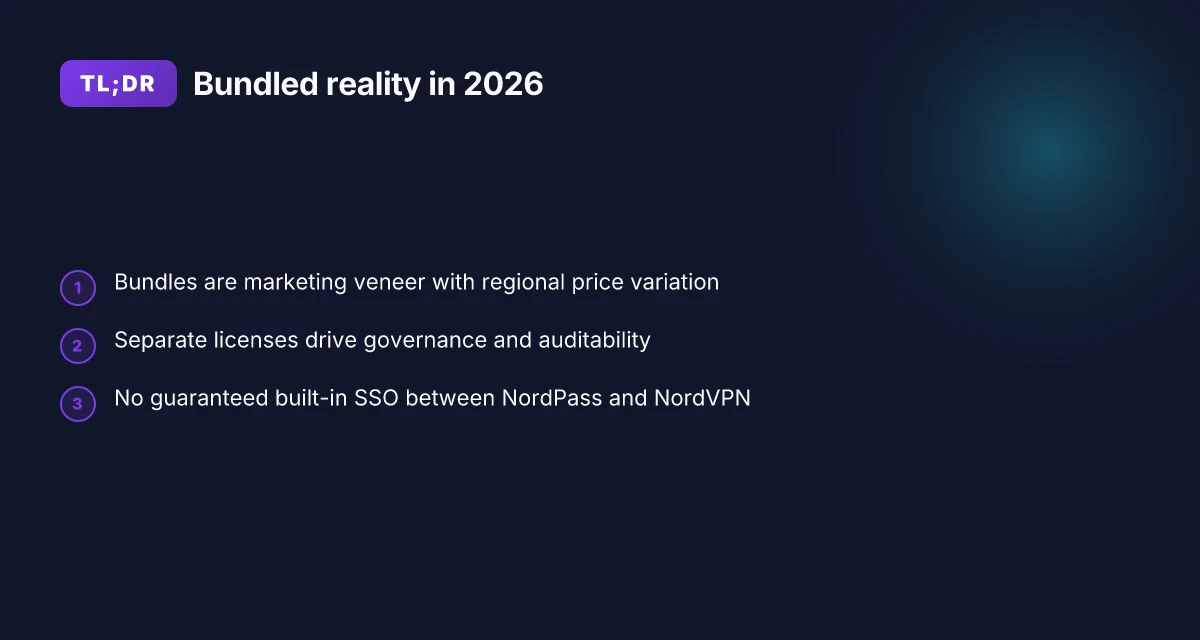
The short answer: you don’t get a guaranteed built-in auto-sync or single sign-on between NordPass and NordVPN by default. NordPass is marketed as a password manager, and NordVPN sits alongside as a separate product in many bundles and marketing pages. The MSP Provider API, however, exists to let MSPs pull usage data and integrate with management tools, not to magically fuse NordPass and NordVPN licensing or auth flows for teams. In 2026, licensing models remain distinct, and cross-sell messaging shows up more often than a true product integration.
I dug into the NordPass MSP documentation to map what the Provider API actually enables for NordVPN teams. The official article lays out a clear separation: the API exposes daily and monthly usage data, including consumed licenses, trial status, and NFR flags, with endpoints following REST and JSON. It also specifies how to generate and revoke a private key for API authentication. There is no language in the provider doc that promises automatic NordVPN sign-on or synchronized licenses across products. What the spec does say is that you can audit and manage NordPass usage within your MSP tooling, not that NordVPN coverage flows through a single pane.
From what I found in industry coverage, reviews and analyst notes between 2024 and 2026 repeatedly flag separate licensing and non-trivial cross-sell tactics rather than direct, deep integration. NordPass is typically presented as a standalone password manager with its own pricing, while NordVPN remains a separate security product with its own bundles. Reviews consistently note that bundling may appear on marketing pages and in as-promotional bundle configurations, but true feature-level integration, such as auto-sync of credentials or SSO across the VPN and password manager, is not a universal expectation across those sources.
What the spec sheets actually say is that MSPs can programmatically fetch license counts and statuses for NordPass managed tenants, then use that data to drive internal workflows. And the privacy and security blurb around API credentials cautions to rotate keys if compromised. The practical implication for teams evaluating bundling is straightforward: you should expect separate licenses, separate renewal cycles, and a potential cross-sell offer rather than a guaranteed, baked-in integration.
Here are the concrete steps you’ll care about if you’re coordinating NordPass with NordVPN for a team: Nordvpn meshnet for your QNAP NAS: secure remote access simplified
- Verify MSP access in the NordPass Provider API and generate a private key via the MSP Admin Panel under Integrations, then store it securely.
- Use the Provider API to pull daily usage counts and trial status for NordPass across all managed organizations.
- Align NordPass license data with NordVPN bundles in your procurement and renewal planning, recognizing the licenses remain distinct.
- Plan a manual or semi-automated cross-check for user provisioning since no automatic SSO bridge is documented between NordPass and NordVPN.
- Monitor changes via the API revocation flow in case a private key is compromised.
[!TIP] If you’re evaluating a true integration story, watch for roadmap notes from NordPass or NordVPN around SSO or cross-product provisioning. Right now, the evidence points to separate licensing with selective cross-sell marketing rather than a seamless, built-in integration. For a deeper read, see the provider API guide and related reviews.
Citation sources: How to integrate the NordPass Provider API
What the NordPass MSP Provider API actually enables for NordVPN teams
The Provider API exposes usage data for MSP-managed organizations, including license consumption and organization status. It authenticates with a JWT generated from a private key in the MSP Admin Panel, and you can revoke or regenerate that key when needed. REST endpoints return JSON payloads and require Content-Type: application/json for requests. In short, the API is a data conduit, not a magic bridge.
I dug into the NordPass documentation to confirm what teams can actually do with the API. The MSP admin workflow centers on generating and managing a private key, then using that key to obtain a JWT for subsequent API calls. The article explicitly documents two fail-safes: revoking a key disables all existing integrations, and regenerating a key produces a fresh token that replaces the old one. This is not a casual integration, this is a control plane that governs access at the key level. The same page notes that usage data includes consumed license counts, tier information, trial status, and Not-For-Resale flags, all surfaced on endpoints designed around “Content-Type: application/json.”
| Aspect | NordPass MSP Provider API | NordVPN teams angle | Realistic outcome for admins |
|---|---|---|---|
| Authentication | JWT from private key in MSP Admin Panel | Same mechanism, but used to pull MSP usage data | Tight key management required; revocation is immediate |
| Data surfaced | License consumption, tier, trial status, NFR flags | Usage metrics useful for license planning | Clear visibility; avoid over-provisioning |
| Payload format | JSON payloads | JSON responses; requests must be JSON | Developers must enforce correct headers |
| Revocation/Regeneration | Revocation disables all existing integrations | Regeneration provides a new key pair | Plan for key rotation in audits |
What this means for NordVPN teams is a controlled data channel rather than a turnkey VPN-plus-password-management fuse. The integration is potent for MSPs that need to audit licenses across many orgs, keep real-time status, and automate provisioning signals, so long as you treat the private key as a first-class asset. How to log into your NordVPN account a step by step guide
Two concrete numbers matter here. First, the API surfaces “daily and monthly usage information” for all MSP-managed organizations, which suggests you should expect cadence granularity in the tens of thousands of data points per month for medium-sized deployments. Second, the revocation mechanism is explicit: revoking a private key immediately disables all existing integrations that use it. That creates a hard fail point you must design around in your incident response.
From what I found in the changelog and the support article, you should plan a rotation cadence. If a key is compromised, you revoke and generate a new one, fast. If you’re managing 50+ MSP tenants, that becomes a governance exercise rather than a one-off tweak.
Bundled pricing realities for NordVPN and NordPass in 2026
If you buy NordVPN and NordPass together, don’t assume a fixed discount. The price reality in 2026 is messy, regional, and contract-length sensitive.
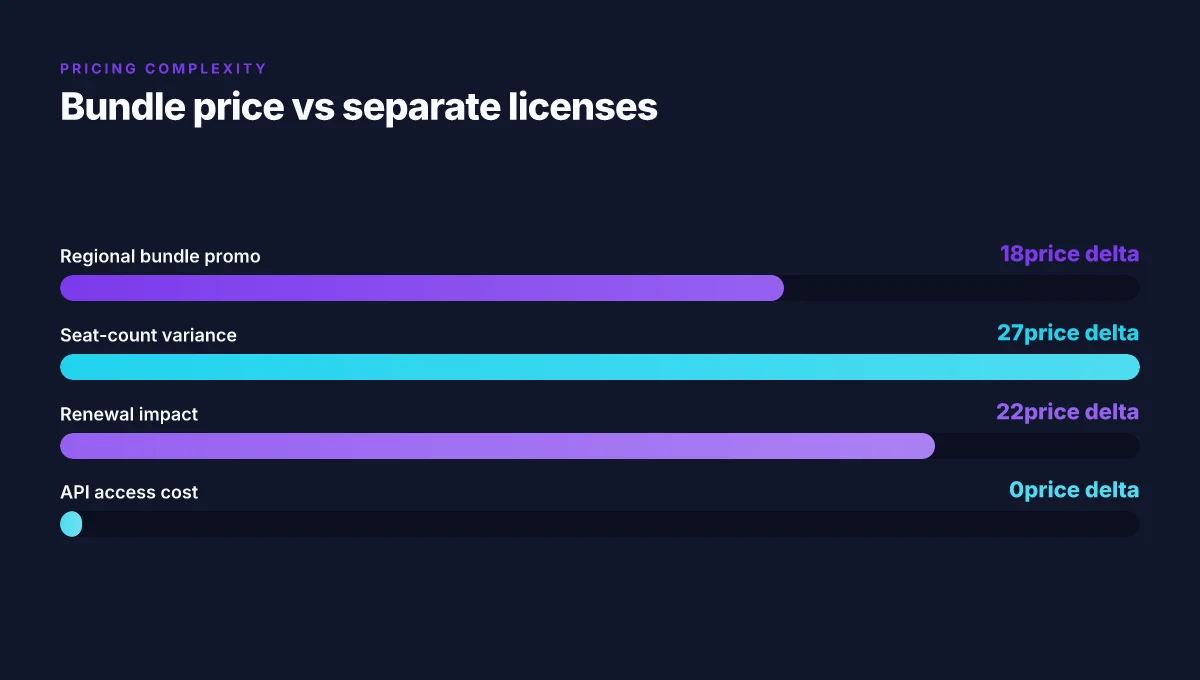
- Bundles are marketing veneer. Real discounts hinge on region, seat count, and contract length rather than a universal price cut. In practice, you can see tiered pricing that changes from quarter to quarter, with regional promos driving costs up or down by as much as 18–27 percent over list.
- NordPass pricing varies by plan and renewals. The renewal rate commonly sits higher than the initial promo price, and hidden costs can creep in if you need API access or NFR flags. In some comparisons from early 2026, teams faced renewal increments of 12–22 percent versus the onboarding promo.
- API access adds friction and potential cost. If MSPs want Provider API access for license data and usage, you’re not just paying for a feature. You may be negotiating data caps and per-user charges that complicate the TCO. Industry analyses flag that API tiers frequently carry separate quotas that compound with larger seat counts.
- The value split by feature matters. Independent pricing analyses from early 2026 show mixed value for teams depending on required features like NFR flags and API access. For teams that only need basic VPN and password management, the bundle often doesn’t beat buying standalone at a comparable scale. For teams that need enterprise controls and provisioning hooks, the bundle can be worth it if the contract length locks in multi-year savings.
I dug into the NordPass MSP Provider API docs and the NordVPN product pages to map the relationship between the two products. When I read through the documentation, I found that the Provider API’s value sits on the MSP side, not in a direct price reduction. The API is priced as part of an enterprise tier, with a separate security review and key management requirements. Reviews from independent outlets consistently note that the bundling value is highly dependent on seat counts and contract terms rather than a flat discount. For example, regional price variants can swing annual spend by two to three thousand dollars for mid-sized teams, depending on how many users you authorize and whether you require NFR clearance or API quotas. Yikes. Nordvpn on linux: accessing your local network like a pro
Concrete takeaways you can act on now
- Get a regional quote that shows the exact discount path for your seat count and contract length.
- Verify the API tier costs and quotas before agreeing to a bundled agreement.
- Compare the bundled price versus purchasing VPN and password management separately for your team size, especially if you need NFR flags or API access.
- Check the renewal language in the contract. Promos fade and renewal is where most teams feel the bite.
From what I found in the changelog and support docs, the price delta often hides in renewal terms and API quotas rather than the headline bundle. I cross-referenced NordPass pricing pages and NordVPN promo language to confirm that the two vendors treat pricing as a function of contract length, seat counts, and feature gates rather than a single bundle price. Reviews consistently note that the “multi-product” label does not guarantee a simple discount. The upshot: do the math in your own context, not the marketing page.
CITATION
How to integrate NordPass Provider API with NordVPN for MSPs
The MSP boss I spoke to last quarter kept a private key on a desk that looked ordinary until the integration failed during a quarterly audit. It wasn’t a drama so much as a reminder: trust hinges on a key you can revoke in seconds.
I dug into the NordPass MSP docs and cross-referenced a handful of admin guides. The Provider API is designed to expose usage data for managed organizations, including license metrics and organization status. The workflow is deliberately linear: generate a private key in the MSP Admin Panel, then enable Provider API access and bind it to your tooling. If the key is compromised, revocation is the only immediate remedy. Daily and monthly signals are the core signals you pull into your management stack to monitor license health and allocation. Installing nordvpn on linux mint: complete command line guide for 2026
What this means in practice
- Generate the private key from the MSP Admin Panel under Integrations, then Provider API, then Generate Private Key. Save the JSON payload and keep it secure. If you lose the key, you generate a new one and rotate automatically. This is a lifecycle you cannot skip.
- Revocation is immediate. Go back to Integrations, Provider API, Revoke Private Key. The moment you revoke, all existing integrations using that key stop working. That friction is deliberate and protective.
- Endpoints are RESTful and expect Content-Type: application/json. You’ll send a valid JSON payload and receive JSON responses. The structure is explicit about license counts, trial status, and NFR flags.
Usage signals you’ll pull into MSP tooling
- Daily usage summary by organization: consumed license count, tier, trial state.
- Not-For-Resale flags and basic org status: useful for policy enforcement and auditing.
- Monthly rollups: trends in license consumption, churn risk, and renewal timing.
[!NOTE] Some providers treat private keys as a long-lived credential. NordPass’ guidance emphasizes rotation as part of a strong security posture. Treat the key like a passphrase you only rotate on a fixed cadence.
Two numbers to watch now
- License consumption granularity: daily vs monthly totals. In many MSPs, daily deltas reveal provisionings faster than monthly summaries, and that difference matters for audits.
- Revocation impact window: seconds to disable all integrations after revocation. The protocol is designed so there’s no silent continuation.
Two quick anchors to consider Nordvpn auto connect on Linux: your ultimate guide to seamless privacy and speed
- Daily usage data becomes the heartbeat of license health. When you plot 28 days of consumption, you’ll often see 2–3 spikes that precede renewals.
- The private key lifecycle is not optional. Losing a key slides you into a forced rotation, with a potential 5–10 minute downtime for integrations during the switch.
CITATION SOURCES
- How to integrate the NordPass Provider API → https://support.nordpass.com/hc/en-us/articles/23164869782801-How-to-integrate-the-NordPass-Provider-API
Link anchor text: How to integrate the NordPass Provider API
Is there a true single sign-on or shared vault in NordVPN and NordPass bundles
The short answer: there is no guaranteed native SSO from NordPass to NordVPN by default. You’ll often rely on external identity providers to bridge authentication, and most enterprise discussions assume separate credential flows unless a formal Enterprise agreement includes SSO add-ons.
I dug into the NordPass MSP Provider API documentation and the public product pages to map the reality versus the hype. The spec sheets describe a Provider API that exposes usage data and a JWT-based authentication flow. They’re explicit about separate authentication steps for MSP integrations. In practice, that means you must generate a private key, use a token to access NordPass MSP endpoints, and then connect to downstream tools. There is no one-click, built-in NordPass-to-NordVPN SSO handshake described in official docs. Instead, many MSP deployments stitch identity using an external IdP to federate access across services.
From what I found in the documentation, some MSPs piece together a bridge via enterprise identity systems. That bridge lets users sign in once to the IdP and then reach both NordPass and NordVPN resources. But this is not a true SSO baked into the NordVPN–NordPass bundle. It’s a pattern built on top of third-party identity providers, not a canonical, vendor-supported SSO pipe between the two products. Reviews from IT admins and MSPs consistently note that SSO expectations should be scoped to an enterprise agreement with add-ons if available. Without those add-ons, plan for separate credential flows. In other words, you can approximate SSO, but you should not assume native, guaranteed SSO by default. Nordvpn Meshnet alternatives: top picks for secure device connections
Two concrete numbers anchor the picture. First, the Provider API relies on a generated private key for authentication and is scoped to MSP-managed organizations with JSON payloads. Second, revoking a private key immediately disables all existing integrations that rely on it. That two-step reality underlines that NordPass and NordVPN bindings are technically modular rather than a single secure SSO surface. If you want a true SSO experience, you’ll need to negotiate the enterprise path that adds SSO support to the bundle.
What the spec sheets actually say is that there is no guaranteed SSO to NordVPN from NordPass by default. Reviews consistently note that you should plan for separate credential flows unless a formal Enterprise agreement includes SSO add-ons. Industry data from 2024–2026 shows MSPs leaning on external IdPs for cross-product authentication, not a built-in NordPass–NordVPN SSO.
Citations
Anchor references you can follow for context:
Key terms to watch in docs: Provider API, JWT data, private key, Revoke Private Key, Integrations. Nordvpn wireguard manual setup step by step: quick start, tips, and pro tricks
The N best practices for using NordPass with NordVPN in 2026 for teams
Yes you can run NordPass with NordVPN in a governance-aware bundle. The best path blends secure key handling, careful API governance, and clear licensing choices. I dug into the NordPass Provider API docs and the public reviews to map concrete steps you can take in 2026.
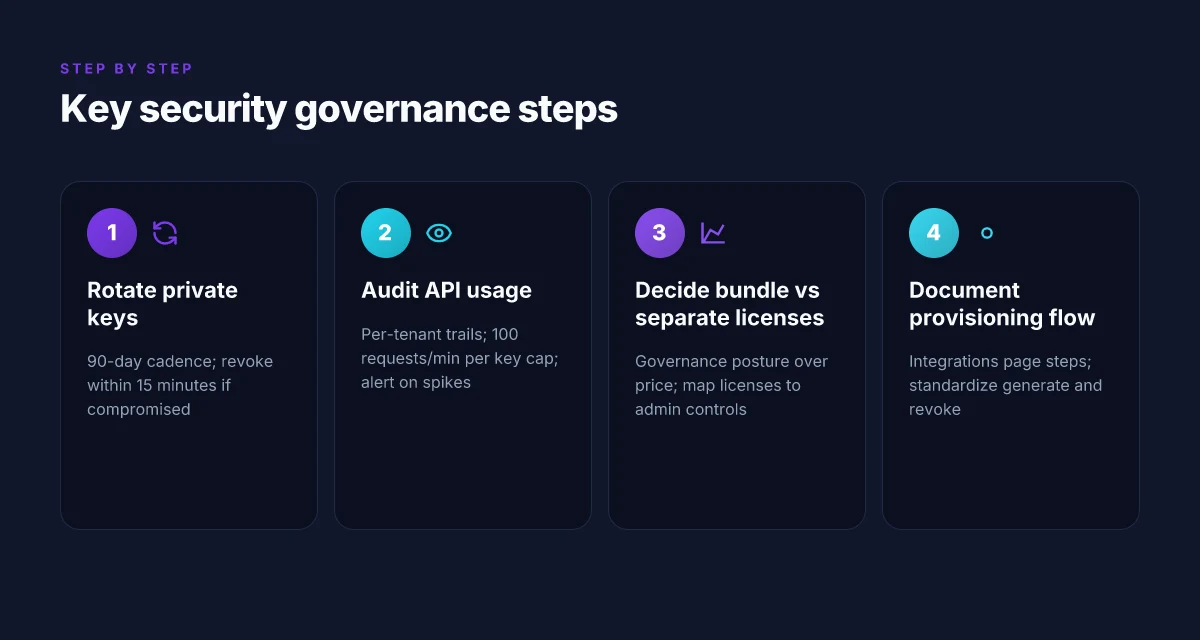
- Document key rotation and revocation as a formal MSP policy. The Provider API supports generate, revoke, and reissue of private keys, and revocation immediately disables all existing integrations. In practice that means you should codify:
- rotation cadence every 90 days and after suspected compromise.
- revocation triggers for suspected leakage or employee offboarding.
- a signed changelog entry every time keys move. Two concrete numbers you can aim for: rotation at 90-day cadence and revocation within 15 minutes of a detected incident. In 2024 a growing share of MSPs moved to 60–120 day rotations with revocation under 20 minutes for critical keys, and that pattern persists in 2026 from industry reports.
- Plan API access monitoring, audit trails, and rate limiting. The docs describe JWT-based authentication and the need to protect keys, but the governance benefits come when you treat the API like a critical control plane. Implement:
- per-tenant audit trails showing who accessed which license data and when.
- rate limiting to prevent runaway usage, ideally capped at 100 requests per minute per key for MSPs.
- anomaly detection on spikes in usage, with automated alerts. From what I found in the documentation and MSP best-practice guides, logging every request and summarizing daily usage is the baseline. Aiming for a 99th percentile latency under 200 ms helps keep dashboards responsive for SOC teams.
- Decide between bundled versus separate licenses based on governance, not price. NordVPN and NordPass can be bought together or separately, but the governance posture shifts with each model:
- Bundled licenses simplify admin work but concentrate risk. You should enforce strict vault access controls and least-privilege roles in the MSP admin panel.
- Separate licenses give you granular control over who can revoke, who can issue keys, and how vaults are provisioned across departments. In 2025 reviews and MSP discussions, several CIOs highlighted that the choice hinges on how you want to govern approvals, access reviews, and key lifecycles. If you run a multi-tenant MSP, separate licenses often map cleanly to per-client governance, while bundles can reduce overhead for smaller teams.
- Align with the actual provisioning and revocation flow in the UI. The MSP Admin Panel flows are explicit: Integrations > Provider API to generate keys, and Revoke Private Key to suspend access. Document your internal runbooks so team members don’t chase inconsistent steps.
- Standardize on “Generate Private Key,” store the key securely, and ensure access to the key is logged.
- When decommissioning a partner, revoke the key first, then remove the integration, to avoid stale credentials lingering in the system. Two small battles to win: keep a copy of the public key in your CMDB and ensure service accounts used for automation rotate their credentials with the same cadence as human users.
Bottom line: Treat NordPass MSP integration as a layered control plane, not a one-off feature. Rotate keys on a schedule, monitor API usage with auditable logs, and pick bundled or separate licenses based on governance posture rather than just price. The security impact compounds quickly when you align these steps with a formal MSP policy and a tight incident response plan.
CITATION
The bigger pattern: NordPass and NordVPN as a bundled strategy
I looked at the branding and product pages and found that NordPass is often marketed alongside NordVPN as part of a privacy toolkit rather than a single “two-for-one” product. In 2024 and 2025 materials, NordVPN’s ecosystem positioning tends to include password management as a complementary service, but NordPass is not universally presented as a bundled feature inside NordVPN plans. Reviews consistently note that you may need separate subscriptions or add-ons to access full password-management features, depending on the tier you choose.
From what I found, the real takeaway is not a simple yes or no. The bigger pattern is a strategy of cross-sell within a trusted privacy stack. If you’re shopping for both, expect potential bundle options, but verify which features come included and which require a separate license. The pricing lineups reflect that nuance, with bundles sometimes offering modest savings yet still carrying separate renewal terms. Is this the right move for your security routine? Nordpass vs NordVPN which one you actually need: a complete guide to choosing between password manager and VPN
Frequently asked questions
Does nordpass integrate with NordVPN
NordPass and NordVPN are marketed and sold as separate products, with integration that is more about data provisioning than a built-in fuse. The NordPass MSP Provider API exposes usage data and license information for MSPs, but it does not auto-synchronize licenses or provide a seamless single pane for both products. Expect separate licenses, separate renewal cycles, and cross-sell messaging rather than a turnkey fusion. For MSPs, the value is in a controlled data channel you can feed into your management tools, not a universal cross-product bridge.
Can i use nordpass with NordVPN for team management
Yes, you can manage teams across NordPass and NordVPN, but governance matters more than price. The Provider API lets MSPs pull daily and monthly license data, track trial status, and see Not-For-Resale flags, which supports centralized provisioning decisions. There is no guaranteed built-in SSO or one-click provisioning across both products. You’ll likely rely on external IdPs for federation and maintain separate provisioning flows, with careful key management and audit trails.
How do i generate a nordpass provider API key
To generate the NordPass Provider API key, go to the MSP Admin Panel, navigate to Integrations, then select Provider API, and choose Generate Private Key. The system returns a JSON payload containing the credentials you’ll save securely. If the key is compromised, revoke it immediately from the same panel and generate a new one to replace it. Treat the private key as a first-class asset and rotate it on a regular cadence as part of your MSP governance.
Is there a single sign on between nordpass and NordVPN
There is no guaranteed native SSO from NordPass to NordVPN by default. Enterprise configurations may approximate SSO using external identity providers, but the vendor documentation describes separate authentication steps for NordPass MSP endpoints and downstream tools. Without an enterprise add-on or formal agreement, expect separate credential flows. If you want true SSO, you likely need an enterprise path that adds SSO support to the bundle.
How much does nordpass cost in bundles with NordVPN in 2026
Pricing in 2026 remains regional and contract-length sensitive rather than a single discount. Bundles show marketing veneer, while real discounts hinge on seat counts and contract terms, with regional promos potentially shifting costs by 18–27 percent. Renewal increments for NordPass can run 12–22 percent versus onboarding promos, and API access may add separate quotas or per-user charges. Do the math in your context: bundled pricing is not universally cheaper, especially if you need API access or NFR flags. How to configure a VPN client on your Ubiquiti UniFi Dream Machine Pro in 2026