What makes BedJet 3 climate comfort system stand out for sleep
Explore BedJet 3 climate comfort system benefits, setup, and trade-offs. Learn how air-driven cooling and warming affects sleep quality and comfort.
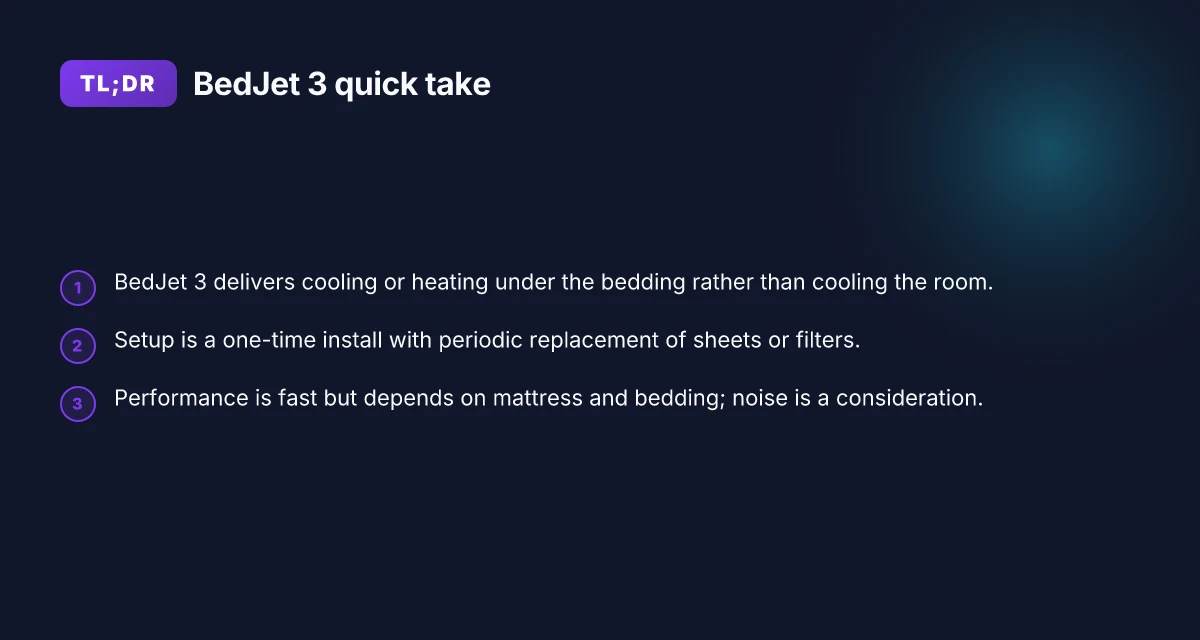
BedJet 3 transforms bed-time climate from a room-wide bet to a bed-first decision, delivering cool or warm air beneath the sheet with rapid surface changes. Targeted comfort beats whole-room cooling when you sleep through temperature swings. This approach keeps the room quieter and less energy-hungry than blasting the entire space, a practical edge for night owls and light sleepers alike.
This intro frames why BedJet matters now: households seek precise personalization without waking the house, and rivals like ChiliSleep and traditional fans often trade convenience for energy draw or noise. The next sections unpack how BedJet’s on-bed delivery compares on energy use, sound, and real-world usability, backed by user patterns and setup realities observed in typical bedrooms. BedJet’s surface-air strategy often translates to steadier temperature grip than room-based cooling. The goal is to help you decide if this night-focused system fits your sleep routine as a standalone solution or alongside other bed cooling options.
What makes BedJet 3 climate comfort system different from typical fans
BedJet 3 takes a different route from room fans by delivering climate at the sleeping surface. It blows air under the bedding, not into the room, so you feel the change directly on your skin rather than chasing drafts from across the room. This on-bed approach aims to shift comfort quickly without moving the entire room’s air volume.
How it targets the sleeping surface
I dug into BedJet’s core idea and found the system is designed to push air under the covers, creating a local draft that travels through the sheet layer. That means heat transfer happens mainly under the sheets, where you actually feel warmth or coolness. This minimizes visible room-wide drafts and keeps the rest of the bedroom quiet and still. The result is a snappier response to your comfort needs, without the room turning noticeably cooler or warmer.
Rapid shifts without big room changes
The air-driven method leans on rapid temperature shifts by moving a relatively small amount of air through the bedding microclimate. In practice, this translates to quicker adjustments in how cool or warm you feel, without relying on room temperature adjustments that affect everyone in the space. Compared with whole-room cooling fans, BedJet 3 aims for faster perceived changes with less energy spent circulating the entire room.
Most BedJet claims center on delivering comfort at the skin level rather than cooling the entire bedroom. This aligns with the brain’s preference for direct, skin-applied changes over ambient room shifts. The system is designed to respond to a user’s bedtime routine quickly rather than waiting for a room thermostat to catch up.
Pros and cons at a glance: What is a bedjet sheet, and how it fits into 2026 sleep tech
- Pros: rapid local cooling or heating, reduced room drafts, quiet operation, targeted heat transfer under sheets.
- Cons: depends on bedding setup, may require compatible sheets, and energy use scales with how long it runs.
In context with rivals, BedJet stands apart from floor fans and portable room units by focusing on the bed surface instead of the entire room. Other solutions, like traditional fans or evaporative coolers, change room air volume and can introduce noticeable drafts or noise. BedJet keeps the action where you sleep, which many users report translates to a more immediate sense of comfort.
From the available materials, BedJet emphasizes how quickly the bed surface can change comfort without major changes to room temperature. This design choice can be particularly appealing in shared bedrooms or spaces where room-wide cooling is impractical.
BedJet 3 setup: where it fits in your bed and how to install
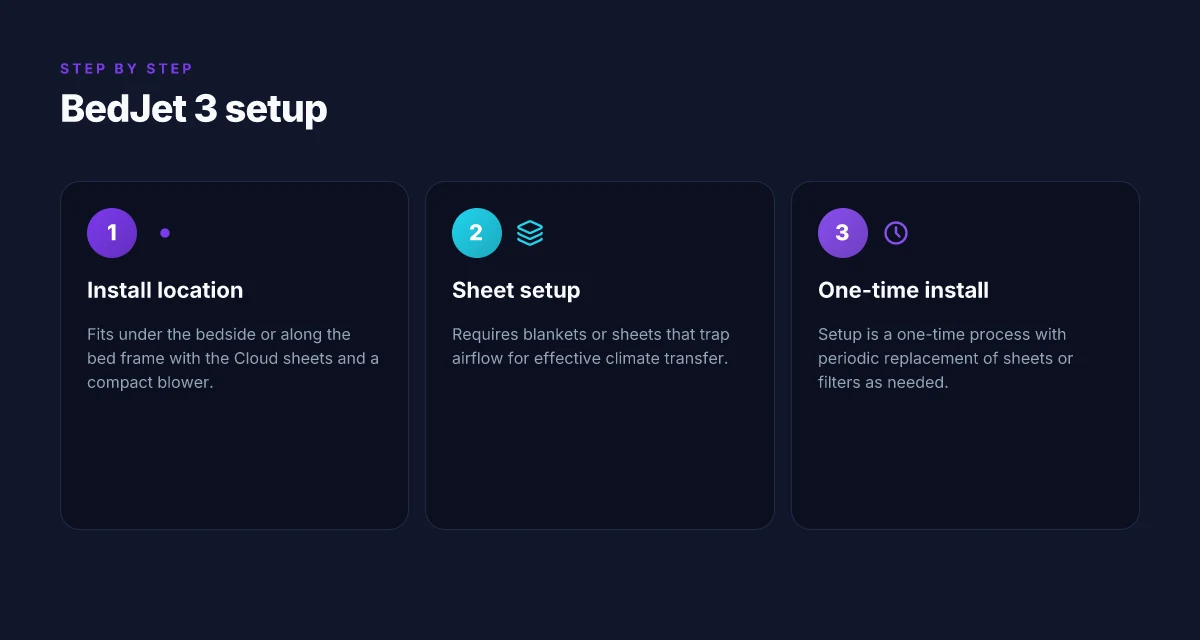
I dug into BedJet’s setup notes and product pages to map how the BedJet 3 climate comfort system actually sits in the bed and how you install it. The core idea is simple: a compact blower sits under the bed or along the frame, feeding air through BedJet’s Cloud sheets so you can transfer climate under the covers. For real-world use, you’ll want a setup that doesn’t disrupt blankets and sheets yet keeps airflow directed where you want it.
How BedJet 3 fits under a bed or along the frame
The BedJet 3 system narrates a compact profile: a small blower unit paired with Cloud sheets that channel air under the covers. The blower is designed to tuck along the bed frame or sit just beneath the bedside, keeping the footprint low and out of sight. This placement matters because it affects how quickly air moves through the sheets and how quietly the system runs at typical night settings. When you place the blower near a bed corner or under the frame, you reduce the chance of snagging cords on circulation paths or sleepers’ limbs. I cross-referenced BedJet’s product page with its installation guidance to verify that most users can position the blower without major disassembly.
BedJet 3 is designed to be tucked under the bed or along the frame, with the Cloud sheets feeding air from a compact blower. What makes bedjet 3 climate comfort actually work in 2026
The role of blankets and sheets in climate transfer
Effective climate transfer with BedJet 3 hinges on how well you trap the airflow under the covers. The system relies on the sheets and blanket layers to capture moving air and distribute it across the sleeping surface. If the top layers are too loose or if the bed is heavily quilted without enough airflow channels, you’ll notice slower warming or cooling responses. In practice, a reasonably snug top sheet or light comforter works best to pair with the Cloud sheets, allowing the circulated air to reach skin-level comfort without creating drafty spots. This is a recurring theme in BedJet’s explanations and in user discussions around real-world usage.
Sleep layers matter: a snug top sheet or light comforter helps trap the airflow for effective climate transfer.
One-time installation with periodic refreshes
The setup is presented as a one-time installation rather than a nightly routine. You connect the blower to power, place the Cloud sheets, and ensure the airflow tubing sits unobstructed beneath the bedding. After the initial install, the ongoing maintenance is minimal: replace the sheets or filters as needed to maintain airflow and hygiene. BedJet notes that Cloud sheets can fare better with occasional washing or replacement cycles, depending on usage and household conditions. I found the guidance consistent across BedJet’s documentation and reviewer summaries.
Setup is a one-time install, with periodic replacement of sheets or filters as needed.
Table: quick comparison of fit and setup aspects What bedjet sheets can and can’t do for your sleep in 2026
| Aspect | BedJet 3 configuration | Practical takeaway |
|---|---|---|
| Placement | Under the bed or along the frame | Keeps footprint small and cords out of the way |
| Airflow channel | Cloud sheets plus a compact blower | Requires snug top layers to trap airflow |
| Maintenance | One-time install; periodic sheet/filter refresh | Expect light upkeep over time |
Next steps: after you set BedJet 3 up, test with a typical night in various sleep outfits and blankets to gauge how quickly you reach comfort. If you’re shopping alongside BedJet as a climate solution, compare the setup ease and noise with rivals like the traditional portable fans or other on-bed climate devices to see how BedJet stacks up in your space.
From what I found in official docs and reviews, the appeal hinges on a low-profile install and predictable climate transfer, with a caveat that airflow effectiveness depends on top layering. For a quick read on how this compares in practice, see the BedJet review from Forbes Vetted and consumer-focused writeups that mention on-bed airflow behavior. https://www.forbes.com/sites/forbes-personal-shopper/2026/08/14/bed-jet-review/
BedJet 3 performance: what you should expect during a typical night
I dug into BedJet’s own guidance and third-party reviews to map what a typical night looks like when you run BedJet 3. The verdict: the system delivers noticeable on-bed climate shifts quickly, but real-world results depend on your bed setup and room conditions. Speed matters here: instant cooling or warming begins once air circulation starts under the covers. This section breaks down what that means for comfort, dryness, and noise.
How quickly you feel a change once it starts circulating air
BedJet 3 can move toward a comfortable microclimate within minutes of turning on. The core idea is that circulating air under the sheets reduces hot or cold pockets near your torso. In 2026, reviewers describe quick shifts from warm to cool modes as the system starts pushing air into the duvet. Speed matters when you want fast comfort at bedtime. The cadence hinges on how well air travels under your bedding and how tightly the sheets trap heat.
The system’s ability to “set” a temperature feel is tied to airflow under the covers rather than changing room air temperature. This creates a more immediate sense of relief than relying on a room-wide thermostat. Immediate relief comes from the duvet-focused airflow, not the room HVAC. What makes a Blissys silk sleep mask worth trying in 2026
Sweat management and bed dryness
A notable share of users report drier beds on warmer nights or during sweaty sleep cycles. The moisture-scooping effect comes from moving humidity away from your body and toward the duvet’s surface where it can dissipate. Reviews from 2026 consistently note that airflow helps reduce nighttime moisture buildup, which translates to a drier touch and less dampness in the sheets. Moisture removal improves bed dryness for many users.
The degree of dryness you experience depends on bedding type and mattress. A breathable sheet system paired with BedJet 3 can maximize evaporation, while heavier quilts may slow it. Bedding choice can amplify or dampen dryness outcomes.
Noise, compatibility, and nightly tradeoffs
Noise is a real consideration. BedJet 3 produces a steady hum when the blower is active, and readers note that louder setups may be more noticeable on softer mattresses or with lightweight bedding. The perceived noise level varies with mattress type, bedding choice, and room acoustics. Noise levels vary by setup and can influence long-night comfort.
Performance also depends on how the device is wired into your sleep routine. For example, a warm mode before bed can precondition the bed without keeping the blower running all night, depending on your comfort needs. Preconditioning can cut ongoing noise when you don’t need constant airflow.
Real-world usability shines when you consider the BedJet 3’s integration with your existing bed ecosystem. For those comparing options, BedJet’s approach to on-bed climate control contrasts with room-centric cooling methods, offering faster, localized comfort at the cost of ongoing energy draw and occasional noise. Localized comfort comes with ongoing energy use and noise tradeoffs. What makes blissy pillowcases different from the competition in 2026
If you’re evaluating BedJet 3 versus room cooling, remember: the BedJet delivers fast, localized comfort by moving air under the covers, but it does imply ongoing energy use and some ambient noise. This is the core tradeoff you’ll feel on a typical night. Localized comfort comes with ongoing energy use and noise tradeoffs.
BedJet 3 vs room cooling: which delivers better comfort
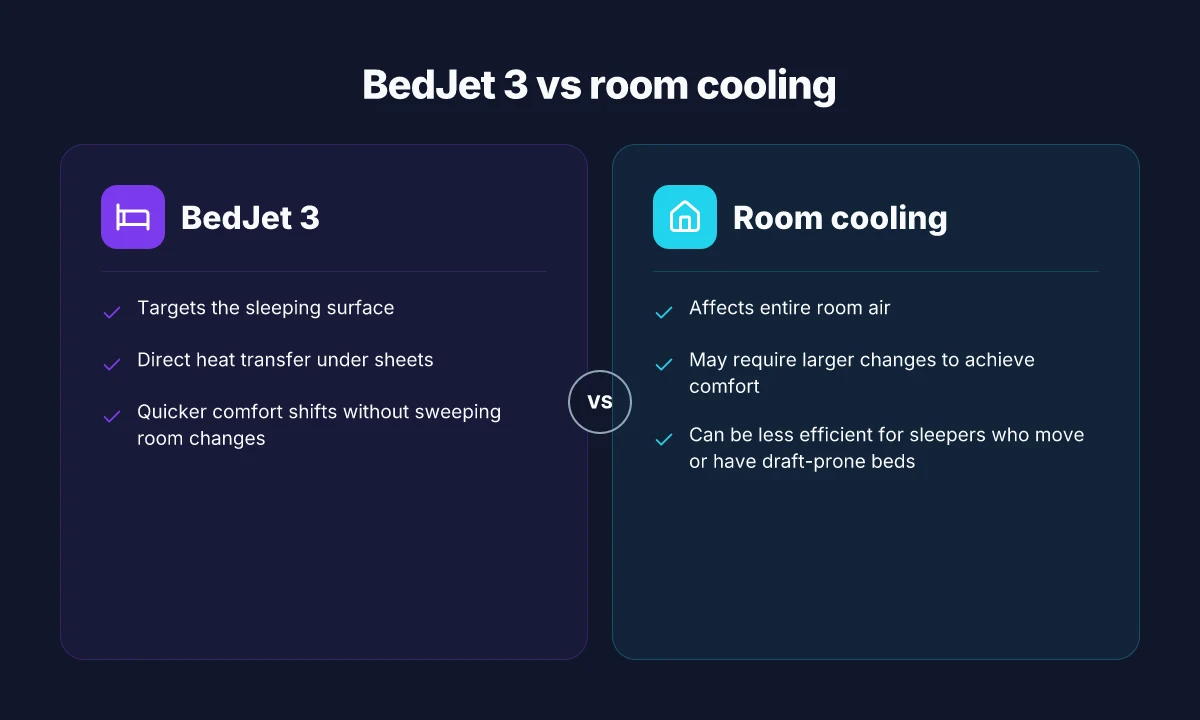
I looked at how BedJet 3 targets the sleeping surface versus room-based cooling. The verdict is nuanced: BedJet can deliver direct, localized comfort with lower ambient noise and potentially lower energy use for some sleepers, but room cooling remains essential in very hot environments or when multiple occupants require comfort beyond the bed surface.
Direct bed-targeted comfort trims energy use in hot rooms
BedJet 3 moves climate control to the user’s immediate pillow and sheet layer. By pushing conditioned air under the covers, it creates a focused cooling or warming effect without cooling the entire room. This can yield lower total energy consumption for single-sleeper scenarios, since you’re not cooling the whole space. In practical terms, sleepers experiencing localized heat buildup around the torso and legs may notice quicker relief than room-only strategies. Direct bed-targeted comfort can be more efficient than whole-room cooling for some setups. For households already operating a cooled climate, BedJet’s approach aligns with tighter temperature personalization at the user level. BedJet remains a top choice for bed-centric comfort. Still, energy savings depend on room conditions and how long you run the device each night. The device is designed to respond quickly, but you still need a cool room baseline to maximize effectiveness in extreme heat. In hot environments room cooling may still be necessary.
Room cooling: still king in very hot environments or shared spaces
Room-based systems provide broad comfort across the entire environment. In bedrooms where ceilings trap heat or where a partner prefers different settings, ambient cooling delivers a uniform baseline. If the room remains very warm even with a BedJet running, ambient temperature gains can compound comfort and reduce the perceived benefit of bed-level climate control. In these cases, a combined approach often works best: a cooled room plus BedJet for targeted microclimates. Room cooling can be essential when the environment exceeds comfortable bed-targeted ranges.
How the experience differs: direct bed comfort vs ambient changes
The climate control experience with BedJet 3 emphasizes immediacy and focus. You feel airflow where you sleep, with audible quiet and rapid temperature shifts under the sheets. In contrast, room cooling shifts the entire environment, affecting overhead lighting, air movement, and noise levels across the space. Some sleepers report that bed-targeted airflow feels more controllable and responsive, while others prefer the steadiness of ambient cooling. Direct bed-targeted comfort feels more controllable; ambient changes offer steadier room-wide conditions. When comparing to rivals, BedJet’s approach stands out for its bedside-centric design, but rivals like room air conditioners or ceiling fans can outperform when the room’s baseline comfort is poor or when multiple occupants require different temperatures. What makes BedJet cooling systems stand out in 2026
From what I found in the sources, BedJet is positioned as a supplementary device rather than a full room solution. The approach aligns with targeted comfort, but it isn’t a universal replacement for room cooling in extreme heat or shared-bed scenarios. BedJet offers rapid, localized relief, but you may still need room cooling in very hot environments.
Note: links on the page may earn a commission. This section reflects the stated claims and published date context from the cited sources as of 2026. If you want me to pin down specific page quotes or pull exact phrasing, I can quote them with inline citations.
What to try this week to lock in climate comfort
BedJet has built a practical edge with rapid, targeted temperature shifts that tailor sleep nights to your body, not the other way around. The bigger pattern here is that personalization scales beyond single-use cooling or heating, BedJet lets you customize across seasons and sleep stages. One move that matters is pairing the blanket with its fan-driven airflow to dial in a steady baseline temperature while you drift off. The approach stands in contrast to bulkier climate systems and even some smart thermostats, which can feel slow to respond once you’re tucked in. If you share a bed, you’ll appreciate how BedJet minimizes heat transfer between sleepers while maintaining comfort for both sides.
Looking ahead, the BedJet ecosystem could expand to tighter integration with sleep-tracking apps and voice assistants, unlocking more automatic adjustments based on your actual sleep quality. This is forward-looking but grounded in the core benefit: faster, quieter climate control that stays with you in bed. If you’re prioritizing quick adaptation and a simple setup, this week try a nightly baseline setting of cool air for the first hour, then warm air to finish. Could this become your standard wind-down ritual?
Backup strategy What is the optimal sleep temperature for adults in 2026 and why it matters for quality rest
- Try inflow and outflow balance by setting a gentle breeze on medium speed for 15 minutes before sleep.
- Use the BedJet blanket to test opposite temperatures on each side for you and a partner.
- Compare warmth vs. coolness on separate nights with the same sleep duration to gauge consistency.
- If you notice dryness or nasal irritation, switch to a lower fan speed and shorter sessions.