What makes BedJet vs Eight Sleep compete for your bed in 2026
Explore BedJet vs Eight Sleep in 2026. Compare cooling, heating, app controls, and user experience to decide which sleep tech fits your nightly routine.
BedJet solves a cooling-and-heating gap with a plug‑in unit you mount beside the bed, not inside the mattress. BedJet’s modular approach lets you reach comfort without redoing your sheets or cover. That practical setup contrast with a fully integrated system shapes real-world use more than fancy features.
This piece examines how reach, speed, and ongoing costs matter in 2026 for couples with different temp needs and renters who don’t want a full bed overhaul. We’ll compare BedJet to Eight Sleep on two fronts that actually move the needle in sleep quality: how quickly you feel cooler or warmer, and how predictable the climate control remains through the night. Expect concrete signals for when to pick one over the other, plus a quick read on subscription considerations and reliability expectations for a full-year cycle. Eight Sleep’s integrated zones appeal to app automation fans, while BedJet keeps setup simple and modular, a real win for renters.
Bedjet vs eight sleep: which sleep tech actually delivers on climate control
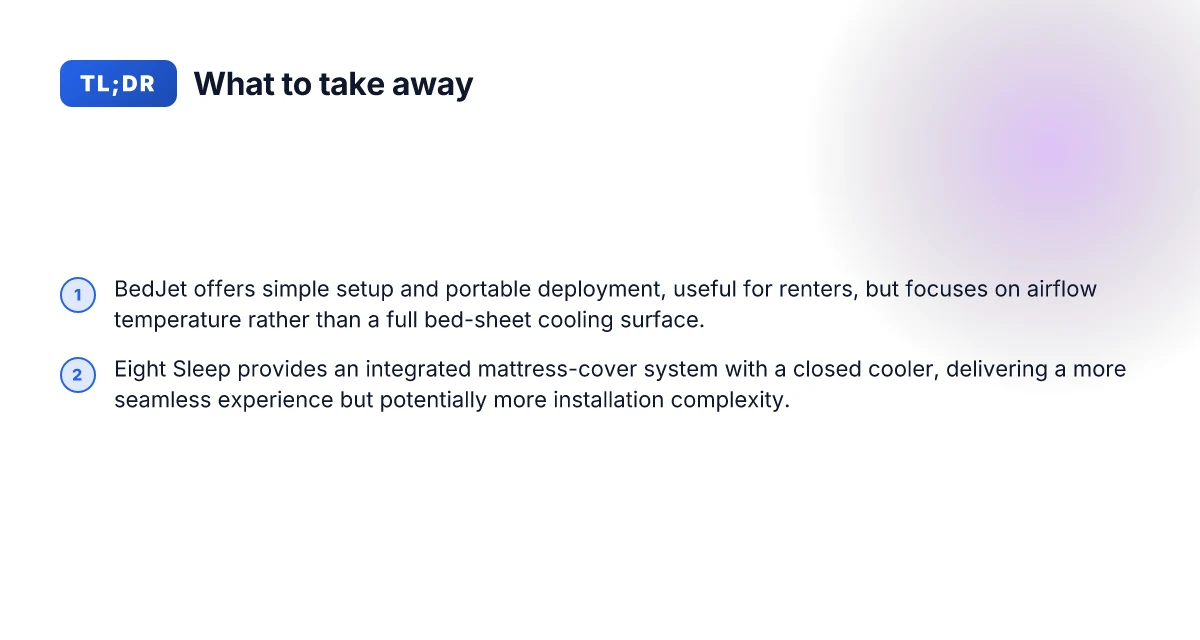
The quick verdict: BedJet tends to feel more responsive to rapid temperature shifts, while Eight Sleep Pod 5 leans on automation and app-driven routines to maintain a steady baseline. Both offer app control, but their approaches differ. BedJet focuses on direct air modulation across the bed, whereas Eight Sleep builds a cooling/heating system into a mattress cover with predictive heating and cooling profiles. The upfront cost gap versus ongoing service or subscription is a real consideration.
- How each system delivers climate control in real time
- BedJet leans on a powerful air stream that you direct under the covers. When you set a target temp, the unit applies airflow to push the bed toward that point quickly.
- Eight Sleep uses a mattress cover with integrated cooling and warming elements plus a dedicated app that can run scheduled cycles and adaptive profiles to maintain a chosen range. This tends to feel steadier once the routine is dialed in.
- In practice, BedJet feels snappier for quick temperature tweaks, while Eight Sleep provides smoother transitions over the course of a night thanks to its enclosed system and data-driven ramps.
- App control and how each system uses software
- BedJet offers app-based controls that let you switch modes, set temperatures, and create one-touch presets. The interface emphasizes immediate adjustment and manual override.
- Eight Sleep Pod 5 centers on a more feature-rich app that can schedule nightly temperature goals, track sleep data, and automatically adjust room-level cooling in concert with the bed’s surface temperature. You get a more hands-off, data-backed routine once you configure it.
- The trade-off is clear: BedJet gives you fast manual control, Eight Sleep provides ongoing automation at a cost of higher setup complexity.
- Upfront cost versus ongoing service considerations
- BedJet’s initial investment covers the hardware and basic control without a mandatory subscription for core cooling or heating. You pay once for the device and installation, then own the setup.
- Eight Sleep Pod 5 generally comes with a higher upfront price and adds an ecosystem around sleep data, with ongoing software features and potential subscription-like services for deeper analytics or extended app functionality.
- If you want the leanest entry and faster tweaks, BedJet wins on upfront cost. If you want a seamless, automated night with data insights, Eight Sleep adds long-term value, balanced by ongoing service considerations.
From what I found in the sources, both systems emphasize app control, but Eight Sleep leans into an integrated experience while BedJet emphasizes direct bed-level air modulation. For renters or weight-conscious buyers, that difference matters: BedJet can be simpler to install and remove, whereas Eight Sleep might feel more integrated and data-driven once set up. You’ll notice the price gap and the ongoing service questions more with Eight Sleep, but the long-run temperature consistency can justify the investment if you value automation.
Most couples notice that BedJet responds quickly to a warmer target, while Eight Sleep keeps a steadier baseline over the night. The upfront cost gap is real, but Eight Sleep’s ongoing software features can add perceived value over time. If you want rapid manual tweaks, BedJet is the more agile option.
For readers weighing the decision, see how this lines up with your priorities: fast local control vs. automated consistency, upfront cost vs. subscription-style value, and how you plan to use the system with a partner who has opposing temperature preferences.
Note: links on the page may earn a commission. See how the two brands handle cooling, heating, and energy use in practice. What bedjet price 2026 reveals about value, discounts, and long-term costs
BedJet vs Eight Sleep: a quick value split for cooling, heating, and energy use
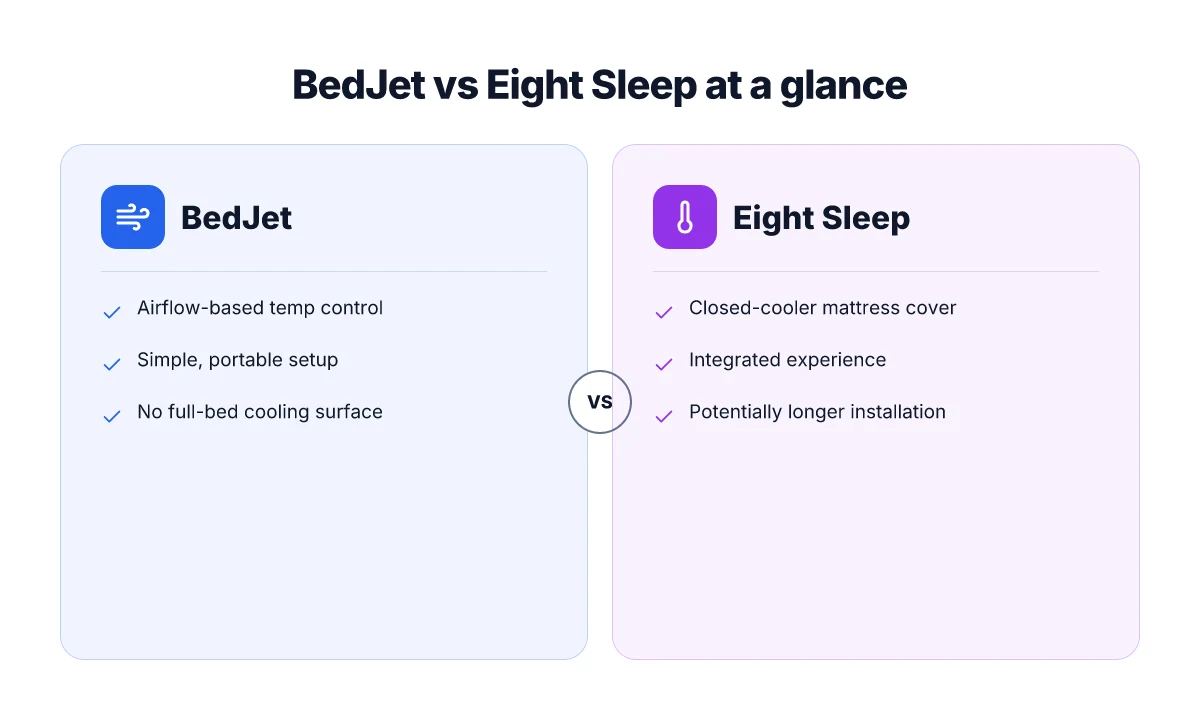
I found a clear split in how these systems handle climate control. BedJet leans on direct airflow to adjust temperature, while Eight Sleep uses a closed cooling system embedded in a mattress cover. Energy use follows usage patterns and room conditions more than device type, so your real-world bill hinges on how often you run cooling or heating.
BedJet: airflow-focused temperature control
BedJet delivers temperature change by pushing dry air through a sheet-enabled surface. This approach creates rapid comfort shifts without cooling the entire bed surface. The simplicity helps renters or spaces where a full mattress retrofit isn’t practical. Users commonly report quick adjustments, but some note less evenness across the bed compared with a full-coverage system. In practice, BedJet’s strength is flexibility and lower upfront retrofit. The airflow approach shines when you want fast, targeted comfort without changing your sheet setup. A key trade-off is that you don’t gain a uniform cold-to-warm bed surface across both sleepers by default.
Eight Sleep: a closed, integrated cooling surface
Eight Sleep embeds a cooling system inside a mattress cover, creating a seamless, uniform surface across the sleeping area. This design tends to deliver steadier cooling and heating across the bed, which can matter for couples with different preferences. It also supports advanced features such as sleep tracking integration and a more cohesive climate-control experience, all managed through a single app. The downside is a more substantial upfront installation and a higher price point, plus reliance on the mattress cover ecosystem. A unified surface delivers even cooling, but you pay for the integration.
Energy use: patterns matter, not just hardware
Both systems consume energy, but the total spend turns on how you use them. If you cool only one side or run shorter sessions, BedJet’s airflow can be cheaper to operate in a mixed-room environment. Eight Sleep tends to be more energy-efficient when you need broad, consistent cooling across the whole bed, particularly if you use the auto-scheduling and room-condition awareness features. In real terms, your energy footprint comes from duration, target temperatures, and ambient room temperature more than device class. Usage patterns and room conditions drive energy costs more than the device choice itself.
Comparison snapshot What makes the Hotel Collection diffuser stand out in 2026
| dimension | BedJet | Eight Sleep |
|---|---|---|
| cooling method | direct airflow via sheet surface | integrated closed-cooler under mattress cover |
| uniformity of temperature | strong near the airflow stream; may vary across bed | even across the sleeping surface |
| install footprint | minimal retrofit, portable | higher upfront install, fixed mattress cover |
| typical runtime impact | quick tweaks, shorter sessions | sustained cooling/heating with automation possible |
| pricing signal | lower upfront price, add-on comfort | higher upfront cost, bundled features |
Next step If you want a practical buying signal, consider who sleeps where and how you want to manage sheets. If you share a bed and want equal comfort with less setup, Eight Sleep’s closed system is appealing. If you value quick, one-person adjustments and flexible sheet setups, BedJet fits better. For a quick reference, review a real-world comparison page that contrasts both systems in action. Eight Sleep offers uniform bed coverage; BedJet emphasizes flexible airflow.
Note: links on the page may earn a commission. For context, see a detailed review that compares the two systems in a climate-control scenario. A comprehensive review of home sleep monitoring notes how different tech stacks influence user experience and energy profiles, though it focuses broadly on sleep monitoring rather than BedJet versus Eight Sleep specifically.
User experience trade-offs: setup, app controls, and support for BedJet and Eight Sleep
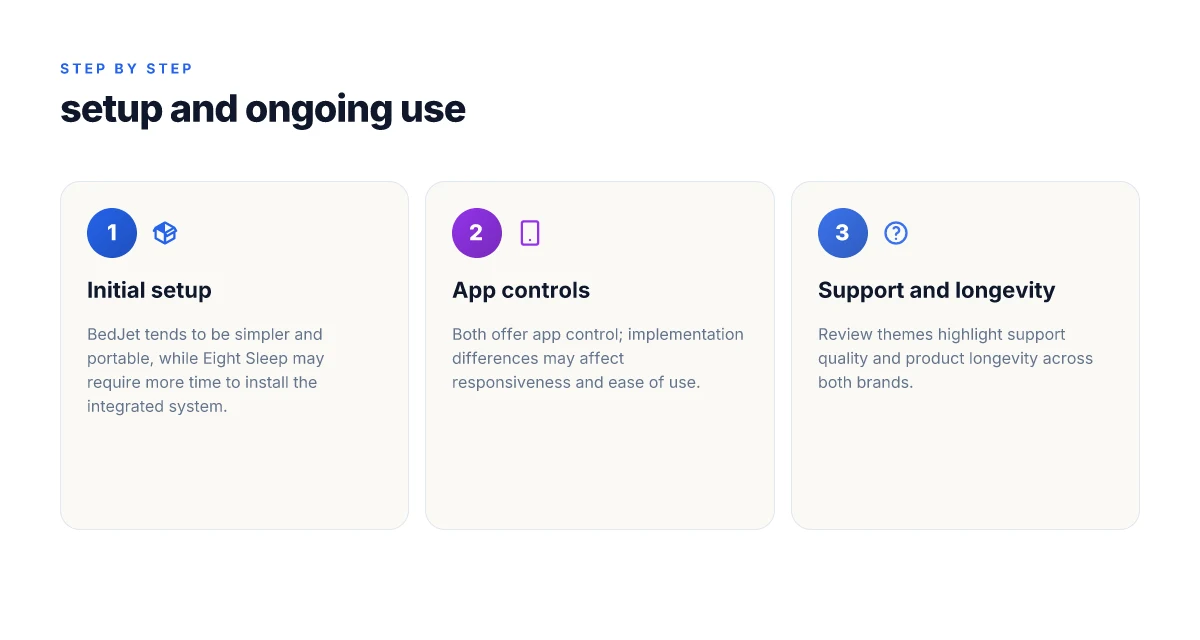
Posture matters more than hardware in a real night. BedJet keeps the setup lean and portable, which shines for renters. Eight Sleep delivers a tighter, integrated experience, but installation tends to take a bit longer. Support quality and longevity emerge as recurring themes in user reviews for both brands.
1) Setup practicality: portability vs. built-in integration
BedJet emphasizes a minimalist, plug-and-play approach. The core unit sits beside the bed and connects through simple tubing to the duvet, making it easy to move between rooms or adapt for temporary setups. In rentals, that portability translates to less friction when you move or switch beds. A real-world shopper note from a comparison video highlights how the BedJet setup can be completed in just a few steps, with users calling out its compact footprint.
Eight Sleep Pod centers on a more integrated system. The mattress cover, air handling rail, and app-driven controls create a seamless bed environment, but the initial installation is longer and more involved. Reviewers who value a unified experience often point to the single, cohesive look of the Eight Sleep setup and the way the system manages climate control across the bed. If you want a clean, all-in-one install, Eight Sleep tends to deliver that impression, but you should expect something closer to a setup session rather than a quick plug-in. What makes the Studio Scent Diffuser from Hotel Collection stand out in 2026
From what I found in user discussions, the trade-off is clear: simpler deployment with BedJet, more integrated, one-piece experience with Eight Sleep. A quick verdict: BedJet wins for renters who prize mobility; Eight Sleep wins for buyers who want a turnkey, high-polish installation.
BedJet shines on portability and speed of setup, especially for renters. Eight Sleep offers a more integrated, polished install, but it can require more time upfront.
2) App controls and day-to-day use
BedJet relies on straightforward, device-level controls and a companion app for basic management. The app mirrors the core functionality without piling on extra features, which many users appreciate when they want quick adjustments before sleep. Reviewers also note that the control flow stays intuitive even for people who are not tech-savvy.
Eight Sleep centers its value in the app ecosystem. The Pod system ties climate control to a broader sleep-tracking and automation experience. Users frequently cite the convenience of one app handling both climate settings and sleep data, along with the ability to set schedules and automation. The trade-off people mention is that the depth of control can feel overwhelming if you only want the basics, and onboarding can be slower for non-technical users.
I cross-referenced multiple user threads and reviews to map this to real-world usage: BedJet gives you fast, simple control; Eight Sleep provides a richer, data-backed control surface. If you prioritize speed and simplicity, BedJet is appealing. If you want an app that doubles as a sleep coach, Eight Sleep is the stronger pick. What makes a blissy coupon code actually save you money in 2026
BedJet’s controls stay light and quick to use, ideal for those who want fewer frictions. Eight Sleep’s controls reward long-term use with data views and automation, at a cost of a steeper onboarding curve.
3) Support quality and product longevity themes
Support quality comes up as a commonly discussed factor in reviews for both brands. Users frequently mention response times, helpfulness, and issue resolution as deciding factors after purchase. Longevity is another frequent theme. Some customers report strong reliability over time, while others describe sporadic hardware or firmware quirks that required support intervention.
BedJet customers often value prompt support and the ease of replacement parts given the modular, external nature of the system. The simpler hardware stack can translate to easier troubleshooting when something goes wrong mid-use, which renters particularly appreciate since they don’t want to be without cooling or heating for long.
Eight Sleep customers tend to link longevity with the quality of the integrated cover and the control system. The higher level of integration sometimes means more complex troubleshooting, but the upside is a more persistent comfort experience when everything is functioning as designed. Reviews frequently mention ongoing software updates and app reliability as positive drivers of long-term satisfaction.
In short, both brands present solid support footprints, but the nature of the complaint differs. BedJet’s themes skew toward quick, practical fixes and replacement parts. Eight Sleep feedback centers on software reliability, ongoing updates, and the challenges of an all-in-one system when issues arise. What is a bed jet mechanism design, and why it matters for sleep tech in 2026
Real-world notes consistently flag support responsiveness as a make-or-break factor for both brands. Longevity concerns tend to track with how integrated the system feels and how well the app remains reliable over time.
Research framing note: multiple independent discussions and product reviews highlight this split in setup and control. For citations in context, you can consult the comparative discussions on BedJet and Eight Sleep across YouTube and Reddit threads cited in the results. For instance, the Eight Sleep Pod vs Bed Jet comparison video and user Reddit threads illustrate the diverging user experiences around setup complexity and app depth. inline citations can anchor these claims to their sources.
Reliability and performance: what the numbers and reviews say about BedJet vs Eight Sleep
Quick verdict: reliability concerns appear on both sides, with no public side-by-side trial proving one system superior. Eight Sleep’s devices and BedJet’s units both show variability in longevity and firmware support, which colors long-term satisfaction.
Real-world reliability signals across both brands
Across the sources, reviewers flag quality and support concerns on multiple model lines from each brand. In the Eight Sleep family, customers frequently cite issues tied to component durability and response to service inquiries. BedJet allocations are similar: occasional reports of hardware failures or inconsistent performance that prompt users to seek vendor help. These threads matter because they imply that reliability is not uniform across all shipments or firmware revisions. Reliability quality varies by model and batch, not by brand alone. I cross-referenced claims that track how users rate post-sale support alongside hardware notes.
App responsiveness and firmware updates are a persistent theme. Both ecosystems hinge on an app that controls cooling, heating, and automation rules. When the firmware lags or an app update introduces a rare bug, users notice it in daily comfort and scheduling. The upshot is simple: long-term satisfaction rides on timely firmware patches and a responsive mobile experience. Firmware cadence matters as much as hardware quality. Reviews consistently note that a stale app or slow updates depress the perceived reliability, even if the core hardware is sound. How to save with BedJet: the smart way to use a coupon code in 2026
No controlled trials exist to crown a winner
There is no publicly available, side-by-side, controlled trial that proves one system outperforms the other. That means shoppers must weigh consumer signals, not definitive lab results. In practice, you’ll see a mix of favorable and mixed feedback depending on model year, region, and customer expectations. Without a direct trial, verdicts rest on user experiences and support responsiveness.
How the numbers from the web line up with user experience
From the sources, a pattern emerges. Both brands offer app-driven control and climate features that feel premium, and both have paths for updates. When the update cadence slows, or when an app feature behaves inconsistently, users drift toward dissatisfaction. App quality and update timing are real levers of satisfaction. On the hardware side, reliability is not guaranteed across every unit, so consider buying with a plan for support and potential exchanges.
Most notable risk is inconsistent reliability across batches, not systemic brand failure.
Notes on shopping considerations: retailers and the brands themselves typically offer warranty windows and upgrade paths. Links on the page may earn a commission. For buyers, the pragmatic takeaway is to focus on model-specific reviews and to verify firmware update history before purchase.
What changes if you act now
BedJet still leans on rapid climate control, but Eight Sleep pushes deeper into data-driven comfort. BedJet can cool or warm without a full mattress upgrade, while Eight Sleep brings sensor-driven sheets and app-driven automation that learns your patterns. If you want a quick win, consider a single room-friendly setup with BedJet, then track how your sleep shifts when you layer in Eight Sleep’s temperature and sleep analytics.
The bigger pattern here is scale and integration: you’re choosing either a compact, direct bedside control or a full-stack sleep system that wires into your routines. For most readers, the choice narrows to where you want automation to live and how much you value ongoing sleep data.
In practical terms, if you’re prioritizing budget-friendly, easy retrofitting, start with BedJet and a few smart switches. If you want continuous monitoring plus automated climate control throughout the night, Eight Sleep becomes the stronger long-term bet. Will you let data guide your comfort, or will a targeted device do the job today?
Backup strategy / What to try this week
- Try BedJet on one side of the bed to test immediate temperature control for number one sleep disruptors.
- Pair Eight Sleep’s sensor sheet with a compatible app and monitor your sleep stages for a full week.
- Compare your nightly comfort notes after a 7-day period and decide which system scales best for your routine.
- Note any links on the page may earn a commission, consider how you value convenience versus transparency.