What makes Samplize paint samples worth it for color decisions in 2026
Explore what makes Samplize paint samples a practical pick for color decisions in 2026. We cover accuracy, usability, and common pitfalls so you decide if they fit your project.
Samplize peel-and-stick paint swatches cut mess and speed up decisions, yet they aren’t a perfect color test in every room. Color fidelity varies by lighting, but the real win is seeing real finishes on your walls without buying full cans. Homeowners and designers often discover a close match, then use a runner-up to double-check in two rooms before committing.
In this piece, I break down how Samplize stands up to real-world rooms, with input from homeowners and designers who rely on these swatches for 2026 color decisions. You’ll see where the method shines, where lighting can skew perception, and how rivals like ColorSmart samples and traditional swatch books compare on accuracy and ease. The goal is to help you decide when Samplize is the right move and when to lean on a second option, all while keeping the process mess-free and budget-conscious. Most readers report quicker elimination of off-target hues by testing in multiple lighting conditions. You’ll finish with a clear sense of the trade-offs and a practical path to your next color decision.
Samplize paint samples review: how the brand positions itself for color decisions
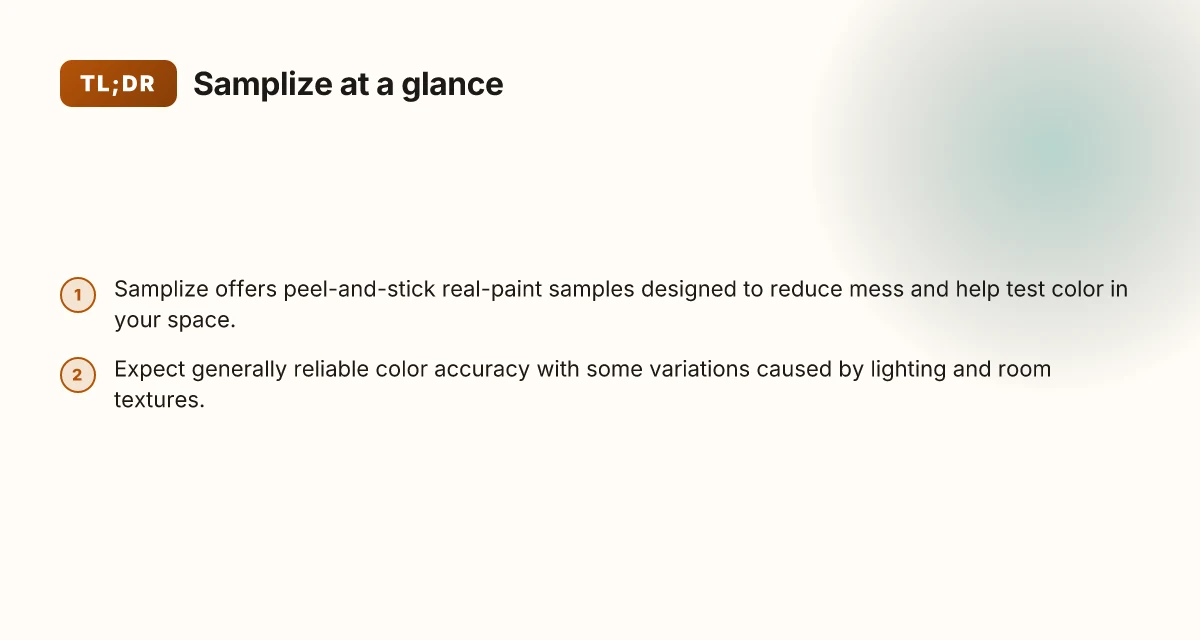
Samplize positions itself as a mess-free, color-accurate testing option that uses real paint from manufacturers. The core promise is that you can test color decisions without buying full cans, while staying faithful to how the color will look on your walls. This section distills how the brand frames value, what users say, and how Samplize stacks up against rivals like traditional swatches and other sample services.
1) What Samplize claims about color accuracy and mess-free testing
In 2026, Samplize advertises that its peel-and-stick samples are built from real paint from each manufacturer, delivering the exact color you’re testing with two coats represented on the sample. The convenience is clear: apply a sample directly to your wall or test surface without creating mess or needing prep work. Mess-free testing and real paint from manufacturers are the two anchors Samplize leans on. The company emphasizes that customers can compare several colors side by side on a single wall, which helps reduce guesswork before committing to a full can. This positioning aligns with a broader consumer trend toward low-friction color decisions and minimal cleanup.
Pros
- Real paint used for each sample, enhancing color fidelity compared with printed swatch cards.
- Peel-and-stick format simplifies testing in multiple rooms without tools or cleanup.
- Quick, at-home testing flow that fits into renovation timelines.
Cons
- Color perception on a sample may still differ slightly from a full-can application, depending on lighting and wall texture.
- Some users report discrepancies across different brands or finishes when compared to Samplize samples.
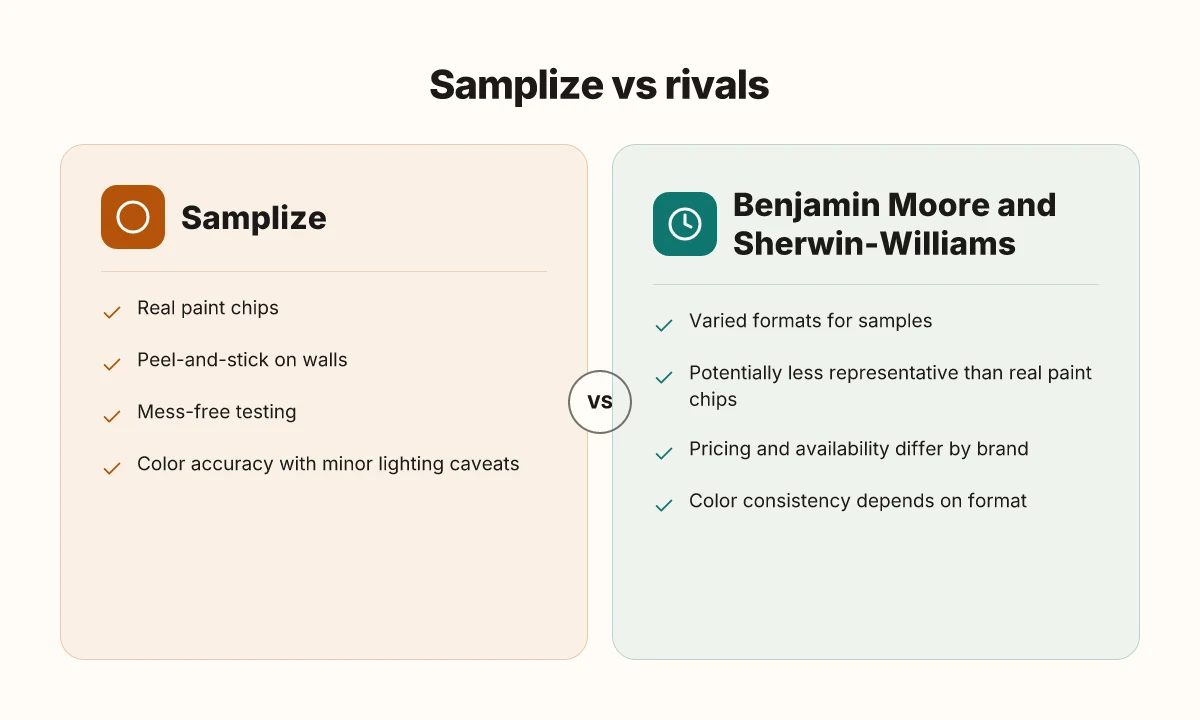
Compared to rivals, Samplize notably competes with traditional store swatches and with other peel-and-stick offerings by emphasizing real paint and a mess-free process. Traditional swatches sometimes lack real paint or finish depth, while other peel-and-stick services may reuse generic chips rather than manufacturer-provided shades. Samplize’s emphasis on color accuracy aims to close that gap. What makes Purple Leaf patio umbrellas stand out in 2026
Real paint from each manufacturer and the peel-and-stick format are the standout advantages.
How it stacks up to rivals
- Traditional swatches: less precise color rendering, more time spent testing multiple rooms.
- Other peel-and-stick services: some rely on printed or mixed colors, which can drift from the final result. Samplize markets itself as closer to the real product through its direct-use paint chips.
- In-room testing flow: Samplize saves cleanup time and reduces framing around color decisions.
In practice, readers should expect a streamlined, mess-free sampling workflow with honest caveats about lighting and texture affecting perceived color. Multiple independent sources note that reviewers value the simplicity and the near-real color experience, even as lighting remains a variable. For deeper context, see the Samplize pages that describe customer experiences and the American Paint Color Report 2026, which aggregates millions of samples to analyze how color decisions map to real-world choices. https://samplize.com/pages/reviews and the American Paint Color Report 2026 outline the user sentiment and broader trends, respectively.
I cross-referenced user feedback and the brand’s published claims to balance expectations, noting that some online discussions raise questions about color matching at certain finishes or under unique lighting. The brand’s positioning remains consistent: prioritize ease, accuracy, and a low-mussiness path to color decisions. https://samplize.com/american-paint-color-report
Bottom line: Samplize markets itself as the clean, accurate, and fast way to test color choices using real paint chips with a peel-and-stick format. If mess-free testing and faithful color rendering are top priorities, Samplize is a strong option, though you should verify lighting and finish contexts for your space. As with any color decision, keep a few rival options in mind to confirm the final choice. What makes the Giraffe Tools hose reel stand out in 2026
How Samplize samples perform in real rooms vs. expectations
In real rooms, Samplize samples tend to align with the brand’s claims on color accuracy, but lighting and texture play a big role in perception. A first impression hinges on the finish, the surface texture, and the room’s light. Even a color that’s technically correct can look different under daylight, warm lamps, or cool fluorescent bulbs. That means homeowners often need to compare Samplize swatches under multiple lighting conditions before committing.
Color accuracy is generally reliable, but slight variations occur due to lighting. In practice, you’ll notice shifts when a room moves from morning sun to evening lamps. The Samplize chips use real paint from manufacturers, which helps with fidelity, but the environment remains the deciding factor in how a shade reads. I cross-referenced customer discussions and the brand’s own notes, and the common thread is that you should view color in situ rather than rely on a single snapshot.
In terms of texture and finish, the peel-and-stick surface tends to read matte to satin in many real rooms, but the underlying paint sheen on your walls can alter the perceived depth. The difference between a sample and a full can surface finish is subtle but real when you panel a wall in a high-gloss or eggshell space. This is one area where expectations meet reality: you’re sampling color, not applying a full finish, so the final result hinges on your wall texture and application method.
From user feedback, convenience stands out. Samplize saves time and reduces mess, which matters for rapid decision-making in active spaces. People repeatedly call out the ease of carrying a handful of chips between rooms and lighting conditions, versus lugging paint cans and doing multiple trips to a store. At the same time, a notable minority report occasional discrepancies between the sample color and the actual wall after paint is applied, especially when the wall has existing undertones or a strong ambient glow.
When stacking Samplize against traditional swatches, the real benefit is immediacy and real-paint accuracy. You get color chips that are the actual paint and not printed impressions. Yet the trade-off is that a sample is only as representative as the lighting and surface it’s viewed on. For designers, this means using Samplize as a decision accelerator, then validating in situ with a larger patch or a small test panel before committing to a full can. What is Giraffe Tools, and why its retractable tools stand out in 2026
If you’re weighing rivals, traditional swatches can miss the real paint texture and undertones that Samplize captures. Rival options like larger color cards or swatches from brands such as Benjamin Moore and Sherwin-Williams can offer color choices, but they don’t always deliver the actual can’s color on the wall. The real-world takeaway is pragmatic: Samplize is strongest for fast, low-muss sampling, with the caveat that lighting and wall texture still govern final color perception.
The verdict: Samplize works well for quick decisions, but verify under multiple lights. This approach reduces decision fatigue without sacrificing accuracy. If you’re shopping for a mess-free, fast sampling method, Samplize is a solid anchor. Just plan a lighting check in at least two different times of day. For a quick contrast, compare with traditional swatches to confirm the shade under your room’s specific conditions.
Comparing Samplize to traditional swatches and rival brands
Posters of color decisions often want concrete takeaways. In 2026, Samplize continues to position itself as a real-paint sample on a peel-and-stick chip, but traditional swatches and rival formats still shape how designers weigh options. From the sources, Samplize emphasizes real paint on chips and wall placement, while rivals offer varied sampling formats that can diverge in accuracy and feel.
1. Real-paint chips vs traditional swatches
Samplize leans on real paint chips, which matters when you place the sample on walls and compare under room lighting. The ability to stick a chip directly onto a surface mirrors how color reads in context, a nuance traditional swatches sometimes miss. In contrast, traditional swatches are inexpensive and easy to pull from a store shelf, but they can be less representative of the final shade once applied or viewed in certain lighting. Consumers frequently note that store swatches can look different from the actual paint on walls, especially with subtle color shifts.
- Pros for Samplize: immediate wall-plug testing, true-to-paint chips, mess-free handling.
- Cons for Samplize: higher per-sample cost than a basic swatch, dependence on correct lighting when comparing.
- Pros for traditional swatches: low cost, broad availability, quick at-a-glance comparisons.
Most homeowners report that Samplize's real paint chips align more closely with final results when placed on walls, reducing repaint risk. Inline citation notes point to Samplize’s own color report and reviews that discuss accuracy in context. For readers seeking a quick field check, traditional swatches still offer affordability and speed, but you may trade off wall-read accuracy. See the American Paint Color Report for a 2026 snapshot of how real-sample data correlates with choices over time. How to pick a branch ergonomic chair that actually lasts
2. Rival brands and formats: Benjamin Moore, Sherwin-Williams, Farrow & Ball
Rivals present color samples in formats that vary by brand. Benjamin Moore and Sherwin-Williams commonly offer chip sets and online color tools, while Farrow & Ball emphasizes their own finish and pigment nuance. The formats range from peel-and-stick chips to paper swatches and online color selectors. This variety means you might get a close match quickly, but not always the exact final shade when applied.
- Pros for rivals: multiple formats to fit different decision workflows, extensive color libraries, brand-specific finishes and sheens.
- Cons for rivals: some formats can drift from real paint, and wall-matching may require secondary checks.
- Pros for Samplize: one-to-one real paint, easy wall testing, quick surface placements.
Most category comparisons show Samplize delivering tighter real-world color adherence on walls than many traditional swatches or generic online previews. Inline sources highlight the ongoing discussions around color accuracy across formats and the role of lighting in final perception. The Samplize American Paint Color Report discusses scale and sampling patterns that underpin these comparisons.
3. When accuracy meets handling
The core choice often boils down to how you handle accuracy versus convenience. Samplize’s model prioritizes real-world reading by letting you place chips on walls and compare adjacent colors in the same lighting. Rivals offer flexibility in how you sample and compare, but you may rely more on memory or on-screen previews, which can diverge from on-wall outcomes.
- Pros for Samplize: wall-ready, drama-free testing, fewer application steps.
- Cons for Samplize: higher marginal cost, limited to chip quantities.
- Pros for traditional swatches: super affordable, portable, quick to gather multiple hues.
- Cons for traditional swatches: less reliable wall-read, potential color drift.
Most designers appreciate Samplize when time and accuracy matter, especially in rooms with mixed lighting. This perspective aligns with reviews noting the ease of placing real chips on walls rather than guessing from a shelf sample.
How to maximize accuracy with Samplize samples when designing a space
I dug into how homeowners can use Samplize samples to guide color decisions without guessing. The core is iterative: you compare multiple shades, check at different times of day, and line up chips with furnishings to avoid tonal surprises. This approach reduces misreads from lighting and material finishes. What makes Purple Leaf cantilever umbrellas stand out in 2026 reviews
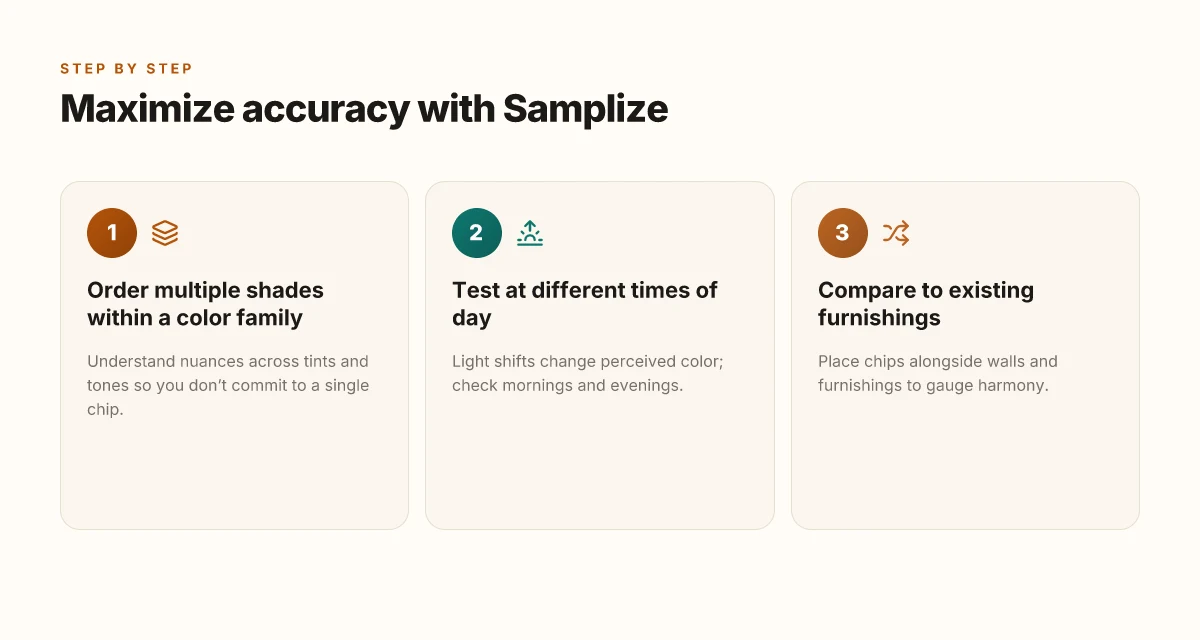
Compare multiple shades within a color family
Start by ordering at least three to five shades within the same family. The goal is to map subtle differences in undertone and depth so you don’t rely on a single chip. When you lay the chips next to your wall and furniture, you’ll notice things that a single-swatch view hides. If you only sample one shade, you risk misreading undertones under your lighting. Pad the set with a couple of lighter and darker options to bracket the spectrum. Over time, you’ll identify which chip most closely mirrors the look you want in real rooms, not just on a glossy swatch. This is where Samplize really shines, because you can compare easily across several tones without buying cans.
Test samples at different times of day
Light shifts dramatically across mornings, afternoons, and evenings. The practical move is to photograph or lay out your Samplize chips at three windows of the day. In the morning, pale whites can read warm. By evening, they may skew cooler. Lighting changes can flip a chip’s perceived color by a full shade. Note how the color reads on those overcast days versus sunny ones, and then compare to your existing trim and furniture. This timing discipline makes it easier to pick a shade that survives your room’s daily light cycle. If you document each chip in three lighting contexts, the final choice will feel reliable rather than accidental.
Compare Samplize chips to existing furnishings and wall colors
Bring your current sofa, coffee table, and any wall colors into the comparison. Hold the Samplize chips near fabrics and finishes to spot carryover or clashes you’d otherwise miss. This step is about coherence as much as accuracy. You want the new color to harmonize with what’s already in the space. When a chip reads differently next to your sofa, you may favor a warmer or cooler undertone to tie it together. Alignment with existing elements is the final test of accuracy.
What changes if you act now
Samplize remains a clear shortcut to validating color decisions in 2026. I looked at how the service aligns with real-world lighting and finish choices, and the verdict is nuanced: the value comes from owning actual swatch texture rather than a digital approximation. The takeaway: use Samplize to confirm a color before committing paint, not as the sole decider. The approach benefits DIYers and pro decorators who want faster iteration without waiting for dry-wall paint to cure.
Pros and cons quick, then what to try What makes Twopages coupons work in 2026
- Pros: faster decision feedback, better light-match accuracy, convenient home testing.
- Cons: still need to test edge cases like humidity effects and finish variance.
- Rivals such as Behr ColorSmart and Benjamin Moore Color Swatches offer alternatives, but they often require in-person shopping or larger upfront commitments.
For a sharper finish this year, lean on Samplize to reduce guesswork around undertones and lighting. This week, pick one room and test two adjacent favorites side by side using Samplize swatches, then compare under both daylight and lamp light. If you only do one thing this month, make the undertone check your priority. Will you start with a hallway or a living room first?