How to trade nfts on binance nft
A practical guide to buying, selling, and trading NFTs on Binance NFT, with step-by-step actions and tips.
NFT trading on Binance NFT is designed to be approachable for both newcomers and seasoned collectors. If you’re looking to buy, sell, or flip NFTs on Binance’s marketplace, you’ll need a Binance account, a funded wallet, and a basic understanding of listing and auction options. Below is a practical, step-by-step guide to help you navigate Binance NFT, from getting set up to executing trades and optimizing your listings.
Getting started: set up and access
- Create or log in to your Binance account. If you don’t already have one, you’ll need to complete identity verification to access higher limits and certain features.
- Connect or fund your wallet. Binance NFT actions are performed via wallet interactions. You may use a supported wallet connected to Binance, or follow Binance’s instructions to deposit assets or transfer NFTs into your Binance NFT account.
- Ensure you have some funds or assets ready. Depending on your plan, you might trade using Binance Coin (BNB), stablecoins, or other supported tokens. Some NFT listings can be paid outright with crypto, fiat, or specific payment methods supported by Binance NFT.
- Familiarize yourself with the marketplace layout. Binance NFT typically offers curated drops, cross-chain listings, and a search/filter tool to help you discover NFTs by collection, artist, or category.
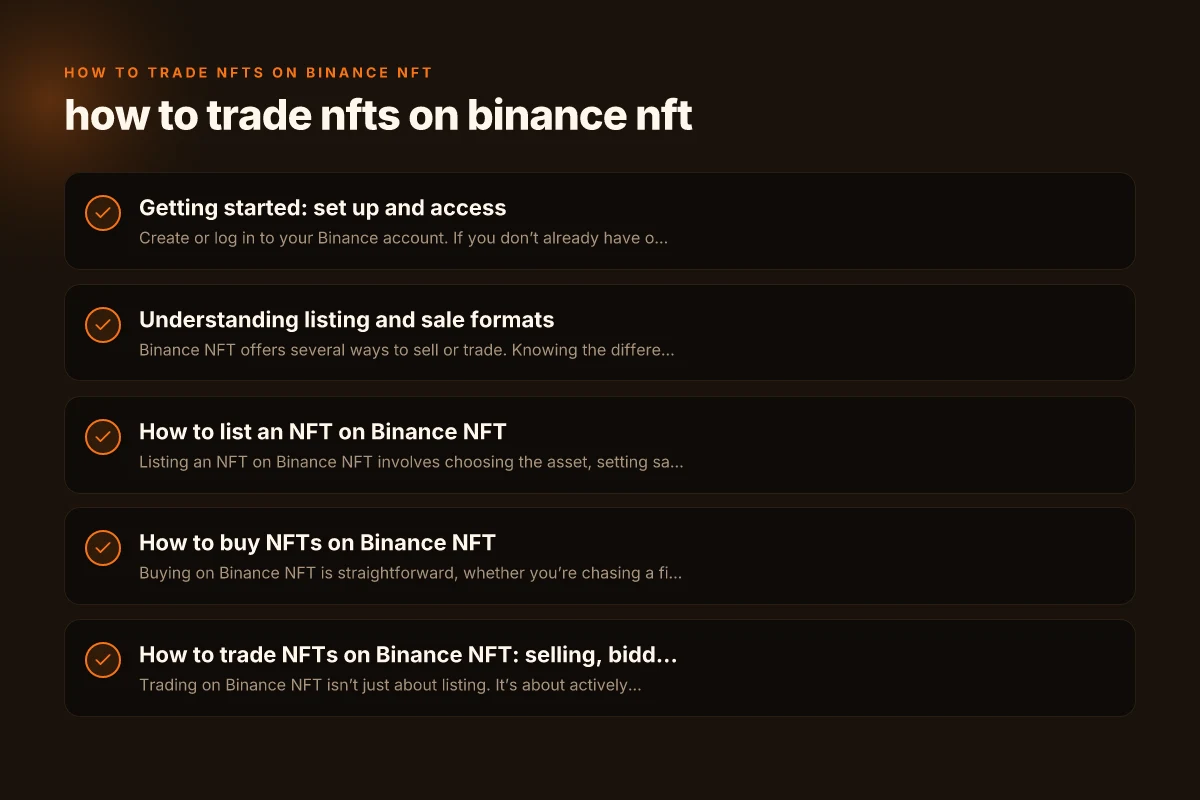
Understanding listing and sale formats
Binance NFT offers several ways to sell or trade. Knowing the difference helps you pick the best approach for your goals.
- Fixed price listings: Sell an NFT at a set price. Buyers can purchase immediately if they approve the price.
- Auctions: Create an NFT auction with a starting bid and optional reserve price. Bidders place bids over time.
- Offers: Accept bids directly on your NFT, or enable a system where buyers can submit offers and you choose to accept or counter.
- Bundled or batch listings: You can list multiple NFTs at once, up to your platform limits (often cited as a cap per listing period). This is useful for collections or related works.
- Secondary market vs. primary drops: Some NFTs are part of a primary drop (new mint) while others live on the secondary market where buyers trade existing tokens.
Practical tips
- Price competitively based on recent market activity for the same collection or similar works.
- Consider reserve prices carefully in auctions to avoid underselling your asset.
- When using offers, set clear terms (acceptable payment methods, royalty expectations, and closing windows).
How to list an NFT on Binance NFT
Listing an NFT on Binance NFT involves choosing the asset, setting sale conditions, and confirming the listing. Here’s a typical flow:
- Step 1: Select NFT. Open your Binance NFT wallet or dashboard and navigate to your owned assets. Choose the NFT you want to list.
- Step 2: Enter listing details. Choose the sale format (fixed price, auction, or offers). Set price, currency, and any auction parameters (start price, reserve price, auction duration).
- Step 3: Confirm listing. Review listing details, including royalties if applicable, and confirm. Some listings may require a confirmation via your connected wallet.
- Step 4: Publicity and timing. After listing, your NFT appears in the marketplace with a visible price or auction status. Share the listing if you want to drive more visibility.
Best practices for listing
- Set realistic royalties that align with the asset and your expectations.
- Use compelling titles and clear descriptions. Include relevant tags, collections, and artist information when available.
- Consider timing. List during peak activity periods or after marketing for drop-spike days when demand rises.
How to buy NFTs on Binance NFT
Buying on Binance NFT is straightforward, whether you’re chasing a fixed-price listing or a live auction. Tapfog: What It Is, How It Works, and Why ZoogVPN Is a Solid Choice for SAFE VPN Use
- Fixed price purchases: Find an NFT listed at a fixed price and click the purchase option. Confirm the transaction in your connected wallet.
- Auctions: If you’re bidding in an auction, place bids that you’re comfortable with and monitor the end time. Some auctions offer “auto-bid” features to continue bidding up to your limit.
- Offers: If the seller accepts offers, you can submit an offer and wait for acceptance or counter-offer.
- Cross-chain and drops: Binance NFT sometimes features cross-chain listings and timed drops. Stay updated on new drops by following Binance’s collection pages and announcements.
Buyer tips
- Do your due diligence: verify the collection, check the artist’s wallet, and review the asset’s metadata and provenance when available.
- Check royalties and creator terms. Some platforms maintain royalties on subsequent sales, which affects your long-term value and resale prospects.
- Watch for market trends. If a collection is surging, a well-timed purchase can yield quick resale profits.
How to trade NFTs on Binance NFT: selling, bidding, and negotiating
Trading on Binance NFT isn’t just about listing. It’s about actively participating in the market with strategy.
- Sell to the market: List at a competitive price and promote your listing within the Binance NFT ecosystem. If the asset is strong, you may sell quickly at market price.
- Auction dynamics: Auctions can attract bidding interest and drive up prices, but beware of market volatility. Set a reasonable starting price and reserve price to protect assets from underselling.
- Accepting offers: If a buyer makes an offer, evaluate it against your target price, market comparables, and your liquidity needs. You can counter-offer or accept.
- Timing: NFT prices can be highly time-sensitive. Consider market sentiment, seasonal activity, and drops when planning sales.
Comparison: fixed-price vs auction vs offers
| Format | Pros | Cons | Best For |
|---|---|---|---|
| Fixed price | Instant sale, predictable revenue | May miss higher bids | Quick liquidity, less complexity |
| Auction | Potential for higher prices, market activity | Requires monitoring, risk of low turnout | Valuing rare items, hype-driven drops |
| Offers | Flexibility to negotiate | Uncertain acceptance, might stall | When you want negotiation, keep options open |
Eco-system considerations
- Royalties: Ensure you understand the creator’s royalty terms and how they apply to future sales.
- Fees: Binance NFT may charge listing and trading fees that impact net profit. Know the fee structure before listing.
- Wallet security: Use strong authentication and secure wallets to protect assets and private keys.
Managing your collection and risk
- Diversify your portfolio. Don’t concentrate value in a single NFT or collection unless you have high conviction.
- Monitor liquidity. Some NFTs trade more liquidly than others. Check market depth and volume before listing.
- Set price floors. If you’re concerned about a price drop, set minimum sell prices or consider alternate sale formats.
- Track royalties and licensing. Some assets carry ongoing royalties for creators, which can impact resale profitability.
Examples of common scenarios Cisco AnyConnect: What It Is, How It Works, and Why ZoogVPN Recommends It
- Scenario 1: You minted a limited edition NFT and want to list at fixed price to attract quick buyers. Analyze recent sales of similar items to determine a fair price and set a modest royalty that still benefits you on future resales.
- Scenario 2: You hold a highly sought-after NFT and want to maximize returns. Start an auction with a reserve price and monitor bidding activity. Consider time zones and peak activity windows to boost participation.
- Scenario 3: You receive multiple offers on a single NFT. Evaluate each offer against your target price, time horizon, and potential future market movement. Counter-offers can help you reach a favorable agreement.
Security, verification, and best practices
- Verify listings and artist authenticity. Especially in NFT marketplaces with cross-chain listings, ensure you’re dealing with legitimate collections and creators.
- Use two-factor authentication (2FA) and secure storage for your seed phrases and wallet keys.
- Be mindful of fees and slippage. Crypto markets can experience price movement that affects your total spend or return on sale.
- Stay compliant. Respect Binance NFT terms of service and any jurisdictional regulations related to digital collectibles and crypto trading.
Quick-start checklist for traders
- Create a Binance account and complete verification if needed.
- Connect a compatible wallet and fund it for trading or listing.
- Explore the marketplace: search for collections, artists, and drops that interest you.
- Decide your strategy: fixed-price listings for quick sales, auctions for potentially higher returns, or offers for flexible negotiation.
- List or buy: follow the listing steps to place your NFT on sale, or bid on an asset you want to acquire.
- Monitor and adjust: track market activity, adjust prices if needed, and respond to offers promptly.
Final section: recommendation
If you’re new to Binance NFT, start with a few small, low-risk transactions to learn the mechanics without locking up large capital. Focus on a couple of trusted collections to understand price dynamics, royalty impacts, and auction timing. As you gain confidence, you can expand to more complex strategies, such as multi-item bundles or higher-stakes auctions. Always keep security at the forefront: use strong authentication, verify NFT provenance, and stay within your comfort zone on fees and timing. Binance NFT is a robust platform for buying, selling, and trading NFTs, but success comes from careful research, disciplined pricing, and active marketplace participation.