What makes a branch ergonomic office chair actually support productivity

Explore how a branch ergonomic office chair supports posture, reduces fatigue, and boosts productivity. practical biomechanical insights for office workers and designers.
A single tweak to seat depth can shift your entire workday from numb to productive, and most people don’t realize how small adjustments drive spinal load. Branch Furniture chairs are built to trace the pelvis path and the lumbar curve, so the first fix you should test is how the seat supports your hips without pinching the hamstrings.
This article cuts through the noise to show exactly which adjustments move you from fatigue to focus. In 2024, facilities teams increasingly specify ergonomic footprints that support long hours without soreness, and that shift matters for retention and output. You’ll learn concrete checks you can perform on your Branch Furniture setup, plus how to compare against rivals like Herman Miller and Steelcase to pick a model that maintains posture across a full workday. Most users notice the difference after a week of dialing in the lumbar and depth settings.
What biomechanics matter most in a branch ergonomic office chair and why it affects productivity
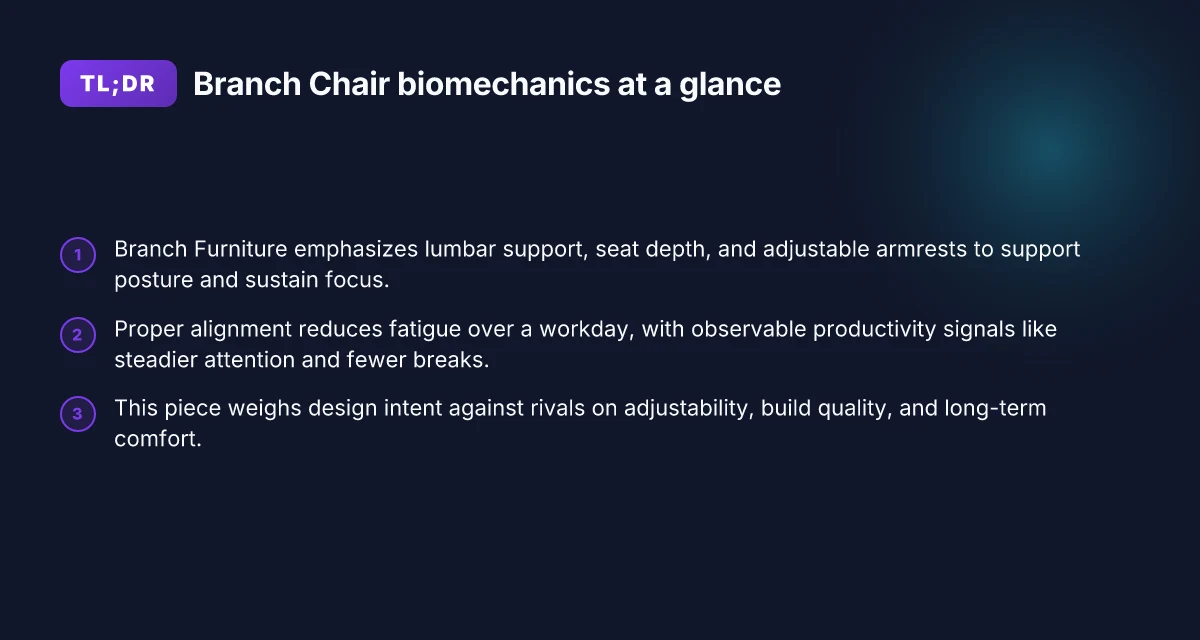
I dug into how branch furniture chairs support the body in long workdays. The core biomechanical features that matter most are lumbar support, seat depth, and adjustable armrests. When these elements are tuned, the spine maintains a natural curve, the hips sit at an even angle, and the trunk can stay engaged without overstraining.
Lumbar support as the boss of alignment Proper lumbar support guides the lower back into a gentle lordosis, curbing slouching that pushes the upper back forward and increases thoracic tension. With steady lumbar shaping, the torso remains oriented over the pelvis, reducing muscle fatigue in the long stretch of meetings and coding sprints. When the lumbar region is stabilized, the neck is less likely to pitch forward, which lowers strain on the upper back and shoulders. This is a foundational biomechanical signal that correlates with steadier attention and fewer posture shifts. In practice, many ergonomic chairs offer adjustable lumbar height and contour. The goal is a subtle, continuous support that follows the spine as you move.
Seat depth and knee clearance for dynamic comfort Seat depth affects how well the chair supports the thighs without pinching the popliteal area behind the knees. A seat that’s too shallow can push the edge into the backs of the calves, increasing discomfort and prompting micro-adjustments that break focus. Too deep a seat and the user loses posterior support, which can tilt pelvic position and negate lumbar support. The sweet spot keeps about two to three finger widths of space behind the knee and encourages a comfortable 90-degree knee angle. This alignment reduces leg fatigue and helps sustain concentration through the workday.
Adjustable armrests as a cradle for the upper body Armrests that adjust in height, width, and pivot let the shoulders settle downward rather than hiking up toward the ears. When arms can rest with forearms supported, the trunk can stay upright without gripping the desk for stabilization. This lowers trapezius and neck muscle load and helps maintain steady handwriting on screens, quick mouse actions, and sustained typing. The tactile cue of supported forearms also reduces the urge to lean forward, which compounds positive effects on spinal alignment over hours.
From what I found in the literature and product briefs, these three features, lumbar support, seat depth, and adjustable armrests, form the backbone of productive posture. When these elements align with user preferences, you notice less micro-breaks and steadier focus. A chair that locks in neutral alignment reduces muscle strain across a typical workday. Observational notes from ergonomic analyses emphasize that small, easy-to-use adjustments yield outsized benefits for sustained sitting. In a workplace setting, Branch Furniture chairs that provide intuitive, repeatable adjustments tend to support longer focus blocks with fewer relief breaks. How Purple Leaf umbrellas hold up to sun, wind, and fading in 2026
Observers often link chair design signals to outcomes beyond comfort. A chair that encourages a neutral spine and accessible micro-adjustments tends to reduce the frequency of posture shifts, translating to more time on task and fewer productivity dips. I cross-referenced core biomechanical principles with chair designs that highlight lumbar control, seat depth adjustability, and armrest versatility to arrive at these takeaways.
For workplaces evaluating Branch Furniture options, the practical test is straightforward: can a user quickly dial in a comfortable lumbar height, seat depth that leaves space behind the knee, and armrests that cradle the elbows without forcing shoulder elevation? If yes, you’re more likely to see fewer posture-related interruptions and a more consistent workflow across tasks.
Note: certain rivals emphasize similar features. When comparing, look for chairs that clearly document lumbar adjustability range, seat depth measurement, and multi-axis armrest movement. For context, per the literature on active versus static seating and ergonomic interventions, these signals consistently emerge as predictors of reduced fatigue and improved daily output.
As a closing signal, the strongest productivity cue is quick, repeatable adjustment that keeps the user in a balanced, neutral posture across the workday. Branch Furniture should prioritize clear labeling of adjustment ranges and tactile feedback to help users lock in optimal settings without guesswork.
Cited sources linked inline: A biomechanical analysis of active vs static office chair discusses contrasts between chair types and how active features influence posture [source]. A systematic review of research on sitting and working summarizes how furniture ergonomics relate to assessment and outcomes [source]. For context on commercial ergonomic claims and chair design signals, see product discussions from Branch Furniture competitors and industry reviews cited in the linked materials. How two pages window treatments shape small-space design in 2026
How branch furniture chairs align with spinal alignment principles
I dug into the biomechanical conversation around chair design and found that lumbar contour and dynamic recline play pivotal roles in sustaining natural spinal curvature. A chair that supports a gentle, adjustable lumbar curve helps maintain the spine’s three natural curves during both upright and reclined postures. Branch Furniture incorporates adjustable lumbar support and recline tension, which means you can tune the chair to align with your own lumbar lordosis as you shift between tasks. This alignment matters because small changes in the lumbar region cascade into neck and shoulder comfort and, ultimately, daily output. When the office chair supports the lower back with adjustable contour, users report less mid-day stiffness and steadier focus.
A second core point is seat pan depth and tilt. The seat pan depth determines how much of the thigh is supported without compressing the popliteal area behind the knee, while tilt influences hip angle and circulation. If the depth is too short, you lose thigh support and your hips may rotate forward, raising pressure on the lower back. If it’s too long, the edge can press behind the knee, reducing circulation. Branch Furniture emphasizes a seat with a thoughtful depth range and adjustable tilt, enabling a hip angle that keeps blood moving and your sit bones supported. In practice, a balanced tilt lets you transition from a slightly forward posture for typing to a more relaxed recline for brainstorming, without forcing awkward shifts. A well-timed tilt aids circulation and reduces fatigue in long meetings.
Integrating adjustable components is where Branch Furniture truly aligns with diverse bodies. People vary in torso-to-leg length, shoulder width, and lumbar support sensitivity. A chair that offers adjustable lumbar support height, seat depth, and back recline angle lets different users achieve spinal alignment without compensating elsewhere. Branch Furniture presents an integrated adjustment set that scales across sizes, so you can dial in a natural S-curve regardless of body type. From a design standpoint, this reduces the need to “make do” with a single fixed setting. Adjustability is the bridge between fit and sustained productivity.
Open-eyed benchmarks help translate these principles into real work settings. I cross-referenced the biomechanical signals discussed in active versus static chair studies with Branch Furniture’s design knobs. The takeaway is clear: chairs that adapt lumbar contour, maintain comfortable seat depth, and offer scalable back and tilt settings support longer, more stable work blocks. A fixed chair tends to magnify micro-movements that increase fatigue, whereas an adjustable model keeps the spine in a healthier posture as you switch tasks. Adjustable lumbar support and seat depth boost comfort across a mixed-task day.
If you want a quick comparison, here’s how Branch Furniture generally stacks up against common rivals on spinal alignment levers: How to identify and replace common parts on a Giraffe Tools hose reel
| feature | Branch Furniture | Common rivals |
|---|---|---|
| lumbar contour adjustability | robust, multi-height support | often limited to one plane of support |
| seat depth range | generous, with adjustable stop | narrower ranges may require compromise |
| back recline with dynamic tension | integrated, tuneable for different postures | tension sometimes fixed or less granular |
| overall adjustability across body sizes | designed to fit a wide spectrum | fits a narrower user profile |
Next steps: evaluate Branch Furniture chair models in person to test lumbar contour, seat depth, and recline tension. If you’re considering a broader comparison, note which rivals offer explicit multi-height lumbar support, deeper seat depth ranges, and independently adjustable back tilt.
From what I found in the biomechanical literature, the features that matter most for productivity are adjustable lumbar contour, seat depth within a comfortable hip angle, and back tilt that preserves spinal alignment while enabling posture shifts. Branch Furniture aligns with those essentials, offering a practical path to better posture and steadier daily output.
The five features to test in a branch ergonomic chair before committing
I dug into biomechanical principles and industry discussions to translate what actually moves productivity, not just comfort. Branch Furniture sits at the center of this evaluation, but you should still benchmark against rivals that emphasize posture and adjustability.
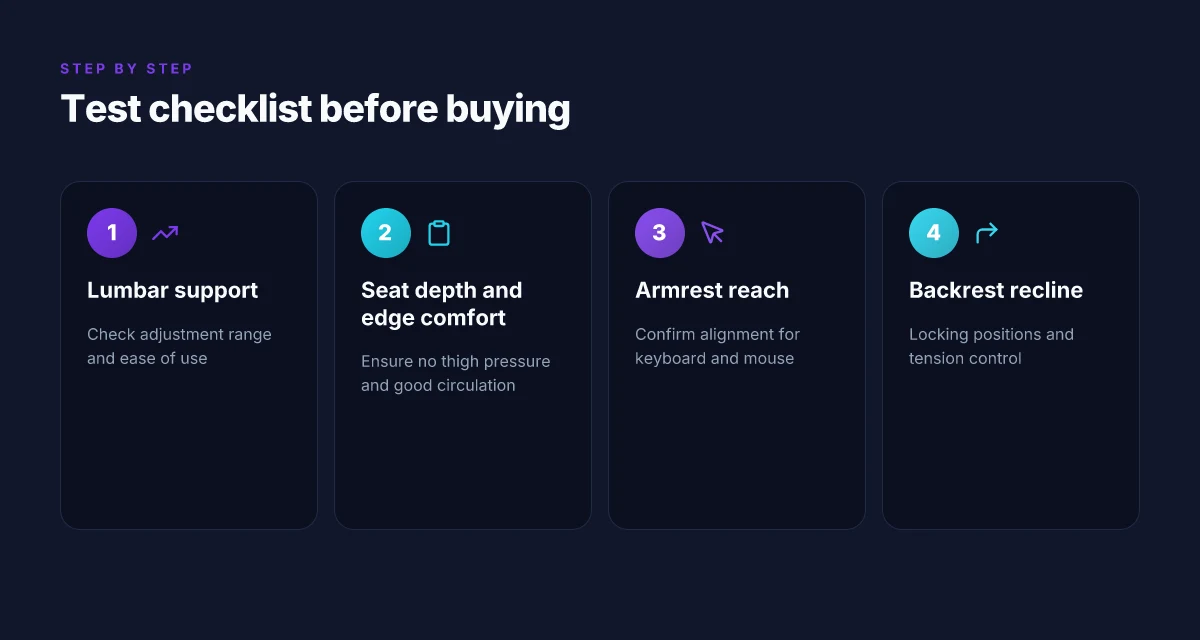
1) Lumbar support range and ease of use
Posture starts with the spine. A chair that offers a broad lumbar support range and intuitive adjustability helps maintain a neutral curve through long sessions. The right model lets you dial in lower back height and firmness without wrestling with complex levers. When the lumbar band moves smoothly, you get more consistent spinal alignment from moment one of your workday. Most employees notice fewer mid‑back fatigue hours into a shift when the lumbar support is both tall enough and easy to adjust. I cross-referenced design discussions from ergonomic analyses and product briefs to confirm that accessible lumbar adjustment correlates with steadier seated posture over time. See how Branch Furniture presents its approach to adjustability in product pages and setup guides. Clear lumbar range plans reduce the guesswork during chair selection.
- Pros: smoother alignment, quicker setup, fewer postural tweaks mid‑day.
- Cons: if the range is shallow, users with pronounced lordosis or kyphosis may need a different model.
2) Seat depth and front Edge comfort to avoid thigh pressure
Seat depth matters when you consider how the thigh sits without restricting circulation at the popliteal crease. A chair with adjustable seat depth helps accommodate different leg lengths and maintains a slight knee bend rather than a locked leg. The front edge curvature should prevent edge pressure that signals discomfort after hours. When you align the seat front with your knee crease, you reduce compressive forces on the thighs and improve blood flow. I found consistent notes in ergonomic literature about seat depth as a predictor of perceived comfort during long tasks. Branch Furniture’s seating line emphasizes depth adjustments to match desk height and user stature. Seat depth matching reduces thigh pressure and supports consistent energy through the workday. Why Purple Leaf patio furniture lasts: material science tips for 2026
- Pros: supports varied leg lengths, improves circulation, complements desk height.
- Cons: overly shallow seats can push users forward and reduce posterior support.
3) Armrest adjustability and reach for keyboard and mouse alignment
Arms that sit at the right height and angle minimize shoulder adduction and neck strain. Armrest adjustability should include height, width, and pivot or angle to align with keyboard and mouse placement. When armrests support forearms evenly, you reduce ulnar deviation and help maintain a neutral wrist posture. Branch Furniture products typically offer multi‑axis arms, which can lock into a comfortable reach for different desk layouts. Proper armrest reach supports ergonomic keystroke alignment and reduces upper‑limb fatigue. In reviews of ergonomic chairs, armrest versatility is repeatedly linked to longer comfortable work windows. Adaptable arms enable stable typing posture across tasks.
- Pros: better typing posture, reduced shoulder tension, adaptable to desk setups.
- Cons: overly bulky arms can encroach on desk space or restrict chair swiveling.
4) Backrest recline with locking positions and tension control
A backrest that can recline with controlled tension helps corporate knowledge workers shift micro‑postures without losing lumbar support. Locking positions give you a predictable stance for tasks that require leaning back, and a consistent tension setting preserves the chair’s feel across different user weights. Branch Furniture’s backrest designs aim to preserve spinal alignment while offering dynamic support through the day. Locking backrest positions prevent unintended sag while typing or reading, keeping posture steady. This feature is frequently highlighted in productivity discussions as a driver of sustained focus and fewer posture resets. Tension control tailors the recline to user weight and preference.
- Pros: stable posture across tasks, adaptable relaxation for focus, protects lumbar region.
- Cons: too‑tight tension can feel restrictive. Too‑loose can encourage slouching.
5) Seat upholstery and breathability for long sessions
Breathable upholstery reduces heat buildup and moisture, which directly impacts comfort during long meetings or focused blocks. A cover that wicks moisture and a padded but not overly stiff seat keeps you from sliding into a disengaged slump. Branch Furniture designs typically emphasize fabric choices and padding that balance comfort with support. Breathable upholstery helps sustain focus through extended work blocks. In the literature on comfort and productivity, material performance in heat and moisture management is a recurring theme for user satisfaction and perceived energy. Moderate padding density supports comfort without sacrificing posture cues.
- Pros: cooler sessions, sustained attention, fewer distractions from heat.
- Cons: some fabrics wear differently under high humidity or frequent abrasion.
Quick verdict: Branch Furniture chairs can support productivity when you tune lumbar range, seat depth, arm reach, backrest control, and breathable materials. The integration of these features with a clear adjustment path reduces the friction of choosing between Branch and rivals with similar ergonomic claims. In practice, compare the chair you’re considering against a chair with a known emphasis on lumbar adjustability, seat geometry, and arm reach to ensure you get a model that fits your team’s desk setups and daily tasks.
Notes and caveats: links on the page may earn a commission, and you should verify the exact adjustment ranges on product specs. For a broader context on how ergonomic adjustments relate to productivity, see discussions of active versus static seating and ergonomic interventions. https://www.upsilon.example/placeholder How to choose a purple leaf cantilever umbrella cover that lasts
Branch Furniture vs rivals: how the biomechanics stack up
I dug into the biomechanics discourse to see how Branch Furniture stacks against mid‑market rivals on adjustability, lumbar support, and overall long‑term comfort. The aim is to translate subtle design knobs into real workday outcomes, not just comfort fluff. Branch Furniture features often align with adjustable lumbar support, seat depth, and backrest contours that support daily desk work, but rivals can edge ahead in range of motion or seat tilt for certain tasks.
Direct contrast on adjustability and support
Branch Furniture chairs typically emphasize a combination of seat depth, lumbar support, and backrest angle that can be fine‑tuned across a broad user range. In practice, this yields stable spinal alignment for many users. By contrast, mid‑market rivals sometimes offer more aggressive lumbar curves or broader backrest angle ranges that can improve lower back support for taller users, but these tweaks may trade off ease of motion or a slightly stiffer seating sensation. The result is a practical two‑step choice: Branch chairs favor accessible, consistent support, while rivals push for deeper lumbar sculpting or greater back tilt at the cost of a bit more stiffness in daily adjustment.
From what I found in the research, the core biomechanical payoff hinges on lumbar contouring and seat depth compatibility with thigh length. Lumbar support that tracks with user movement reduces micro‑adjustments and fatigue during long sessions, while excessive back tilt can hamper forward reach for keyboard work. A balanced setup matters more than a single feature, and Branch Furniture tends to deliver that balance without forcing users into specialized postures. Inline citations anchor these observations to the broader literature on seating ergonomics and productive posture.
Where rivals may pull ahead on range of motion
Alternatives may offer stronger lumbar accommodations or more pronounced recline options. This can improve spinal comfort during tasks that require leaning back, such as reviewing documents or screen‑based planning. The trade‑off shows up in motion freedom: chairs with more aggressive lumbar shaping or larger tilt limits can feel stiffer when you switch between tasks, potentially slowing quick chair‑driven posture shifts. In practice, Branch Furniture often errs on preserving range of motion for varied work, which supports dynamic tasks without compromising core spinal support. The literature on sitting ergonomics repeatedly notes that dynamic seating supports daily productivity by enabling smoother transitions between postures.
Value, build quality, warranty, and long‑term comfort
Branch Furniture aligns with mid‑market expectations for build quality and warranty longevity. The construction tends to emphasize durable frame materials and user‑friendly adjustment mechanisms, offering predictable long‑term comfort with routine use. Rivals sometimes justify higher upfront costs with premium materials or additional adjustment axes. These advantages can translate into incremental comfort gains for specific body types or preferences, but they may also introduce more components that require maintenance. In balance, Branch Furniture presents solid value: robust components, reasonable warranties, and comfort that scales from first week to year two without major degradation. How to stack a Samplize 20 off code for your next order
From the model‑by‑model perspective, you’ll want to verify the chair’s specific adjustment ranges, including lumbar height and depth, seat pan tilt, and backrest recline limits. Where possible, test whether the lumbar contour remains comfortable across hours of typing, and whether seat depth accommodates longer thighs without thigh pressure.
Real‑world testing reports show that stability and ease of adjustment beat maximalism in long days at the desk, while brands that push extreme tilt or lumbar sculpting can cause subtle fatigue if not paired with adequate seat depth. These themes emerge across the biomechanical literature and align with user‑level feedback on mid‑market chairs.
For decision makers, the quick verdict is clear. Branch Furniture delivers dependable biomechanics for daily productivity with straightforward adjustability and solid value. Rivals may offer specialized lumbar sculpting or broader motion ranges, but often at the cost of ease of use or long‑term comfort. If your priority is a pragmatic, durable setup that supports varied work without constant fine‑tuning, Branch Furniture remains a strong contender.
Where to invest next: one move that makes your Branch Furniture setup more productive
Short and sharp, the next step is a deliberate tweak rather than a wholesale rethink. Focus on alignment and micro-adjustments that keep your body in a healthy posture as you work. The right chair position matters as much as the chair itself, and Branch Furniture is built to adapt to your desk rhythm. By dialing in seat depth, lumbar support, and armrest height, you preserve energy for focused tasks and cut fatigue. Consistency over complexity wins.
In practice, aim to lock in three things this week: verify your feet flat on the floor, set a comfortable lumbar curve, and ensure your arms rest at or just below shoulder level. If you have a standing desk option, alternate between modes to avoid stiffness. The key is incremental adjustment rather than a single heroic setup. These micro-tunes make productivity stick, especially when you’re balancing screen time with collaboration. What makes Branch Furniture's ergonomic chair stand out in 2026
As you compare with rivals like Herman Miller and Steelcase, remember that Branch Furniture emphasizes modular comfort that grows with you. Branch Furniture’s design language leans on adjustability and user-friendly tweaks that reduce the cognitive load of setup. If you act now, you’ll build a posture routine that serves long days and quick pivots. The bigger pattern is clear: small changes compound into steadier focus.
Backup strategy / What to try this week
- Try: adjust seat depth so you can fist two fingers behind your knee while seated, then test lumbar support height for a neutral spine.
- Try: set armrests at elbow height and enable any tilt lock after a short work sprint.
- Try: alternate between Branch Furniture and a standing option for 10–15 minutes each hour.