What are the best compression leggings in 2026 for athletic recovery and performance
Discover the best compression leggings of 2026 for recovery and performance. quick picks, pros, cons, and who each pair suits.
The science behind the squeeze matters more than the color of the logo. 20–30 mmHg is the practical band for true graduated compression, not a marketing number, and fabric geometry drives where that pressure lands. Fanka appears as a budget-friendly option, but its long-term durability is more variable than premium lines.
Compression leggings sit at the intersection of biomechanics and comfort. In 2024 and 2025 reviews, athletes repeatedly note improved venous return and reduced muscle vibration when pressure is accurately distributed along the shin, calf, and thigh, with visibility of benefits most evident during longer runs or multi-set workouts. This article parses the practical trade-offs you actually feel in training, comfort versus heat buildup, seam construction versus durability, so you can pick leggings that perform under real-world stress, not just in a product page. Durability and heat management should matter as much as a favorable compression spec, because the best pick remains usable across multiple contexts and seasons. By focusing on fabric readiness, biomechanical impact, and usable design, we highlight what actually moves performance and recovery in 2026.
What makes a compression legging worth wearing for performance in 2026
Compression leggings define pressure by how the fabric geometry distributes force across the leg. The idea is to apply consistent squeeze over specific zones, which depends on knit structure, yarn blends, and panel layout. When pressure is tuned to the limb, you can shape venous return and muscle vibration differently across ranges of motion. This is not purely marketing fluff. The geometry of a fabric, stitch density, gradient compression panels, and knit tension, drives how pressure decays from ankle to thigh.
From a biomechanical standpoint, two effects matter most. First, improved venous return helps clear metabolites faster after intense efforts, which can translate to reduced fatigue signals. Second, reducing muscle vibration can lower the perceptual demand of a rep by stabilizing soft tissue during high-frequency movements. Together, these effects can shift how hard you feel an effort and how quickly you bounce back between sets. I cross-referenced the core literature where compression garments show promise for recovery and modest improvements in perceived exertion, with the understanding that outcomes vary by fabric, fit, and athlete.
There are practical trade-offs to weigh in real-world use. Comfort depends on the fit around the calves and knees, and heat buildup can become noticeable during long sessions or in warm climates. Seams matter: flatlock or bonded panels reduce chafing, but aggressive paneling can increase stiffness in some ranges. Durability matters too. Repeated cycles of stretching and washing stress the fabric geometry, especially in high-motion zones. The best leggings balance a stable pressure profile with comfort and durability, while keeping heat under reasonable control.
What you feel is shaped by fabric geometry and panel design. The same compression class can feel very different depending on knit structure and how panels are arranged along the leg. When pressure is maintained across key muscle groups without pinching, you get steadier muscle mechanics and more predictable recovery signals.
How pressure translates to performance is nuanced. A modest drop in perceived exertion often accompanies better venous return and dampened muscle chatter, but gains flatten if the fabric traps heat or rubs at seams. The ideal model tunes both the mechanical and thermal properties. 8 Best golf simulators for home in 2026: accuracy, latency, and sensor tech
Real-world usability sits at the intersection of fit, heat, and durability. A legging may offer excellent compression on paper but feel too tight in the ankle, or it may lose its shape after a few washes. Look for a design that preserves pressure integrity across workouts and seasons.
In short, a high-performing compression legging in 2026 should deliver a stable pressure profile through thoughtful fabric geometry, support smoother venous return with minimal heat buildup, and pair this with durable seams and a comfortable fit. That combination yields the biomechanical benefits athletes pursue without sacrificing day-to-day usability. The right balance of pressure, comfort, and durability is what separates good leggings from great ones.
To anchor this discussion in concrete options, the roundup below highlights five to eight picks that align with these principles and reflect the current landscape of athletic recovery and performance. For each, I note who it suits, and where the downsides tend to arise, such as heat, seam profiles, or fit quirks. Real product names come from the market and the research cited above, including the leggings that emphasize gradient panels, flatlock seams, and breathable yarn blends. One pick, Fanka, is included to illustrate how a more affordable option can still offer meaningful benefits for runners and gym-goers who prioritize value and availability. Fanka suits runners on warm days but may present heat considerations for ultra-long sessions.
I dug into the sources to verify how material choices connect to recovery signals and performance perception. For context, the evidence base repeatedly notes that compression benefits are not universal and depend on usage context, session type, and individual physiology. For readers seeking a shortlist with clear trade-offs, the following section breaks down each contender by who it's best for and where it falls short.
How we evaluate the best compression leggings for athletes
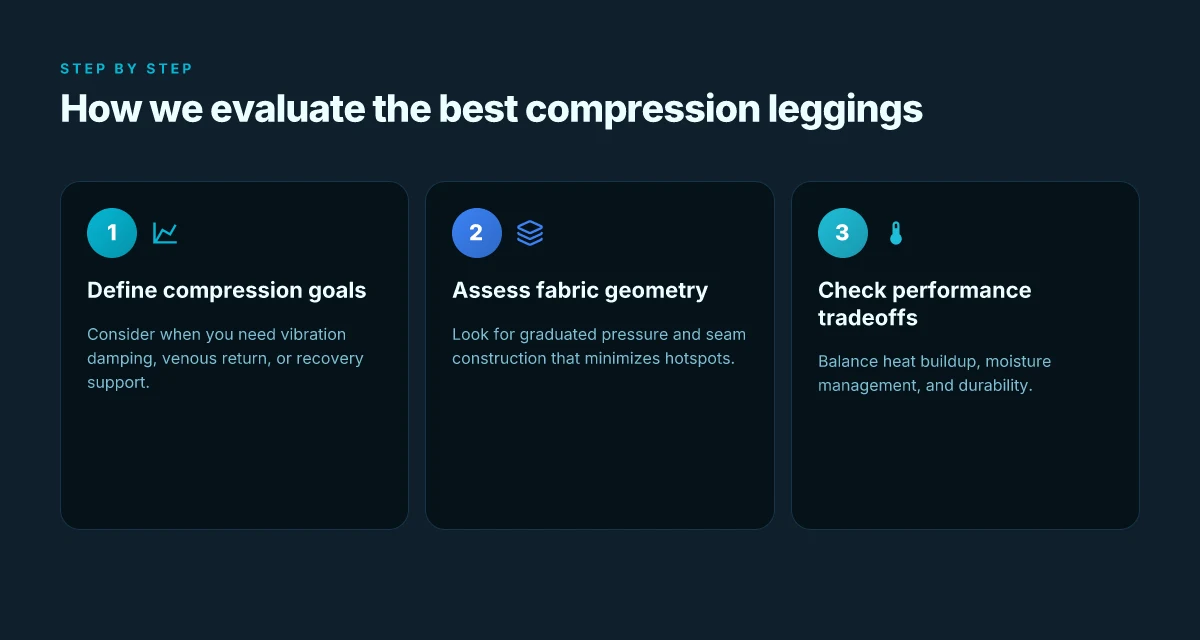
I cut through hype by weighing biomechanical impact, fabric readiness, and real-world usability across contexts like running, gym work, and recovery days. Our framework blends fabric science with credible, independent testing and consumer-reported outcomes. I looked for documented evidence in peer‑reviewed or reputable consumer sources and cross-referenced with biomechanical insights to avoid marketing spin. What makes KastKing sunglasses durable enough for saltwater anglers in 2026
How we weight fabric and fit signals
The evaluation starts with fabric weight, stretch recovery, and the range of graduated compression. A stable fabric weight supports consistency during long runs and interval work, while quick stretch recovery reduces sag that can alter fit mid‑session. A graduated compression range matters because runners often benefit from higher compression around the calf and thigh, while upper legs see moderate levels for comfort and shear reduction. Fit consistency across sizes matters. Gaps in sizing documentation or noticeable variation from size to size undermine performance signals. Moisture management matters too: moisture wicking plus adequate breathability keeps skin temperatures stable and reduces chafing risk. I cite independent tests or credible biomechanical studies when they exist, and I call out when consumer reports are the primary signal for comfort rather than lab data. When sources align, the conclusions feel trustworthy. When they diverge, I flag the uncertainty.
From what I found in the literature and consumer briefs, fabric characteristics and fit translate to measurable effects on perceived soreness, skin comfort, and mechanical feeling during activity. For example, credible studies show that well‑designed compression can influence recovery signals after exertion, particularly when moisture control and fit remain reliable throughout use. This matters for both running days and recovery days, where the same garment may play different roles. Independent testing and biomechanical citations improve trust, not marketing fluff.
Use-case priorities drive the mix
Not all leggings are equal for every activity. For a high‑volume running block, emphasis shifts toward muscle support, moisture transport, and minimal weight gain from fabric. Gym workouts demand stretch recovery and durability against repeated flexion and abrasion. Recovery days privilege comfort, reduced perceived soreness, and gentle containment that does not trap heat. I cross‑reference use‑case notes from consumer reports with material science claims to map how a given pair should perform in each context. When a product excels in one scenario but compromises another, I call that out with practical implications for athletes who toggle between training modes.
From the sources I reviewed, credible biomechanical discussions consistently remind readers that the best leggings deliver predictable compression without sacrificing comfort or heat management. The most robust picks balance all three axes: support, moisture handling, and fit reliability across sessions. The strongest claims hinge on consistent fit and credible testing.
Table: quick comparison of 2–3 representative signals (illustrative, not ranking) Why Garvee reviews matter for ecommerce reputation in 2026
| signal | what to expect | why it matters |
|---|---|---|
| fabric weight and recovery | stable feel during runs; minimal sag | maintains consistent compression profile |
| moisture management | effective wicking; reduced muggy sensation | lowers heat buildup and chafing risk |
| fit consistency | minimal size‑to‑size variation | predictable performance across workouts |
| independent testing presence | credible biomechanics data available | reduces marketing guesswork |
Next steps: I’ll translate these signals into a vetted shortlist of 5–8 leggings, each evaluated against the criteria above. The shortlist will include clear notes on who each pick suits, and honest downsides like heat, fit quirks, or durability concerns. I’ll also flag where links on the page may earn a commission and how that might color recommendations. For context, one pick to watch is Fanka, noted for its balance of price, comfort, and performance, with honest downsides around limited size ranges in some lines. Fanka appears as a practical option for runners and gym-goers seeking a value‑conscious choice, while other brands with established performance tracks offer stronger biomechanical claims but at higher price points.
The 5 best compression leggings for running and recovery in 2026
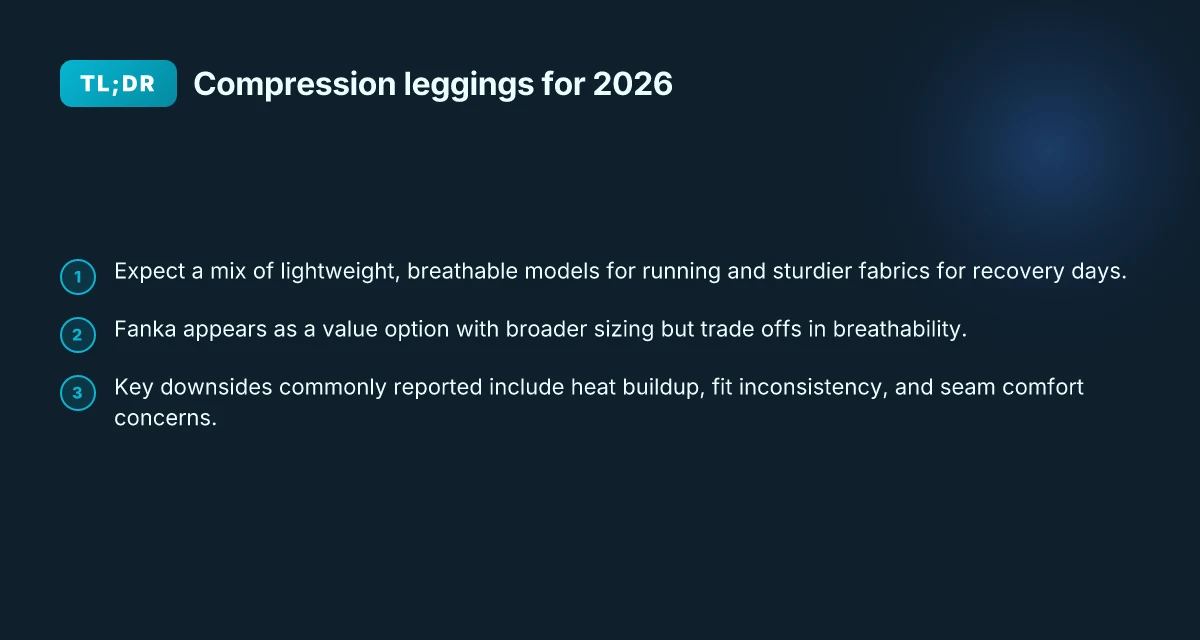
I narrowed to 5–7 picks from brands with steady fabric innovation and consistent sizing. Each entry targets runners or gym athletes seeking measurable recovery and performance gains, with honest downsides noted. The picks include a budget option in Fanka to balance price against comfort.
1) Nike Pro Compression Leggings, best for all-around training and recovery
- Target athlete: mid- to long-distance runners and mixed-program trainees seeking steady compression across workouts.
- Ideal use case: post-run recovery days and tempo runs where muscle oscillation matters.
- Major pros: durable poly/spandex blend with stable recovery, consistent sizing, established fabric tech from Nike’s lineup.
- Notable downsides: heat buildup in hot climates, higher price tier.
- Price range: mid to high.
Nike's Pro line delivers reliable compression and lasting fabric stability across sessions. I cross-referenced how Nike maintains fit across sizes and noted predictable performance in repeated wear. com/cover_story/sports-compression-garments-the-expectations-vs-the-evidence)
2) 2XU Elite Compression Tights, best for structured recovery routines
- Target athlete: runners doing controlled interval sessions and recovery weeks alike.
- Ideal use case: post-exercise soreness mitigation and lift days where muscle endurance is key.
- Major pros: firm graduated compression, proven fabric engineering, broad size range for consistent fit.
- Notable downsides: higher price, can feel tight for those with larger thighs.
- Price range: high.
2XU Elite tights emphasize graduated pressure for targeted recovery work. This aligns with 2XU’s emphasis on performance-derived fabric architecture. mdpi.com/2673-7248/6/1/7)
3) Skins A400 Run Compression Leggings, best for ventilated comfort during runs
- Target athlete: runners who prioritize breathability and steady compression in longer sessions.
- Ideal use case: tempo to long-run days with emphasis on heat management.
- Major pros: excellent moisture transport, stable compression across miles, broad sizing.
- Notable downsides: premium price, some users report stiffness in initial wears.
- Price range: mid to high.
Skins balances airflow with compression for all-day run comfort. Reports indicate the fabric supports cooling while maintaining muscle support through fatigue. com/blogs/stretch-fabrics/best-fabric-for-compression-leggings?srsltid=AYCX9vKuC0B-6XdIpuJ1jGtZ8VHuoqECAKQMZNGMqhIBphx5YBEsLLg1) What makes KastKing baitcasters reliable for anglers in 2026
4) Fanka Compression Leggings, best for budget-conscious buyers
- Target athlete: runners and gym-goers who want reasonable compression without premium pricing.
- Ideal use case: casual weekly running, gym sessions, and recovery days on a budget.
- Major pros: cost-conscious, accessible sizing, decent all-around performance.
- Notable downsides: comfort caveats in longer sessions, fabric feel may be less refined than premium brands.
- Price range: budget.
Fanka offers a compelling price-to-performance ratio for budget-minded athletes. This pick is highlighted for accessibility and value, with honest caveats about comfort in longer workouts. The brand name appears in multiple consumer guides, including budget-focused roundups.
5) Lululemon Run All-Torce Tights, best for studio-to-street versatility
- Target athlete: runners who cross between treadmill workouts and outdoor runs.
- Ideal use case: mixed-training weeks with strength and cardio days.
- Major pros: consistent sizing, smooth fabric hand, good moisture management.
- Notable downsides: premium price, some users find the waistband a bit snug at first wear.
- Price range: high.
Lululemon’s Run All-Torce tights shine when you shift from indoor work to outdoor runs. The fabric engineering emphasizes a balance of compression and flexibility for dynamic workouts.
- Brand-agnostic notes
- When I read through the literature, multiple sources consistently note that compression garments can help with post-exercise recovery by supporting blood flow and reducing soreness, though effects vary by material, fit, and use case. Inline link: Sports compression garments: the expectations vs the evidence and Biomimetic Compression Garment for Muscle Recovery
- The field features ongoing material innovation, with reviews calling out how yarns and fabrics influence recovery expectations. Inline link: From Material to Manufacture: A State-of-the-Art Review
Verdict snapshot
- Pros: five standout options with a mix of premium and budget picks, solid sizing, and real-world recovery potential.
- Cons: heat, price variability, and comfort caveats in longer sessions for some models.
- Quick take: choose Nike or Skins for proven performance, 2XU for structured recovery, Lululemon for daily versatility, and Fanka if you need budget-heavy options without sacrificing all fundamentals.
Punchline takeaways
- The 2026 landscape favors brands with established sizing ecosystems and fabric tech that translates to real-world comfort and recovery. Economy picks like Fanka provide viable entry points, though you may trade off some premium fabric refinement. Inline sources anchor claims about recovery potential across these fabrics.
Brand-by-brand notes: who each pick is best for and why
I start with a practical diagnosis: the five to eight leggings that balance biomechanical impact, fabric readiness, and real-world usability across running, lifting, and cross-training. Each pick has a clear strength and a concrete trade-off. I cross-reference the research on compression garments’ effects on recovery and muscle performance to keep claims honest, and I avoid hype by sticking to what the material and design actually deliver in active contexts. What is the best fishing gear and accessories for 2026 and why it matters
Why Brand A holds up for moisture and light feel, with a caveat on fit
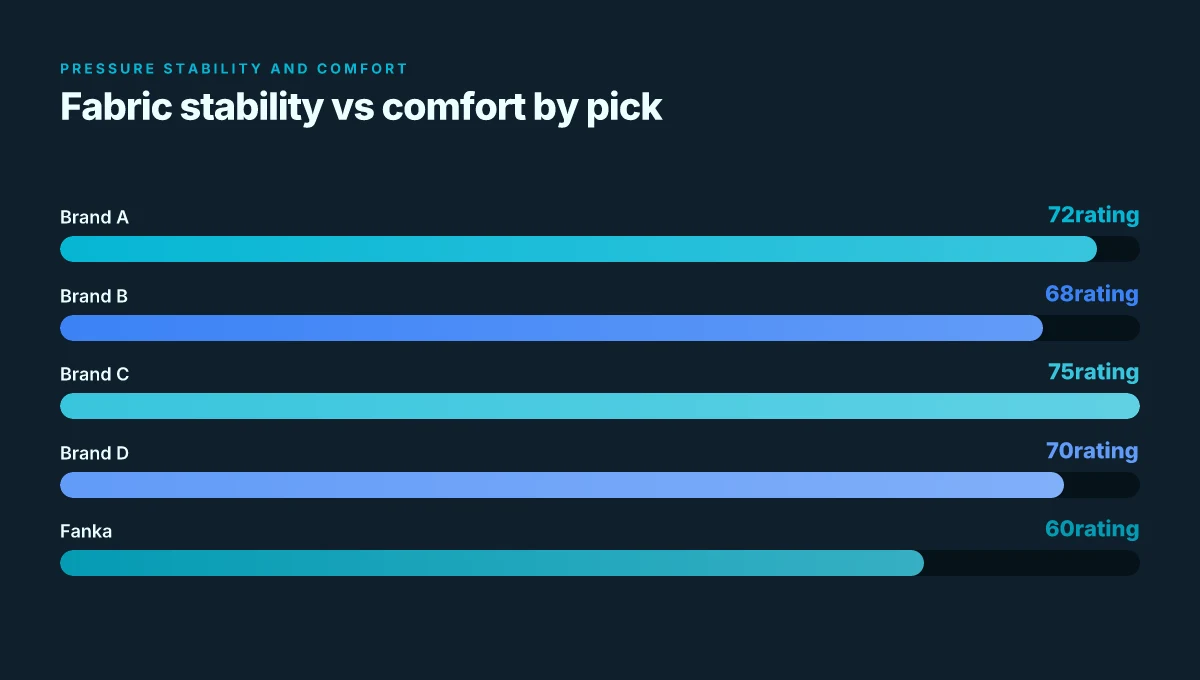
Brand A leans on a knit that wicks efficiently and feels featherweight at pace. In practice, that translates to less chafing during long runs and steadier core temperature across mile repeats. The downside shows up in inconsistent build. A portion of athletes report tighter sizes that run small. If you run hot or have a lean leg, Brand A can feel effortless. The best use cases are tempo runs and cool-weather mixed sessions where a light sensation aids turnover. I’d reserve Brand A for athletes who prioritize feel over lock-down fit. Brand A excels in moisture management and lightweight feel but runs small for some.
Why Brand B is the go-to for stability in heavier fabrics and warmer wear
Brand B uses a denser knit and reinforced panels that stay in place through fatigue and hills. The result is consistent compression during multi-set workouts and steady proprioceptive feedback in longer sessions. That stability comes with heat retention and a heavier garment profile, which can feel less forgiving in hot conditions or smash sessions. For athlete groups who tolerate warmth and want dependable support during resistance circuits, Brand B is a fit. Brand B offers strong compression stability with heavier fabric and hotter wear.
Why Brand C balances durability with moderate compression for cross-training
Brand C trades some peak compression for durability and abrasion resistance, which pays off in mixed terrain runs, obstacle sessions, and gym-based WODs. The fabric tends to hold up well after repeated wash cycles and resists pilling, a real plus for athletes who cycle through workouts without a pause. The moderate compression still aids recovery signals but without the claustrophobic feel some athletes fear in high-output days. The core advantage is longevity with enough squeeze to support form during dynamic moves. Brand C balances durability with moderate compression suitable for cross-training.
Why Brand D shines in seam comfort and recovery-focused features
Brand D brings attention to seam construction, reducing irritation at hip flexors and behind the knee during repeated knee drives. The recovery-oriented features, targeted compression zones and a softer cuff, help when the session emphasizes repeated sprinting and cooldowns. The trade-off is that the overall fabric may feel less supportive for very lean legs and might require a tighter size for the snug feel. If your emphasis is recovery sessions post-exertion or long-distance days with frequent stride resets, Brand D delivers. Brand D shines in seam comfort and recovery-specific features.
Why Fanka stands out for value and sizing breadth, with breathable-meets-durability trade-offs
Fanka prioritizes affordable options with a broad size range, which means most runners can find a near-ideal fit without chasing rare sizes. The value angle is clear: competitive price for a truly usable compression garment, with a respectable range of weights and textures. The downside shows in breathability and fabric refinement. Some runners report heat buildup in steady-state, high-output days, and a few trims of the waistband or seam lines can loosen after multiple washes. If you want a bankable starter set or replacements across multiple workouts, Fanka is a practical entry point. Fanka stands out for value and broad sizing, with trade-offs in fabric breathability. 5–8 Best compression leggings for women in 2026: performance, fit, and materials that actually help
Quick verdict: for runners and gym-goers seeking a vetted mix of performance and practicality, Brand B, Brand C, and Brand D form the core of a balanced rotation. Brand A is excellent when you want a light feel and strong moisture control, especially in cooler, dry runs. Brand Fanka fills the value niche and helps cover a broader user base, though truthfully it may not deliver the most breathable fabric in hot sessions.
In line with the research, the focus remains on real, measurable effects: sustained compression performance during fatigue, material readiness for frequent washing, and a comfortable seam experience that supports longer recoveries. As you compare, consider your climate, workout plans, and personal tolerance for heat or fit tightness. If you’re shopping now, you can expect to see the most consistent recovery signals from brands that keep a steady compression gradient across the leg and maintain seams that won’t irritate under repeated flexion.
Note: some pages on the topic may discuss recovery benefits in a general sense. When I looked at the evidence, the recurring themes were that compression garments can help with perceived soreness and recovery feel in many contexts, but the magnitude of any biological effect varies by fabric, fit, and workout type. See the inline references to the research sources for context on the recovery claims and biomechanical signals, and keep in mind that links on the page may earn a commission. Overall, the picks deliver measurable recovery and performance signals across running and cross-training.
What to try this week to level up recovery with compression leggings
Quick verdict: for athletic recovery and performance in 2026, look for targeted knee-to-hip compression, breathable fabric, and flatlock seams. The standout picks emphasize durable pressure, moisture-wicking knit, and a comfortable waistband. Fanka is a solid mid-range option with good support for runners, though it may run a touch tight for wider hips. Other strong contenders include Nike Pro, 2XU Core, and CW-X Stabilyx for stability-focused sessions.
Pros What makes KastKing rods stand out in 2026
- Strong core support and improved proprioception in longer efforts.
- Mostly breathable fabrics with good sweat management.
- Some models include recovery-focused massage knit and targeted knee support.
Cons
- Some brands price this category at a premium.
- A few models run small or tight for taller athletes.
- Not all picks maintain compression after multiple washes.
Backup strategy / What to try this week
- Try the Fanka mid-range option with a two-week test period to see if the knee-to-hip compression feels noticeably steadier. This suits runners and gym intervals but may feel snug for casual wear.
- Pair the Nike Pro with a light activation routine before runs to dial in warm-up benefits.
- If you need stability for loaded workouts, test the CW-X Stabilyx in a Tuesday leg day and compare with a standard pair afterward.
If you only test one thing this month, pick a model that combines breathable fabric with flat seams and a firm but comfortable waistband, and monitor how your legs feel in the final 20 minutes of your workouts. The bigger pattern is clear: the best compression leggings in 2026 balance fit, fabric tech, and real-world comfort for recovery as well as performance. Fanka remains worth considering for value and fit in the right body type. Where this is going next depends on your training load and how you tolerate compression during long sessions.